






Definition and Purpose of the Thesis
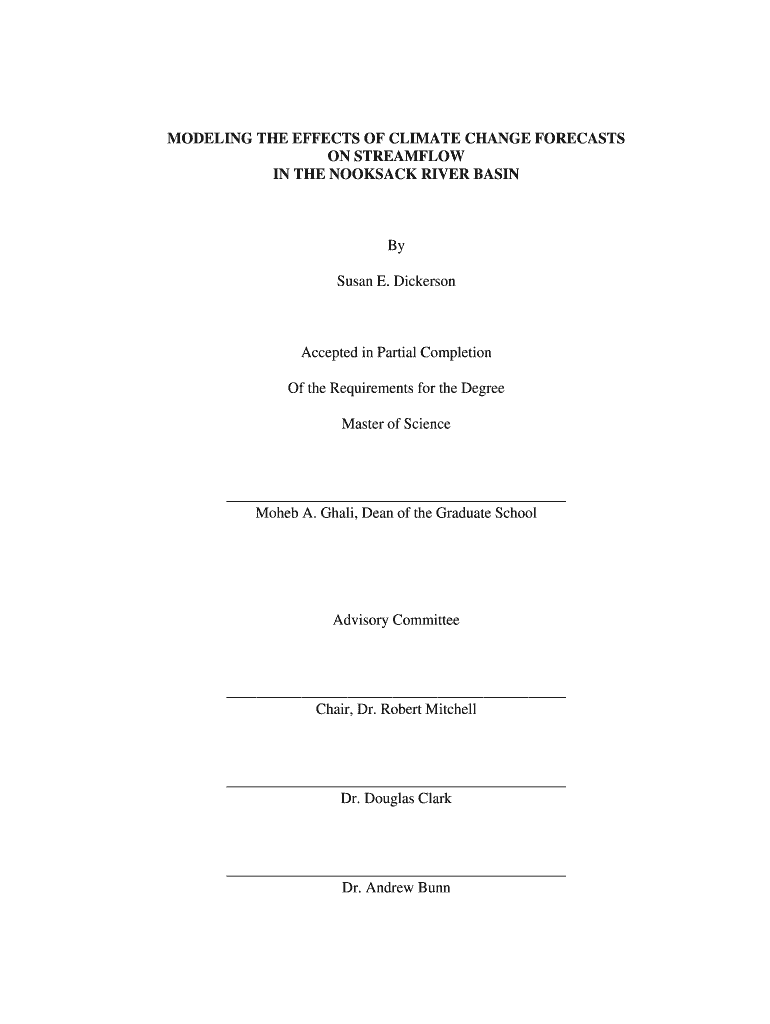
The document titled "By Susan E. Dickerson Accepted In Partial Completion - Western" refers to a master's thesis submitted by Susan E. Dickerson as part of her graduate studies. The primary focus of the thesis is to model the effects of climate change on streamflow in the Nooksack River Basin, located in Washington State. This thesis provides essential insights into how changes in temperature and precipitation patterns due to climate change could affect water resources in the region.
How to Use the Thesis by Susan E. Dickerson
The thesis provides a comprehensive analysis of the potential impacts of climate change. Researchers, environmental planners, and policy makers can use this work to understand future streamflow scenarios and make informed decisions about water management practices. The study’s use of the Distributed Hydrology-Soil-Vegetation Model (DHSVM) offers a reliable method for simulating impacts, making it a valuable reference for academic and professional studies in environmental sciences.
Obtaining a Copy of the Thesis
To access Susan E. Dickerson’s thesis, interested parties should contact the institution where it was submitted, typically Western Washington University’s library or thesis repository. These institutions often have copies available in physical or digital formats, which can be requested through library services or via interlibrary loan for those outside the institution.
Steps to Understanding the Thesis Content
- Introduction and Objective: Begin with understanding the research objectives and the hypothesis that guides the study.
- Methodology: Review the methodologies employed, specifically the DHSVM and climate forecast models, to appreciate how data was gathered and analyzed.
- Findings: Focus on the key findings that highlight changes in streamflow and implications for water resource management.
- Discussion: Analyze the discussion section for insights into the broader implications of the findings and potential future research avenues.
Importance of Climate Impact Studies
This thesis highlights the crucial role of studying climate impacts on natural resources. With global climate change posing significant risks, understanding localized impacts becomes indispensable for strategic planning. This research underscores the need for adaptation strategies in water management, acknowledging altered hydrological patterns which could influence agricultural, municipal, and ecological water uses.
Key Elements Within the Thesis
- Use of DHSVM: Offers a detailed model for predicting streamflow changes due to climatic shifts.
- Climate Scenarios: Provides analysis based on downscaled forecasts from General Circulation Models (GCMs).
- Predicted Changes: Includes projections for increased winter flows, decreased summer flows, and reduced snowpack.
- Resource Planning Implications: Discusses how these changes affect water resource planning for different stakeholders.
Audience and Typical Users of the Thesis
The primary audience for this thesis includes environmental scientists, hydrologists, policy makers, and graduate students focused on climate or water resource management. Institutions involved in environmental conservation efforts would also find this work beneficial for developing adaptive strategies against climate risks.
Legal and Ethical Use of the Thesis
When using or referencing the thesis, it is important to follow ethical guidelines for attribution and citation as defined by academic institutions. This respects the intellectual property of the author and maintains the integrity of academic discourse. It ensures any derivative work or application of the thesis findings is legally compliant and adheres to institutional standards.
Variations and Related Studies
This thesis may have parallels with other climate impact studies, particularly those focusing on regional water resources affected by climate change. Researchers should consider reviewing related literature to gain a comprehensive understanding of the subject. Such comparative analysis can be critical for drawing broader conclusions about environmental patterns and for cross-validating findings.