






Definition and Meaning of Forward-Looking Statements
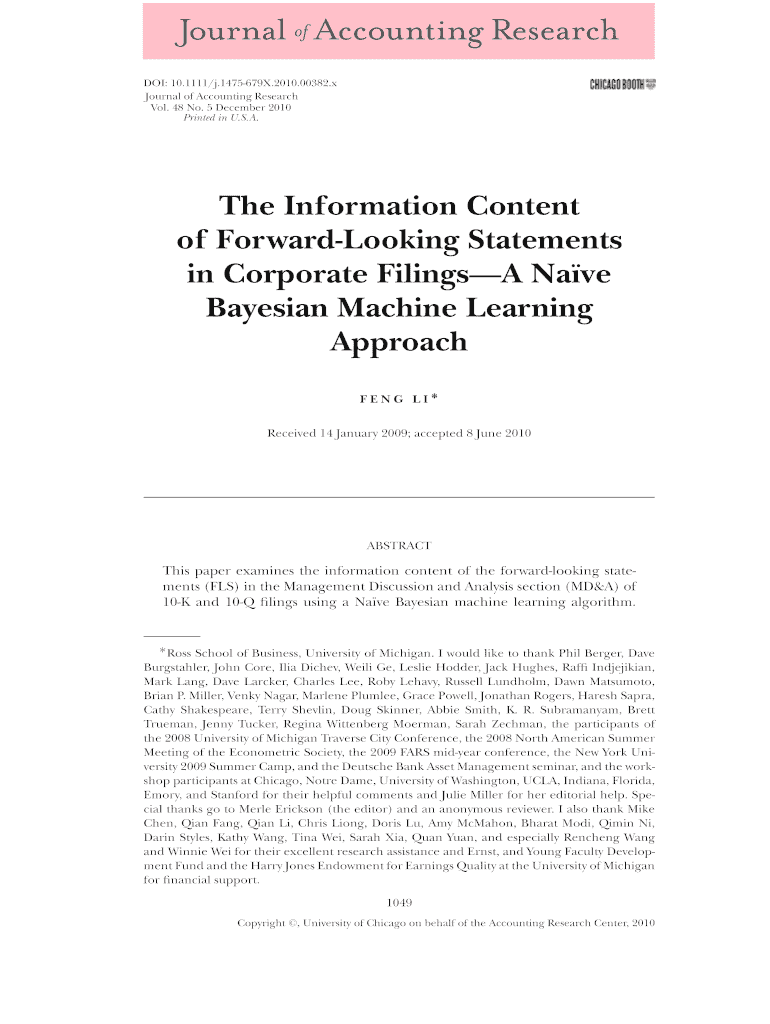
Forward-looking statements are projections or forecasts issued by a corporation regarding future business operations, financial performance, or potential business events. Typically found in the Management Discussion and Analysis (MD&A) sections of financial reports like the 10-K and 10-Q, these statements provide investors and stakeholders with insights into the company’s strategic direction and future prospects. They often reference future actions or external influences that might impact the company's trajectory.
Key Characteristics
- Predictive Nature: Unlike historical data, these statements forecast future performance or events.
- Conditional Language: They may include terms such as "anticipate," "expect," "intend," "plan," or "believe," signifying uncertainty and potential variations.
- Regulatory Context: Governed by disclosures that require companies to provide honest and clear insights into their expected future actions and outcomes.
Steps to Utilize Forward-Looking Statements
Analyzing Forward-Looking Statements
- Identify the Context: Begin by examining the MD&A section to understand the narrative of these statements.
- Evaluate Assumptions: Consider the assumptions made and their alignment with market conditions and business strategies.
- Assess Predictive Accuracy: Compare past forward-looking statements with actual outcomes to gauge accuracy.
Using Statements Effectively
- Investment Decisions: Utilize these statements to make informed decisions about potential investments by assessing projected future growth.
- Risk Management: Understand potential risks and prepare strategies to mitigate unfavorable outcomes in alignment with the projections.
Important Terms Related to Forward-Looking Statements
Understanding certain terms is crucial for interpreting these statements accurately:
- Naïve Bayesian Approach: A statistical method that analyzes the relationship between current performance metrics and the projections, used to assess the accuracy of forward-looking statements.
- Accruals: These are financial transactions recorded when they are incurred, not when cash is exchanged, influencing statement predictions.
- MD&A (Management Discussion and Analysis): A section in corporate filings where management discusses the financial condition, including forward-looking statements.
Who Typically Uses Forward-Looking Statements
Primary Users
- Investors: Use these statements to evaluate future profitability and growth prospects.
- Financial Analysts: Analyze these forecasts to support investment recommendations and reports.
- Corporate Management: Utilize them internally to guide business strategy and operational planning.
Secondary Users
- Regulatory Bodies: May assess these statements for compliance with disclosure regulations.
- Competitors: Monitor industry trends and competitor strategies reflected in these statements.
Key Elements of Forward-Looking Statements
Essential Components
- Expected Events: Details about anticipated projects, product launches, or market expansions.
- Financial Projections: Income, revenue, and expenditure forecasts that inform strategic financial planning.
- Market Analysis: Evaluations of market conditions that could affect business performance.
Impactful Inclusions
- Strategic Initiatives: Plans related to mergers, acquisitions, or strategic partnerships.
- Operational Efficiency: Statements about improvements or changes designed to optimize performance.
Legal Use and Compliance
Regulatory Obligations
- SEC Requirements: Ensure accuracy and are truthful about assumptions underlying the forward-looking statements, as required by the U.S. Securities and Exchange Commission (SEC).
Compliance Risks
- Litigation Potential: Companies could face lawsuits if statements are misleading or lack a reasonable basis, highlighting the importance of cautious disclosure practices.
Examples of Using Forward-Looking Statements
Practical Applications
- Case Study Analysis: Consider a tech company's use of forward-looking statements to predict the impact of launching a new innovative product.
- Industry Comparisons: Compare statements across companies within the same industry to evaluate competitive positioning and strategic foresight.
Scenario Exploration
- Economic Downturns: Analyze how companies revise their statements during adverse economic conditions to reflect adjusted expectations.
Software Compatibility for Analyzing Forward-Looking Statements
Supported Platforms
- Financial Software Integration: Use platforms like TurboTax or QuickBooks to include analysis of forward-looking statements in comprehensive financial scenario modeling.
- Document Management Systems: Utilize document systems like DocHub for annotating, reviewing, and managing reports containing these statements in various formats.
Business Types That Benefit Most
Targeted Industries
- High-Growth Sectors: Industries such as technology and pharmaceuticals, where rapid innovation requires clear strategic projection.
- Capital-Intensive Industries: Such as automotive and manufacturing, which need extensive planning and forecasting for sustained investment and development.
Specific Business Entities
- Corporations: Benefit from comprehensive disclosures that attract investors and align internal strategic goals.
- LLCs and Partnerships: Use statements to communicate growth potential to partners and stakeholders.