






Definition and Meaning
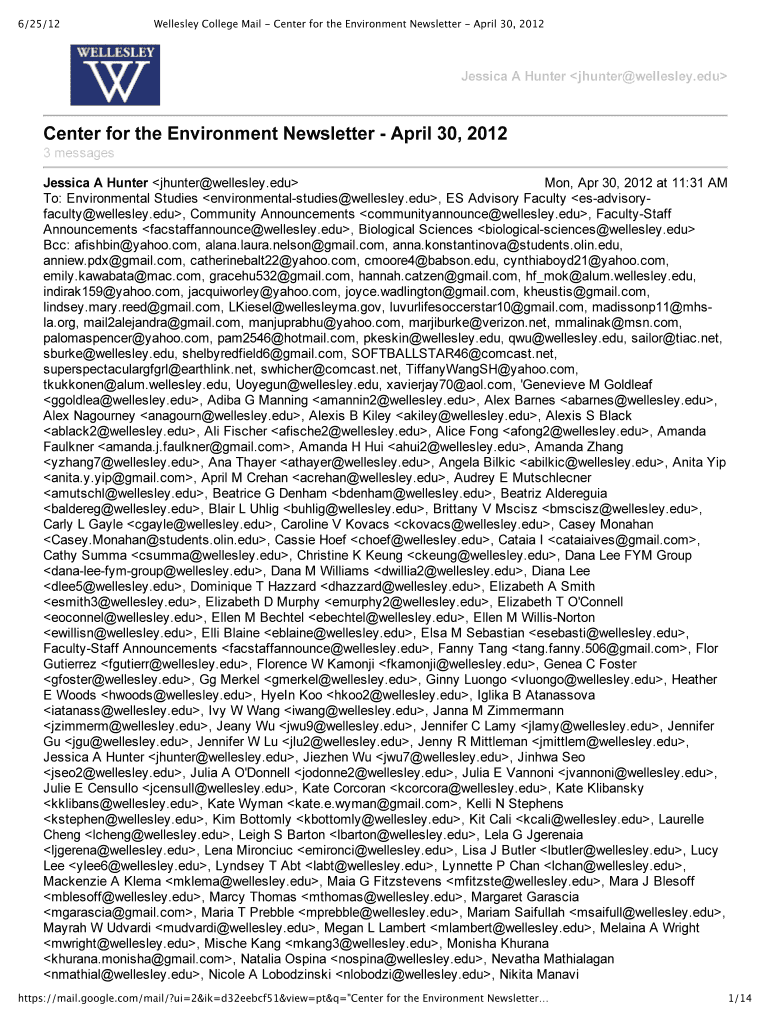
The term "6 25 12 Wellesley College Mail Center for the Environment Newsletter April 30, 2012 JessicaAHunterjh" appears to refer to a specific issue of a newsletter published by the Center for the Environment at Wellesley College. The date, April 30, 2012, is likely when the newsletter was issued, and "JessicaAHunterjh" could be a unique identifier related to the document's creation or distribution. This newsletter serves to disseminate information about environmental initiatives, events, and opportunities related to sustainability at Wellesley College.
How to Use the Newsletter
Using this newsletter involves engaging with its content, which is designed to inform and promote involvement in sustainability initiatives. Readers might begin by examining sections on upcoming events, job and internship opportunities, and initiatives within the environmental studies field. Engaging with this content can involve attending events like the Environmental Studies Thesis presentations or participating in programs at the Regeneration Student Farm, contributing to both personal growth and community impact.
How to Obtain the Newsletter
The newsletter can typically be obtained through the Wellesley College Mail Center or the college’s website. Alumni, current students, and faculty might access it via college email. Archives possibly hold older issues, available upon request from the college’s administrative offices or library services. Internet archives or digital university repositories may also store past newsletters for wider accessibility.
Steps to Complete Actions from the Newsletter
- Identify Areas of Interest: Review the newsletter to determine which sections align with your objectives—such as job opportunities or upcoming events.
- Mark Important Dates: Note key dates such as dates for presentations or workshops.
- Contact Organizers: For events or activities you're interested in, reach out to the listed contacts for more details or to confirm attendance.
- Submit Applications: If applying for positions, ensure all required documentation is prepared and submitted by highlighted deadlines.
- Prepare for Engagement: Attend scheduled events or workshops and actively participate in the initiatives described.
Who Typically Uses the Newsletter
The newsletter is primarily targeting Wellesley College students and faculty involved with or interested in the environment and sustainability. This includes students studying environmental science, faculty members leading sustainability initiatives, and potential external partners or alumni looking to engage with college activities. It acts as a valuable resource for anyone aiming to stay informed on environmental programs at the institution.


Key Elements of the Newsletter
- Upcoming Events: Lists activities including thesis presentations and open farm days.
- Job and Internship Opportunities: Details positions available within the realm of environmental sustainability, offering practical experience in fields like recycling, ecology, and community farming.
- Research and Studies: Information on ongoing research, providing insights into cutting-edge environmental studies and initiatives.
- Student and Faculty Engagement: Encourages participation and contributions to sustainability projects and discussions within the college community.
Important Terms Related to the Newsletter
- Environmental Sustainability: Practices aimed at reducing human impact on the environment while maintaining ecological balance.
- Regeneration Student Farm: A component of Wellesley College's sustainability initiatives focused on agriculture and ecological conservation.
- Thesis Presentation: An academic event where students present their research findings to peers, faculty, and community members.
Examples of Using the Newsletter
An example of utilizing the newsletter is when a student pursuing a degree in environmental studies uses it to apply for a summer internship in community farming described in the publication. Additionally, a faculty member might coordinate with students to attend and support an open farm day, fostering a learning experience that reinforces classroom teachings with practical exposure.
Versions or Alternatives
While the April 30, 2012, issue is specific, alternate versions might include subsequent newsletters with updated information on environmental events and opportunities. Libraries and databases at the college may house digital or print archives of previous and following issues, providing a broader historical context of environmental efforts and changes at the college over time.