






Definition and Meaning
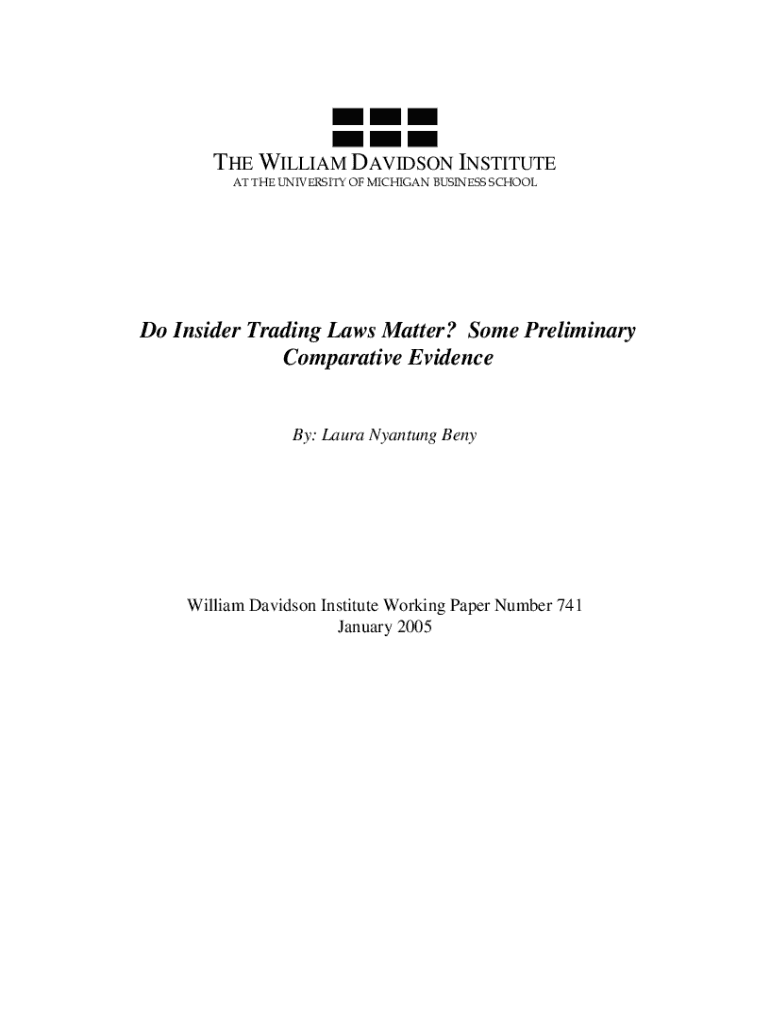
Insider trading refers to the buying or selling of a publicly-traded company's stock by someone who has non-public, material information about that stock. The "Do Investors in Controlled Firms Value Insider Trading" form explores the context and implications of insider trading within firms that have a controlling shareholder or entity directing operations. Controlled firms often have a concentrated ownership structure, which can influence how insider information is utilized and perceived by investors. This form helps in understanding whether or not investors consider insider trading as a valuable indicator when it occurs in these controlled settings.
Key Elements of Insider Trading in Controlled Firms
Insider trading within controlled firms can involve unique elements that distinguish it from general cases of insider trading:
- Control Ownership: A single entity or a small group owns a significant portion of the firm, potentially affecting the flow and transparency of information within the company.
- Influence on Management: The controlling entity may exert considerable influence over management decisions, including those related to disclosure and transactions involving insider information.
- Market Perception: Investors may perceive insider trading differently in controlled firms due to the potential for information asymmetry and conflicts of interest.
These factors can affect the evaluation of insider trading activities and the overall perception of the firm in the financial market.
How to Obtain the "Do Investors in Controlled Firms Value Insider Trading" Form
The form can be obtained through regulatory bodies that monitor and regulate securities trading in the United States. These include:
- Securities and Exchange Commission (SEC): The SEC oversees insider trading regulations and provides access to related documentation and forms.
- Financial Industry Regulatory Authority (FINRA): As an independent regulator, FINRA may offer additional resources and forms concerning trading practices within controlled firms.
Accessing the form generally requires registration or a request to these governing bodies, ensuring that stakeholders are properly informed about regulatory considerations and compliance obligations.
Steps to Complete the Form
Completing the "Do Investors in Controlled Firms Value Insider Trading" form involves several steps:
- Identify the Controlled Firm: Specify the firm in question and detail the ownership structure.
- Specify Insider Trades: Document the insider trading activities, including dates, amounts, and participants.
- Evaluate Market Impact: Assess how these activities might influence investor perceptions and market behavior.
- Compliance Check: Ensure all insider trading activities comply with legal requirements and are properly disclosed.
- Submit to Relevant Authorities: Once completed, submit the form to the appropriate regulatory bodies for review.
Each step requires comprehensive documentation and analysis to fulfill regulatory obligations effectively.
Why Investors Value Insider Trading in Controlled Firms
Investors might value insider trading in controlled firms for the following reasons:
- Indicator of Future Performance: Insider trading by those with substantial inside knowledge of the company might signal confidence in the firm's future performance.
- Strategic Moves: Such trading can indicate strategic shifts or upcoming announcements that could impact the firm's valuation.
- Market Sentiment: Insider trading activity in controlled firms can shape investor sentiment, influencing buying and selling decisions in the market.
Understanding these motives helps investors make informed decisions about their investment strategies.
Examples of Using Insider Trading Information
Real-world scenarios where insider trading information in controlled firms might be utilized include:
- Investment Analysis: Analysts might use insider trading data to model potential investment opportunities or risks associated with controlled firms.
- Market Predictions: Financial professionals could incorporate insider trading trends into forecasts of market movements or sector performance.
- Regulatory Monitoring: Watchdog entities might analyze insider trading patterns for signs of legal non-compliance or market manipulation.
These applications demonstrate the diverse utility of insider trading information in financial decision-making.
Legal Use of Insider Trading Information
Legal regulations surrounding insider trading are strict, particularly within the United States. Here is a brief overview:
- Disclosure Requirements: Insiders must report their trades to the SEC, ensuring transparency and compliance with federal securities laws.
- Regulation FD (Fair Disclosure): This regulation requires that all material information be shared with investors simultaneously to prevent selective disclosure advantages.
- Sanction Framework: Violations can result in significant penalties, including fines and imprisonment, emphasizing the importance of adherence to legal statutes.
Understanding and conforming to these regulations is crucial for all investors and entities engaged in insider trading activities.
Important Terms Related to the Form
Several terms are essential to understand when evaluating the form "Do Investors in Controlled Firms Value Insider Trading":
- Material Information: Non-public information that can influence an investor's decision to buy or sell securities.
- Concentrated Ownership: A scenario where a single entity or a few entities own a large percentage of a company's stock.
- Market Liquidity: The ease with which assets can be bought or sold in the market without affecting the asset's price.
A solid grasp of these concepts provides clarity and insight into the evaluation of insider trading within controlled firms.