






Definition and Historical Significance
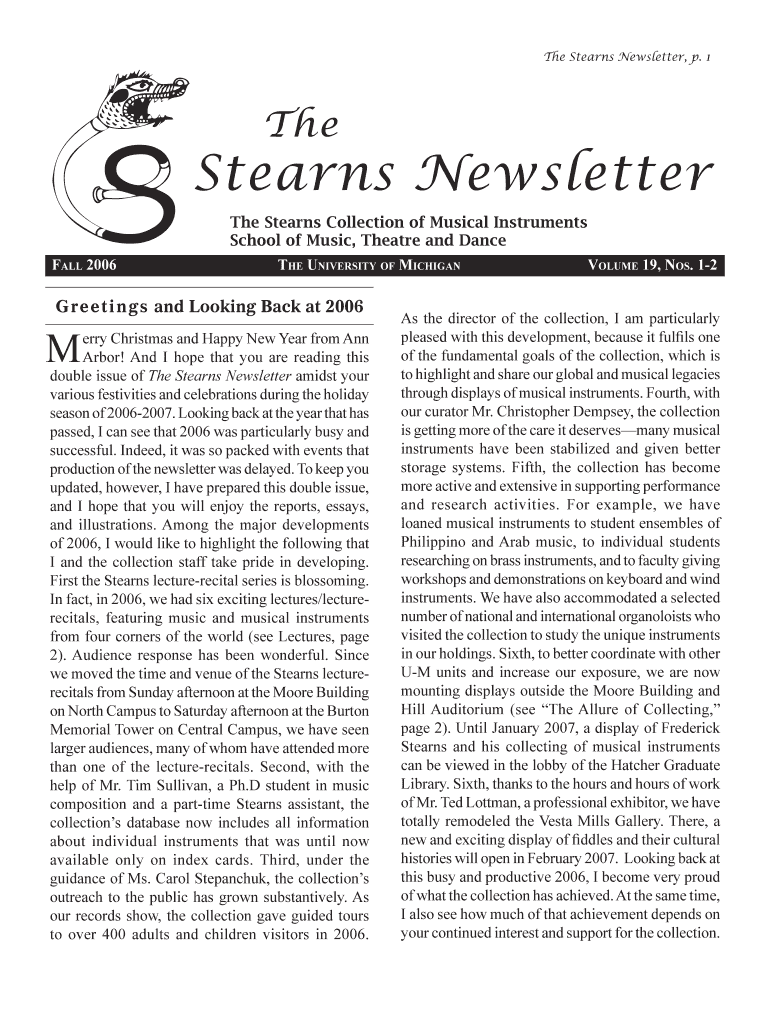
The Stearns Collection of Musical Instruments is housed at the University of Michigan and is one of the largest collections of historical and contemporary musical instruments in North America. Established by Frederick Stearns, a prominent philanthropist and instrument collector, the collection serves as both a resource for academic study and a public exhibition. It includes over 2,500 instruments from around the world, highlighting the diversity and cultural significance of musical practices.
Major Themes and Contributions
- Historical Scope: Spanning a wide historical range, the collection offers insight into the development of musical instrument design and usage across different epochs.
- Cultural Diversity: Featuring instruments from various cultures, the collection provides a comprehensive view of global musical traditions.
- Educational Resource: The collection is leveraged for teaching musicology, organology, and ethnomusicology at the university.
How to Use the Collection
The Stearns Collection is open for educational visits, research, and virtual tours. Individuals interested in exploring the collection can do so through various means.
Interactive Tours and Research
- Guided Tours: These are available for groups and educational institutions. Visitors can learn about specific instruments and their contexts.
- Virtual Access: An online database allows researchers and enthusiasts from around the world to explore the collection digitally.
- Lecture Series: Associated lecture-recitals present instruments in their historical context through live performances.
Obtaining Access to the Collection
Access to The Stearns Collection can be obtained by contacting the University of Michigan's School of Music, Theatre & Dance. Arrangements for educational visits or scholarly research can be made through the collection's administrative offices.
Procedures for Access
- Academic Inquiries: Faculty and students can request access for research purposes.
- Public Visits: The collection frequently hosts open house events and special exhibitions that are open to the public.
- Online Database: The virtual catalog can be accessed by anyone interested, providing a searchable database of instruments and associated information.
Steps to Engage with the Collection
Exploring the Stearns Collection can be achieved through a series of well-defined steps, tailored to both casual visitors and serious researchers.
- Plan a Visit: Check the University of Michigan's calendar for open events or schedule a guided tour.
- Engage Online: Utilize the online database to explore the collection virtually.
- Contact the Curator: For specialized research needs, communicate with the curator to access specific instruments.
Importance and Benefits
The significance of The Stearns Collection lies in its educational and cultural value. It acts as a bridge connecting historical musicology with contemporary music education.
Core Benefits
- Educational Impact: Enhances curriculum for students studying music history and performance.
- Cultural Enrichment: Provides a platform to understand diverse musical heritages.
- Community Engagement: Facilitates public awareness and appreciation of musical history.
Legal Use and Ethical Considerations
Responsible use of The Stearns Collection ensures that it remains an invaluable resource for future generations. Ethical considerations govern the handling and exhibition of these historic instruments.
Best Practices
- Conservation Efforts: Proper maintenance and restoration techniques are vital for preserving instruments.
- Academic Integrity: Respectful use and citation are essential in research and publications.
- Legal Compliance: Adhering to museum and academic standards for handling and displaying cultural artifacts.
Key Elements of the Collection
Understanding the components that make up The Stearns Collection provides insight into its role as a comprehensive musical archive.
Components
- Instrument Variety: Ranges from early European instruments to contemporary creations.
- Exhibition Methods: Interactive displays and informative plaques aid visitor understanding.
- Supporting Resources: Accompanied by a library of music literature and historical documentation.
Examples of Use and Engagement
The Stearns Collection not only serves academic purposes but also engages the public through practical applications and public performances.
Practical Applications
- Lecture Recitals: Instruments are used in performances that educate audiences on historical musicology.
- Collaborative Research: Scholars publish works utilizing insights gained from the collection.
- Public Workshops: Offer hands-on experiences, engaging community groups in practical music-making sessions.