







Definition & Meaning
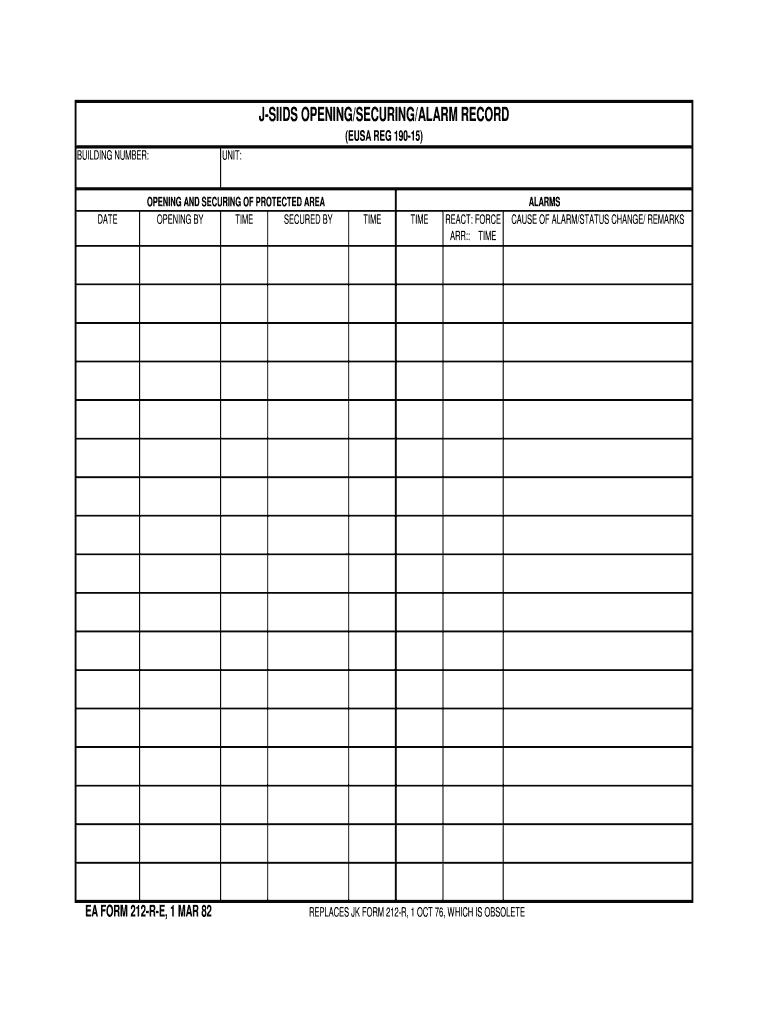
The EA 212-R form is a specialized document primarily used for recording the opening, securing, and alarm status of a protected area. This form operates under the regulation EUSA REG 190-15, focusing on the secure management of specific sites to ensure compliance with security protocols. It captures critical data such as building number, date, unit, and personnel involved in the changes to the secure status of the building.
How to Obtain the EA 212-R Form
To obtain the EA 212-R form, individuals must usually access it through designated official channels, which might include secure intranet systems or specific departments within the organization responsible for security and compliance. It might also be available for download as a fillable PDF for convenience, ensuring that personnel can fill out the form electronically or print it as needed.
Steps to Complete the EA 212-R Form
- Identify Section Elements: Start by recording the building number and the date to set the context of the form.
- Document Opening Times: Record the precise times when the protected area is accessed by authorized personnel.
- Securing Information: Indicate when and by whom the area is secured post-usage.
- Record Personnel: List all individuals involved in the opening and securing of the area.
- Alarm Status Changes: Note any changes to the alarm status during these sessions.
- Add Remarks: Provide any additional comments that may be relevant to the security status or operations conducted.
Key Elements of the EA 212-R Form
- Building Number: Essential for identifying the location relevant to the activity logged.
- Date: Ensures that the record accurately reflects the time frame of operations.
- Personnel Involved: Key for accountability and verification of authorized entry.
- Alarm Status: Indicates security protocol adherence and any deviations during the noted period.
- Remarks Section: Allows for additional notes, instructions, or observations that could be significant to security assessment.
Legal Use of the EA 212-R Form
Compliance with protocols detailed in EUSA REG 190-15 mandates the use of the EA 212-R form. It serves as a legally recognized document evidencing adherence to security practices. The form's legal usage is crucial in auditing security measures and in investigations following any breach of protocols.
Who Typically Uses the EA 212-R Form
Typical users of the EA 212-R form include security personnel, facility managers, and other staff tasked with maintaining the security and integrity of restricted areas. The form ensures that audits and inspections can verify that security procedures are followed consistently and correctly.


Important Terms Related to the EA 212-R Form
- Protected Area: The physical space whose secure status is documented via the EA 212-R form.
- EUSA REG 190-15: Regulation under which the form operates, ensuring compliance with security protocols.
- Alarm Status: Indicates whether the security systems were activated, deactivated, or modified during a reported period.
- Securing: The process of locking down or ensuring that the protected area is fully secured against unauthorized access.
State-Specific Rules for the EA 212-R Form
While the EA 212-R form is standardized under EUSA REG 190-15, specific state or local adaptations may dictate variations in how information is recorded or reported. Agencies might issue supplementary guidelines depending on regional security concerns or regulatory requirements, impacting the form's implementation and enforcement.
Examples of Using the EA 212-R Form
In practice, an EA 212-R form might be used in military bases, government buildings, or other high-security facilities where maintaining a rigorous log of access and security measures is critical. For instance, should a door alarm trigger unexpectedly, security teams would verify the EA 212-R form entries to check if an authorized opening and securing matched the timing of the alarm event.
Software Compatibility
Modern versions of the EA 212-R form may be managed using specialized software compatible with document management systems like TurboTax or QuickBooks to some degree, although direct integration might vary. Custom systems developed for security audits typically incorporate electronic logging to simplify data entry and retrieval.
Penalties for Non-Compliance
Failure to correctly utilize the EA 212-R form, or any deviation from the required protocols when handling secure areas, can result in penalties including reprimands or more serious administrative actions, depending on the severity and frequency of the oversight. Non-compliance could expose the organization to risks of inadequate security practices, impacting overall operational safety.
Each section within the form not only ensures that clear records of security processes are kept, but they also provide a reliable audit trail for reviews and investigations, thus serving both practical and compliance purposes.




