






Definition & Meaning
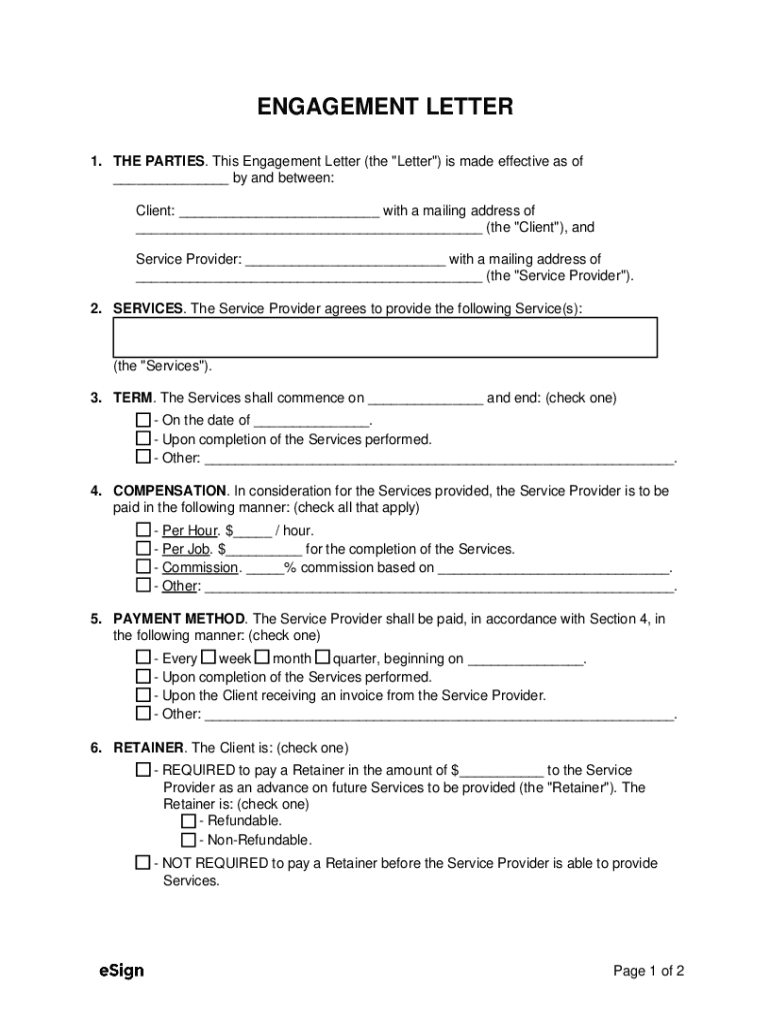
A Lawyer Attorney Engagement Letter is a formal document that establishes a professional relationship between an attorney and a client. This letter outlines the scope of services, fee structures, and other essential terms of engagement, ensuring both parties have a clear understanding of their commitments and responsibilities. This document serves as a legally binding contract that governs the interaction between the attorney and the client, often subject to state laws.
Key Elements of the Lawyer Attorney Engagement Letter - eForms
An engagement letter typically includes critical components to set the foundation for the legal relationship:
- Scope of Services: Clearly outlines what services the attorney will provide.
- Compensation Structure: Details how fees are calculated, whether hourly, flat-rate, or contingency.
- Retainer Requirements: Specifies if an upfront payment is required and how it will be used.
- Termination of Service: Explains the conditions under which either party can terminate the agreement.
- Governing Law: Identifies which state’s laws will apply to the contract.
These elements collectively ensure transparency and prevent disputes over the service terms.
How to Use the Lawyer Attorney Engagement Letter - eForms
To use the engagement letter effectively, follow these steps:
- Draft the Engagement Letter: Use eForms to create a customized letter that suits your needs.
- Review the Draft: Ensure all terms align with your expectations and that there are no ambiguities.
- Share with the Client: Provide the draft to your client for their review and input.
- Negotiate Terms: If necessary, discuss any changes your client would like to see.
- Finalize the Document: Once both parties agree, sign the document to formalize the arrangement.
- Retain a Copy: Keep a signed copy for your records as proof of the agreement.
These steps facilitate a structured approach to forming a legally binding attorney-client relationship.
Steps to Complete the Lawyer Attorney Engagement Letter - eForms
Completing the engagement letter involves several straightforward steps:
- Access eForms Platform: Log in to the eForms website.
- Select the Template: Choose the Lawyer Attorney Engagement Letter from the available templates.
- Input Required Information: Enter the specifics, such as the client’s name, contact details, and legal service description.
- Review and Edit: Ensure that all entered details are accurate and comprehensive.
- Collaborate as Needed: Use DocHub's collaborative tools to work with your client on the document.
- Sign Electronically: Utilize electronic signature functionality to finalize the document.
This digital process simplifies the administrative aspects of document creation and execution.
Who Typically Uses the Lawyer Attorney Engagement Letter - eForms
The engagement letter is commonly used by:
- Solo Practitioners: Independent attorneys who need a formalized agreement with clients.
- Law Firms: Legal practices seeking a standardized approach for client engagement.
- Corporate Legal Departments: In-house teams requiring project-specific agreements.
- Clients Requiring Legal Services: Individuals or businesses engaging legal counsel for various matters.
These parties rely on the document to set clear boundaries and expectations within their legal dealings.


Legal Use of the Lawyer Attorney Engagement Letter - eForms
The engagement letter is central to ensuring legal compliance in attorney-client interactions:
- Establishes Legal Obligations: Clearly defines the duties of the attorney and client.
- Mitigates Risks: Helps avoid misunderstandings about service delivery and payment.
- Protects Confidentiality: May include confidentiality clauses to safeguard sensitive information.
- Regulates Dispute Resolution: Specifies procedures for handling disputes, such as mediation or arbitration.
The document, therefore, plays a crucial role in managing legal and relational aspects of the service.
State-Specific Rules for the Lawyer Attorney Engagement Letter - eForms
When drafting an engagement letter, be aware of state-specific guidelines:
- Varying State Laws: Each state may have distinct requirements regarding what must be included in engagement letters.
- Ethical Rules: Attorneys must comply with their state's Bar Association guidelines.
- Fee Arrangements: State laws may dictate how fees can be structured or communicated.
It is important to customize the engagement letter to comply with the applicable state laws to avoid legal conflicts.
Important Terms Related to Lawyer Attorney Engagement Letter - eForms
Understanding key terms is essential for effective use:
- Retainer: An upfront fee paid to secure legal services.
- Contingency Fee: Payment based on the outcome of the case.
- Billable Hours: Time spent by an attorney on a case that can be charged to the client.
- Conflict of Interest: A situation where the attorney's interests may interfere with their duties to the client.
Familiarity with these terms enhances comprehension of the engagement letter’s content and implications.