
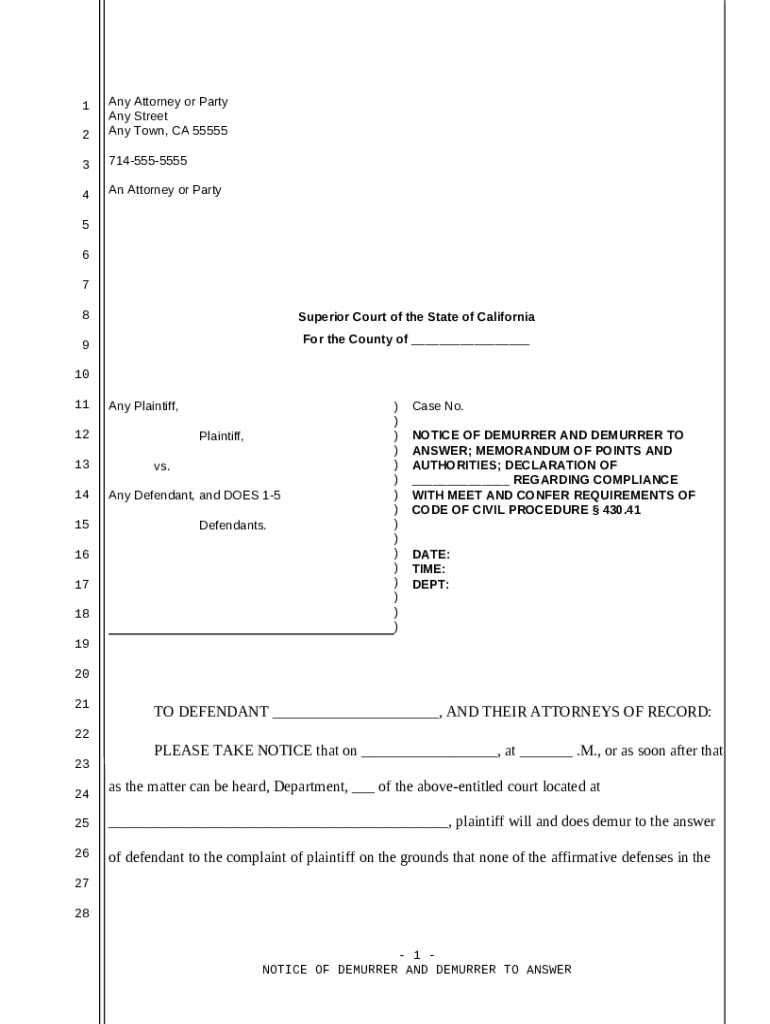







Definition & Meaning
A "Sample Demurrer to Answer for California" is a legal document used in California courts when a plaintiff seeks to challenge the defendant’s affirmative defenses outlined in their answer to a complaint. It argues that the defenses are either insufficiently supported by facts or are unclear. The demurrer references specific sections of the California Code of Civil Procedure to assert these claims, and the objective is to request the court to strike down these defenses, often aiming to proceed without giving the defendant an opportunity to amend them.
Key Elements of the Sample Demurrer to Answer for California
The demurrer typically comprises several important elements:
- Header Information: Includes details such as the names of both parties, the case number, and the court name.
- Introduction: Brief statement of intent, indicating the purpose of filing the demurrer.
- Factual Basis: Outline of the factual insufficiencies or uncertainties in the defendant’s answer.
- Legal Arguments: Cites relevant legal codes like the California Code of Civil Procedure and precedents to bolster the demurrer's foundation.
- Conclusion: Requests the court to sustain the demurrer, often without leave to amend, indicating that the defendant should not be allowed to revise their answer.
How to Use the Sample Demurrer to Answer for California
Utilizing a sample demurrer involves several steps:
- Review the Defendant’s Answer: Thoroughly examine the answer provided by the defendant to identify weak or unclear defenses.
- Referencing Codes and Precedents: Use the sample to understand which sections of the California Code of Civil Procedure may be relevant, applying them to the case specifics.
- Drafting the Document: Utilize the structure and terminology from the sample to draft a precise and legally sound demurrer.
- Filing with the Court: Ensure proper filing of the document within the timeframes stipulated by the court rules to avoid dismissal.
- Serving the Document: Serve the demurrer on the defendant’s legal counsel as per court guidelines.
Steps to Complete the Sample Demurrer to Answer for California
Completing a demurrer involves a clear sequence of actions:
- Title and Case Information: Input the correct court, case number, and party names at the top of the document.
- State Facts: Clearly describe which of the defendant’s defenses lack factual basis or are vague.
- Legal Arguments: Employ the sample to structure robust legal arguments, citing relevant statutes and legal precedents.
- Conclude and Request: End with a concise request for the court to sustain the demurrer without leave to amend.
- Sign and Date: Ensure the document is properly signed and dated by the filing party or their attorney.
Legal Use of the Sample Demurrer to Answer for California
The legal validity of a demurrer in California requires careful drafting and adherence to legal standards:
- Procedure Adherence: Strictly follow the procedural rules specified by the California Code of Civil Procedure.
- Sound Legal Basis: The arguments must align with established legal principles and existing case law.
- Timeliness: A demurrer must be filed as per the specific timeline set by the court to maintain its validity.
State-Specific Rules for the Sample Demurrer to Answer for California
California has distinct rules governing demurrers:
- Filing Deadlines: Typically, a demurrer must be filed within 30 days after the answer is served.
- Service Requirements: Proper service of the demurrer document is required for it to be considered by the court.
- Specific Legal Standards: Must conform to statutory requirements under the California Code of Civil Procedure, especially regarding the basis for objections.
Examples of Using the Sample Demurrer to Answer for California
In practice, employing a sample demurrer can serve various situations:
- Contract Disputes: When the defendant’s affirmative defenses are weak or irrelevant in a breach of contract case.
- Tort Claims: Challenging defenses in personal injury claims due to lack of factual support.
- Family Law Cases: Disputing defensive claims in child custody or divorce cases that lack clarity or legal grounding.
Required Documents
When filing a demurrer, having the correct documents is essential:
- Demurrer Document: The complete demurrer with all necessary details and arguments.
- Proof of Service: Evidence that the demurrer has been properly served on the defendant.
- Supporting Documents: Any additional documents or exhibits referenced within the demurrer must be attached.
Who Typically Uses the Sample Demurrer to Answer for California
The main users of a demurrer in California include:
- Plaintiffs: Individuals or entities challenging the sufficiency of defenses raised against their claims.
- Attorneys: Legal professionals drafting the demurrer for clients in civil litigation cases.
- Pro Se Litigants: Self-representing individuals seeking guidance in preparing a legally compliant demurrer document.






