01. Edit your form online
Type text, add images, blackout confidential details, add comments, highlights and more.

Type text, add images, blackout confidential details, add comments, highlights and more.

Draw your signature, type it, upload its image, or use your mobile device as a signature pad.

Send it via email, link, or fax. You can also download it, export it or print it out.
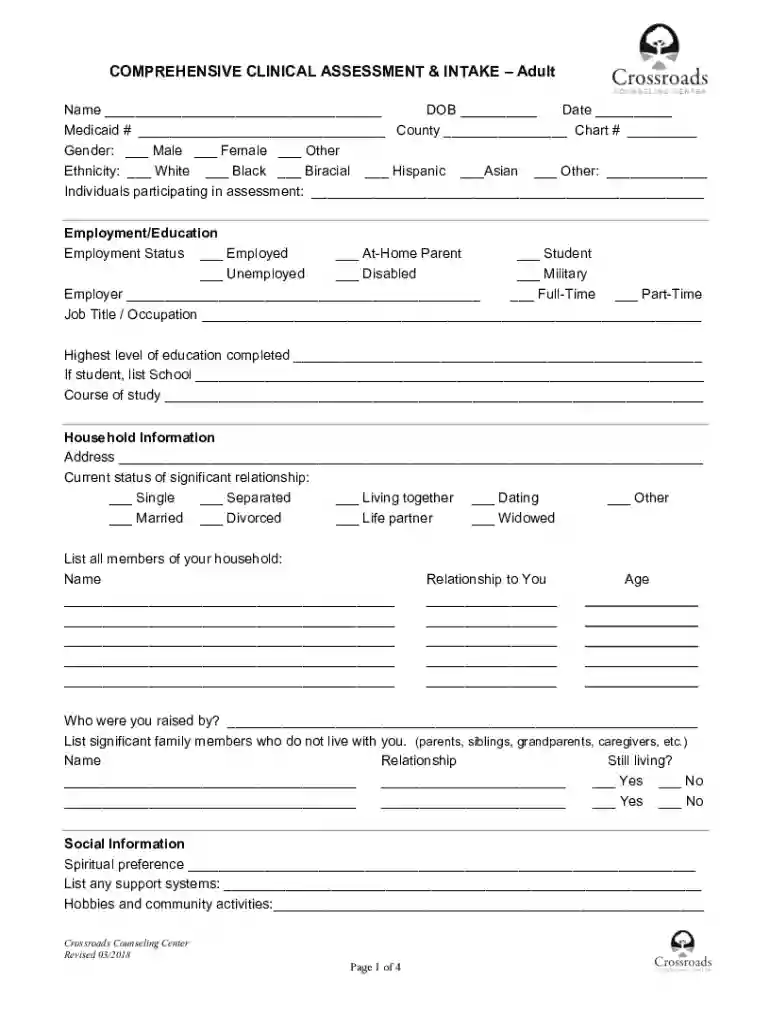
Comprehensive Clinical Assessment Training for Licensed professionals is a systematic educational process aimed at equipping licensed mental health practitioners with the skills necessary to conduct thorough evaluations of clients. This training emphasizes the importance of understanding a client's personal, demographic, and psychological information to accurately assess their mental health needs. Trainees learn to gather detailed histories of employment, household, medical background, and social interactions to form a comprehensive understanding that aids in effective treatment planning.
The primary goal is to enhance the practitioner’s ability to make informed decisions about treatment options based on a holistic view of the client’s life circumstances and mental health status.
Utilizing the comprehensive clinical assessment training involves a structured approach to learning and application. Here’s how licensed practitioners generally proceed:
Initial Introduction: Start with understanding the framework and objectives of the training. Familiarize yourself with the core components and expected outcomes.
Engage in Modules: Participate actively in each module, which may include workshops, seminars, and online courses. Modules cover various aspects like intake processes, interpreting assessments, and reporting findings.
Practical Application: Apply learned techniques in supervised environments initially to gain confidence and ensure proper technique.
Feedback and Reflection: Regularly seek feedback from mentors or supervisors and incorporate this into practice. Reflect on case studies and real-world applications to deepen your understanding.
Certification and Ongoing Education: Complete necessary evaluations and pass any examinations required for certification. Engage in continuous professional development to stay updated on new assessment techniques and methodologies.
By adhering to these steps, practitioners can effectively incorporate this training into their practice to improve client outcomes.
Completing this training program involves several detailed steps, each crucial to mastering comprehensive clinical assessment skills.
Assessment of Eligibility: Verify that you meet the prerequisites for participation, including possessing a relevant license and having foundational knowledge in psychology or mental health.
Enrollment: Register for the training through accredited institutions or professional organizations offering the course.
Participation in Coursework: Actively engage with all instructional materials, including lectures, readings, and interactive sessions. Pay attention to both theoretical knowledge and practical skills.
Practical Evaluation: Undergo assessments that may include simulations, role-playing, and real-life case evaluations under supervision.
Feedback and Improvement: Use supervisor feedback to refine skills. Systems are often in place to review each part of the process and suggest improvements.
Final Certification Examination: Successfully complete a final exam or submit a portfolio demonstrating mastery of clinical assessment techniques.
Continuous Updates: Stay informed about new developments in clinical assessment by participating in ongoing training workshops or seminars.
This training is primarily utilized by:
These professionals benefit from this training by improving their diagnostic accuracy and treatment efficacy.


The training focuses on several key elements, crucial for developing a rounded skill set:
Intake Process: Learn to collect essential client information, including demographic and personal history.
Mental Health Evaluation: Gain expertise in evaluating mental health status using standardized tools and interviews.
Data Interpretation: Develop the ability to interpret collected data to inform decision-making and treatment planning.
Risk Assessment: Learn techniques to assess potential risks, such as self-harm or harm to others, and develop safety plans.
Mastering these elements allows practitioners to conduct thorough assessments and formulate effective treatment strategies.
State regulations can introduce variations in how training is conducted and applied:
Licensing Requirements: Each state may have specific licensing prerequisites that influence eligibility for training participation.
Scope of Practice: Variations may exist in what assessments are legally permissible in a given state, impacting the application of training.
Mandated Reporting and Ethical Standards: State laws might dictate specific reporting duties and ethical guidelines, affecting training content and focus.
Understanding these differences is vital for applying training knowledge within legal and ethical bounds in different jurisdictions.
Practitioners use this training in various scenarios:
Case Study Analysis: Use knowledge to dissect complex cases, identify underlying issues, and make informed treatment decisions.
Team Coordination: Collaborate effectively with multidisciplinary teams to provide holistic client care.
Individual Therapy Programs: Develop and adjust personalized therapy plans based on comprehensive assessments of individual client histories.
These examples showcase how training empowers professionals to improve their service delivery and client outcomes.
Practitioners can choose between digital or paper formats for training materials:
Digital Versions: Offer interactive elements, immediate updates, and accessibility across devices, enhancing learning experiences.
Paper Versions: Allow for note-taking and provide a tactile learning alternative for those who prefer traditional methods.
Each format has its advantages, and selection often depends on personal preference and institutional resources.
At DocHub, your data security is our priority. We follow HIPAA, SOC2, GDPR, and other standards, so you can work on your documents with confidence.