Definition & Meaning
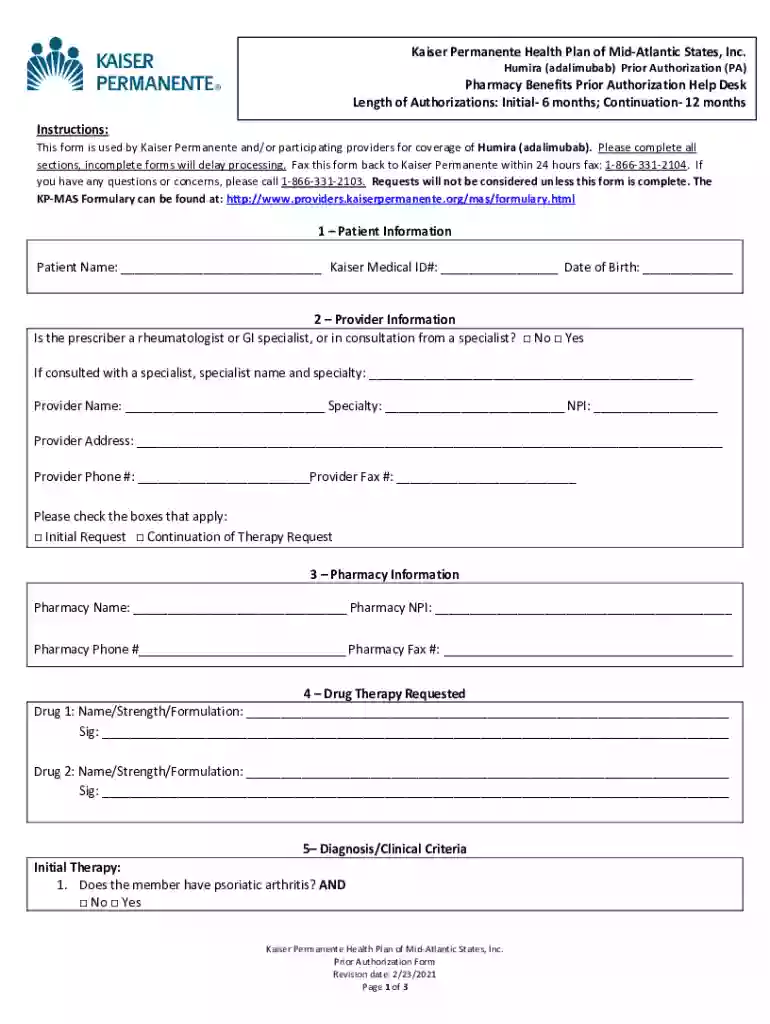
A Prior Authorization (PA) Form for Kaiser Permanente is a formal document used to request approval for specific medical treatments, medications, or procedures that require pre-approval from the health insurance provider. This form ensures that the requested healthcare service is covered under the patient's insurance plan and is medically necessary.
The PA form serves as a communication tool between healthcare providers and insurers, detailing the patient's medical history, the proposed treatment plan, and the rationale behind the request. A complete and accurate form is crucial for a smooth approval process, avoiding denials or delays in healthcare coverage.
Importance of Prior Authorization
- Validates coverage: Ensures the proposed service or medication aligns with the coverage policy.
- Controls costs: Helps prevent unnecessary and potentially costly treatments.
- Coordinates care: Encourages collaboration between healthcare providers and insurers to plan appropriate care.
How to Use the Prior Authorization (PA) Form for Kaiser Permanente
Using the Prior Authorization (PA) Form requires an understanding of both the insurance requirements and the documentation process. First, identify if the treatment or medication necessitates a PA by referring to the insurer’s guidelines or consulting with the healthcare provider.
Steps in Form Utilization
- Consultation: Discuss the need for PA with the healthcare provider.
- Form Access: Obtain the form from Kaiser Permanente’s official website or request it through your healthcare provider.
- Complete Information: Fill out the form with accurate patient details, treatment specifics, and any medical justification.
- Provider's Role: Have the healthcare provider complete their section, including medical records or additional documents.
- Submission: Submit the completed form through the designated submission method, ensuring all sections are complete.
How to Obtain the Prior Authorization (PA) Form for Kaiser Permanente
Acquiring the PA form can be straightforward if you follow the correct steps. Patients or providers can access the necessary document through various means.
Access Points
- Kaiser Permanente Website: Download directly from the insurer’s site.
- Healthcare Providers: Obtain a copy from your doctor's office during your visit.
- Customer Service: Request the form by contacting Kaiser Permanente's customer service for assistance.
Tips for Retrieval
- Check Online Portal: Many insurers offer downloadable forms through their secured member portals.
- Request Assistance: Healthcare providers often assist in the retrieval and completion of PA forms.
Steps to Complete the Prior Authorization (PA) Form for Kaiser Permanente
Completing the PA form involves providing detailed and precise information to avoid processing delays. Follow these steps to ensure comprehensive form completion.
Detailed Step-by-Step Process
- Personal Information: Enter patient details, insurance policy number, and contact information.
- Provider Details: Include the healthcare provider’s name, contact details, and national provider identifier (NPI) number.
- Treatment Information: Specify the medication or procedure, including dosage and frequency if applicable.
- Medical Necessity: Provide a thorough clinical justification for the request, supported by patient history and evidence.
- Review: Double-check all information for accuracy and completeness before submission.
Typical Users
- Primary Care Physicians: To request authorization for treatments outside standard care.
- Specialists: Especially for expensive procedures or specialty medications.
- Patients: Those who wish to initiate or understand the prior authorization process.
Key Elements of the Prior Authorization (PA) Form for Kaiser Permanente
The critical components of this PA form ensure that all necessary information is provided to facilitate a well-informed coverage decision.
Main Components
- Patient and Provider Information: Personal and professional identifiers, including contact details.
- Requested Treatment or Medication Details: Comprehensive description of the service or drug.
- Clinical Justification: Medical history and rationale supporting the treatment necessity.
- Signatures: Required from the patient or guardian and the healthcare provider.
Form Submission Methods (Online / Mail / In-Person)
Kaiser Permanente offers several channels for submitting the completed PA form to fit different needs and preferences.
Submission Options
- Online Submission: Fast and convenient through the insurer's online portal.
- Mail-In: Send the completed form to the designated address if online access is an issue.
- In-Person Drop-Off: Deliver the form directly to a Kaiser Permanente office for immediate processing.
Considerations for Submission
- Timeliness: Submit the form well ahead of the intended treatment date to accommodate review timeframes.
- Verification: Confirm receipt with the insurer to prevent processing delays.
Legal Use of the Prior Authorization (PA) Form for Kaiser Permanente
Understanding the legal aspects of using this form is critical to ensuring compliance and protecting patient rights.
Compliance and Regulations
- Patient Privacy: All information shared must comply with HIPAA regulations to protect patient data.
- Insurance Policies: Ensure the requested services meet insurance terms and guidelines.
- Documentation: Maintain copies of all submissions and communications for records and appeals if necessary.
Examples of Using the Prior Authorization (PA) Form for Kaiser Permanente
Demonstrating how this form is utilized in practice can illuminate its significance and applications.
Practical Scenarios
- Medication Authorization: A patient requiring a high-cost drug not typically covered needs to submit a PA form with supportive medical history.
- Specialized Surgery: A patient’s surgeon files a PA request for an advanced procedure to establish insurance coverage approval prior to scheduling.
These examples highlight the form's role in ensuring medical interventions receive requisite authorization, ultimately facilitating patient care within the insurer's framework.