




Definition & Meaning
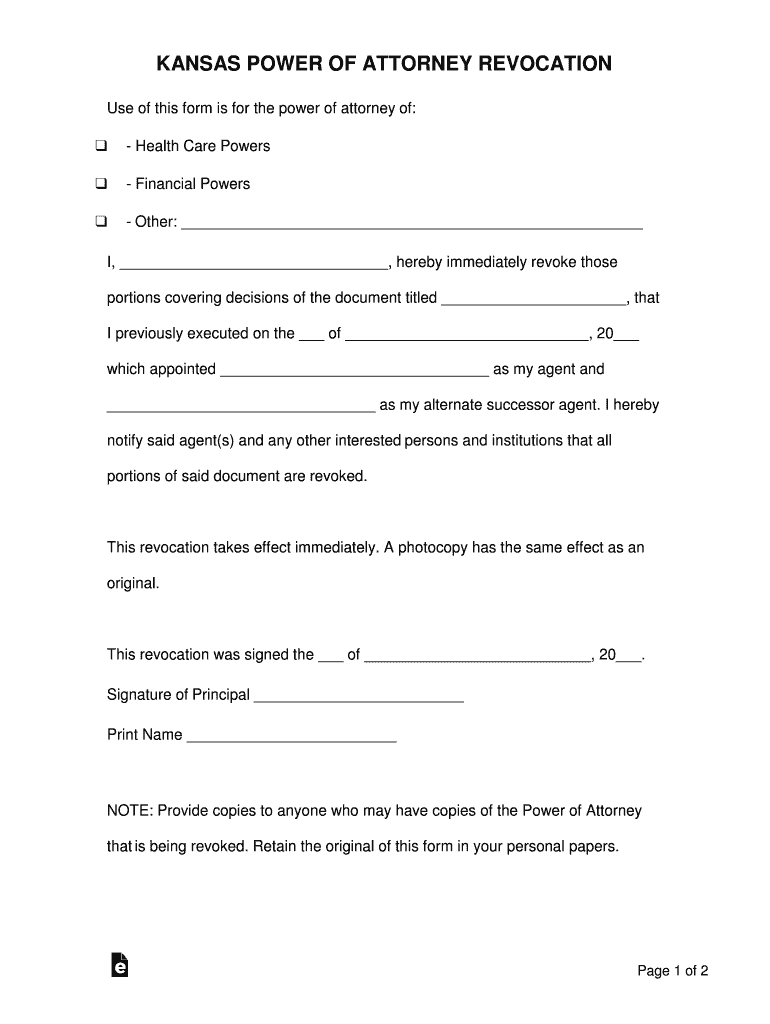
The Kansas Power of Attorney (POA) Forms are legal documents that allow an individual, known as the principal, to designate another person, called the agent or attorney-in-fact, to make decisions on their behalf. These forms can cover a range of matters, including financial transactions and healthcare decisions. A revocation form is available when the principal needs to terminate a previously granted Power of Attorney, ensuring the agent no longer has those powers.
How to Use the Free Kansas Power of Attorney FormsPDF Templates
When utilizing the Free Kansas Power of Attorney FormsPDF Templates, the principal should follow a step-by-step approach to ensure legal compliance and effectiveness:
-
Selection of Form Type: Determine the type of power of attorney needed, such as a General POA for broad financial matters or a Healthcare POA for medical decisions.
-
Fill Out the Form: Input essential details, including personal information, specifics about powers granted, and any limitations on those powers.
-
Signature and Notarization: Both the principal and agent must sign the completed form, typically in the presence of a notary public for validity.
-
Distribution: Provide copies to relevant parties, such as financial institutions or medical facilities, to put the powers into effect.
Key Elements of the Free Kansas Power of Attorney FormsPDF Templates
These templates include critical components that need careful consideration:
-
Principal and Agent Information: The document requires detailed contact and identification information for both parties.
-
Scope of Authority: Clearly defines what powers are being granted to the agent, whether it includes financial, medical decisions, or both.
-
Effective Date and Duration: Specifies when the powers begin and whether they have an expiration date or are durable and continue even if the principal becomes incapacitated.
Steps to Complete the Free Kansas Power of Attorney FormsPDF Templates
Completing these templates involves several specific steps to ensure they are legally binding:
-
Gather Necessary Information: Collect all required personal details and previous POA documents if amending or revoking existing powers.
-
Choose Powers to Grant: Decide on the exact responsibilities and limits of the agent’s authority.
-
Complete the Form: Fill out the document, making sure all sections are accurately completed.
-
Notarization and Witness Signatures: Arrange for notarization and obtain witness signatures as needed for enforceability.
State-Specific Rules for the Free Kansas Power of Attorney FormsPDF Templates
Kansas has particular legal requirements regarding POA forms:
-
Notarization: Kansas typically requires notarization or two adult witnesses for validation.
-
Revocation Protocol: To revoke a power of attorney, the principal must notify the agent in writing and distribute the revocation document to any parties who might rely on the original POA.
Important Terms Related to Free Kansas Power of Attorney FormsPDF Templates
Understanding the following terms is crucial when dealing with POA forms:
-
Principal: The person who grants authority to an agent.
-
Agent or Attorney-in-Fact: The individual granted the authority to act on the principal's behalf.
-
Durable Power of Attorney: Remains effective even if the principal becomes incapacitated.
-
Springing Power of Attorney: Comes into effect only under specified conditions, often incapacitation of the principal.
Legal Use of the Free Kansas Power of Attorney FormsPDF Templates
To legally utilize these templates, adherence to Kansas statutes is essential:
-
Statutory Compliance: Ensure the forms comply with Kansas laws governing powers of attorney, such as K.S.A. 58-652.
-
Proper Execution: Follow all prescribed steps, including necessary witness or notary verification, to uphold the form’s legality.
Examples of Using the Free Kansas Power of Attorney FormsPDF Templates
Real-world applications of these forms include:
-
Financial Management: A principal allowing an agent to manage banking, investments, and tax matters on their behalf.
-
Healthcare Decisions: Granting an agent authority to make medical treatment choices if the principal is unable to communicate them.
These scenarios demonstrate the form's practicality in ensuring continuity and clarity in decision-making when the principal is unavailable or incapacitated.