







Definition & Meaning
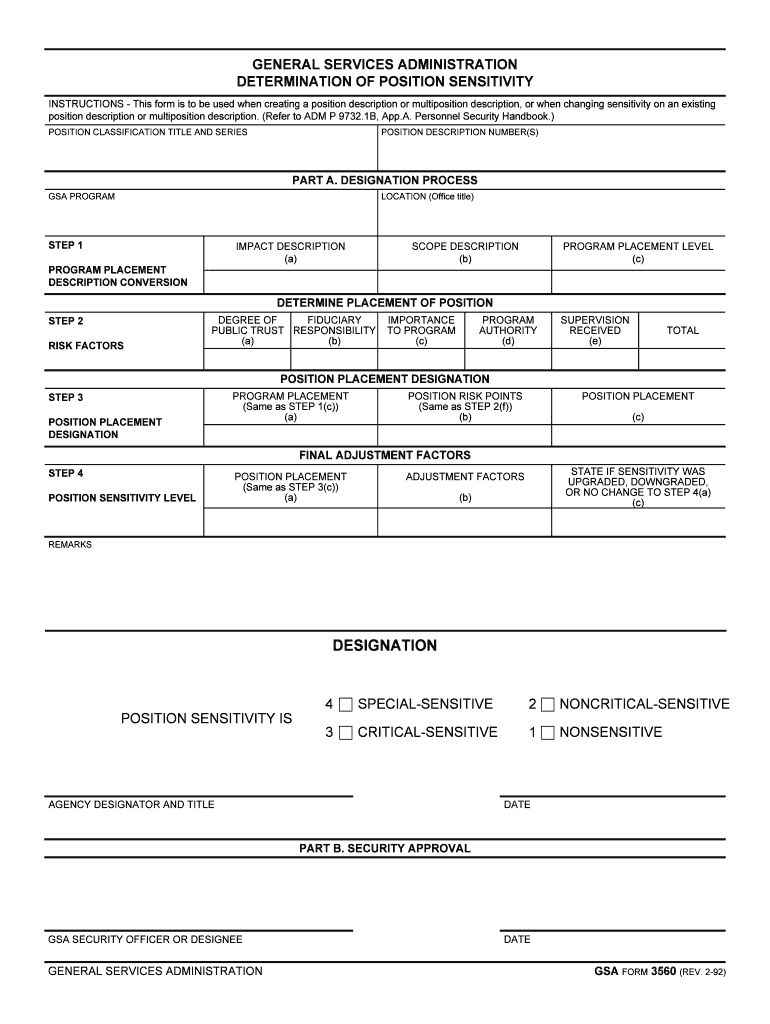
The "Position Designation Tool - OPM" is a critical tool utilized by the United States federal government, specifically designed to help agencies systematically determine the sensitivity and risk levels associated with specific positions within the organization. This tool is essential for ensuring that the designation process aligns with federal guidelines and security requirements. It provides a structured approach to assess the impact and risk factors of positions, which aids in maintaining the integrity and security of federal operations.
- General Services Administration (GSA): The tool outlines procedures used by federal bodies like the GSA to assess positions.
- Sensitivity Levels: Determines how a position affects national security, agency operations, and data protection.
- Risk Assessment: Evaluates potential risks tied to specific job roles.
How to Use the Position Designation Tool - OPM
Utilizing the "Position Designation Tool - OPM" involves a series of systematic steps to effectively evaluate job roles. This ensures that the role designations meet established risk and sensitivity criteria set forth by federal governance.
- Identify the Position: Start by clearly defining the job role and its responsibilities.
- Assess Risk Factors: Evaluate potential risks related to the position’s impact on agency functions and national security.
- Determine Security Requirements: Identify the necessary security levels or clearances required for the position.
- Finalize the Designation: Apply the findings to formally designate the positions based on risk and sensitivity.
- Role Clarity: Ensures positions are delineated correctly for proper risk assessment.
- Documentation: Maintain records of the evaluation for compliance and future reference.
Steps to Complete the Position Designation Tool - OPM
Completing the Position Designation Tool requires a thorough approach, ensuring meticulous evaluation of each job position. The completion process is designed for accuracy and compliance with federal standards.
- Gather Position Information: Collect comprehensive data about the position, including duties and responsibilities.
- Evaluate Program Placement: Review the position’s place within the agency’s operational structure.
- Analyze Fiduciary Responsibilities: Understand any fiscal duties associated with the role.
- Assess Supervision Levels: Determine the extent of oversight the position requires or provides.
- Input Validation: Ensure all data inputs are correct for valid results.
- Cross-Verification: Cross-check findings with federal guidelines to ensure compliance.
Key Elements of the Position Designation Tool - OPM
Understanding the key elements within the Position Designation Tool is vital for robust and compliant evaluation. Each component plays a significant role in accurately designating job positions.
-
Risk Management Framework: Outlines the principles of evaluating risk tied to federal positions.
-
Security Protocols: Details the protective measures and clearance levels needed.
-
Position Description: Comprehensive detailing of job roles to form the basis of analysis.
-
Evaluation Metrics: Specific criteria used to assess position sensitivity.
-
Regulatory Compliance: Adherence to OPM and federal standards for position assessments.
Legal Use of the Position Designation Tool - OPM
Legal compliance is a fundamental aspect of utilizing the Position Designation Tool. It guides agencies to operate within legal boundaries while designating job positions.
-
Federal Mandates: Ensure that the use of the tool aligns with federal policies and statutes.
-
Confidentiality Agreements: Protect sensitive data evaluated during the designation process.
-
Audit Trails: Maintain transactional records for any audits or legal reviews.
-
Legal Precedents: Previous legal decisions or policies impacting job designation.
-
Adherence to Guidelines: Following OPM guidelines to avoid legal complications.
Who Typically Uses the Position Designation Tool - OPM
The primary users of the Position Designation Tool are federal agency officials responsible for human resources and personnel security. These users employ the tool to align position sensitivity with the organization’s operational needs.
-
HR Personnel: Ensure positions meet security and sensitivity requirements.
-
Security Officials: Validate the appropriate clearance levels are assigned.
-
Federal Managers: Align job roles with the agency’s strategic goals.
-
Risk Officers: Evaluate the potential risks within agency positions.
-
Compliance Officers: Ensure adherence to federal designation standards.


Required Documents
To effectively use the Position Designation Tool, specific documentation is necessary to ensure the process is thorough and adheres to federal guidelines.
-
Position Descriptions: Detailed documentation of job roles and responsibilities.
-
Organizational Charts: Visual representations of the agency’s structure.
-
Security Clearance Records: History of the position’s required clearances.
-
Risk Assessment Reports: Documents outlining assessed risks for positions.
-
Program Placement Reviews: Records of how positions fit within program structures.
Examples of Using the Position Designation Tool - OPM
Real-world usage of the Position Designation Tool illustrates its practical application and benefits in streamlining federal job designation processes.
-
Risk Reduction in Sensitive Roles: A high-security clearance position was re-evaluated and adjusted to align with current threat levels.
-
Optimization of Resources: Roles requiring excessive supervision were successfully reduced, optimizing agency resources.
-
Compliance with Evolving Standards: An agency updated position designations in response to new OPM guidelines, ensuring continued compliance.
-
Enhancements in Data Protection: Positions impacting data integrity were reevaluated for stricter security compliance.
-
Agency-wide Implementation: An entire department adopted the tool, resulting in consistent and compliant designations across all positions.




