Disposition Schedule 5Records Management 2026

Get Form
Disposition Schedule 5Records Management Preview on Page 1

Here's how it works

01. Edit your form online
Type text, add images, blackout confidential details, add comments, highlights and more.

02. Sign it in a few clicks
Draw your signature, type it, upload its image, or use your mobile device as a signature pad.

03. Share your form with others
Send it via email, link, or fax. You can also download it, export it or print it out.

Definition and Meaning

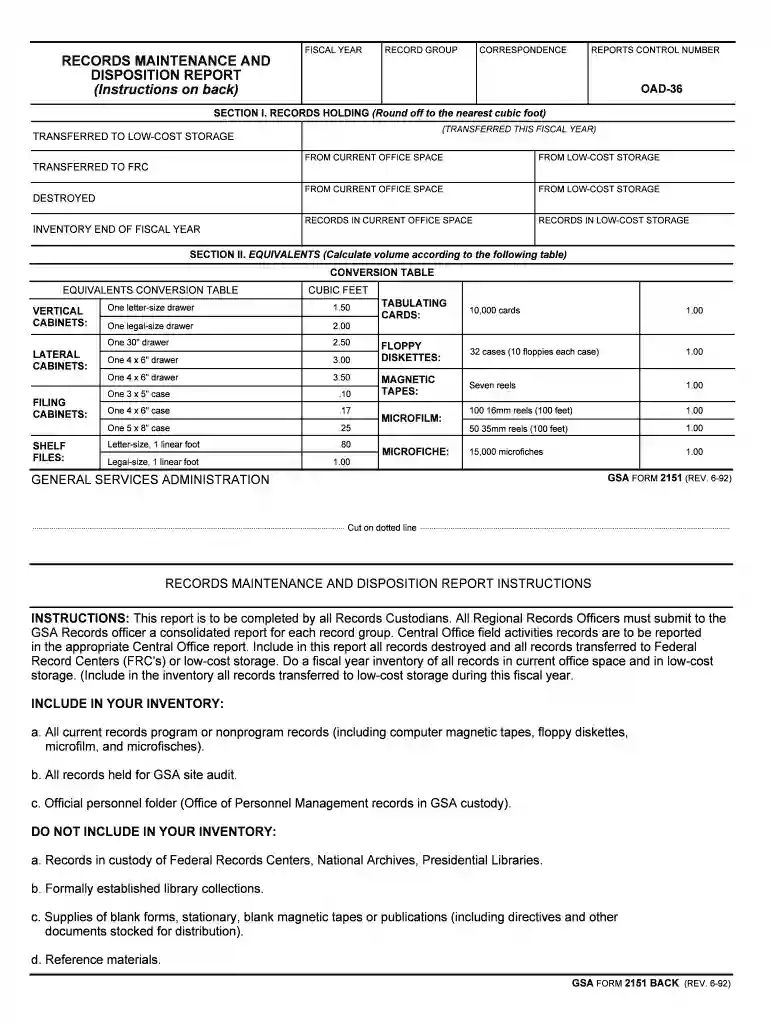
The Disposition Schedule 5Records Management is a comprehensive guide utilized by Records Custodians to manage organizational records. It outlines procedures for maintaining, transferring, and disposing of records. This schedule ensures that records are handled in compliance with legal and organizational requirements, enhancing both efficiency and security within the records management system. By adhering to this schedule, organizations can ensure that their records lifecycle is managed systematically from creation and maintenance through to eventual disposition.

How to Use the Disposition Schedule 5Records Management

Users begin by familiarizing themselves with the specific guidelines detailed in the schedule, which encompass procedures for transferring records to storage facilities, destruction protocols, and necessary record inventories. Steps include:

  1. Review the schedule to understand the categories and retention periods for different types of records.
  2. Identify records that require action based on their age, type, and current storage conditions.
  3. Follow the outlined procedures for either transferring records to low-cost storage facilities or destroying records that are no longer needed.
  4. Document all actions taken on records according to the reporting requirements stipulated in the schedule.

Key Elements of the Disposition Schedule 5Records Management

This schedule is composed of various critical components, including:

  • Retention Periods: Specifies how long each type of record must be maintained.
  • Transfer Procedures: Details the process for moving records to permanent storage facilities.
  • Destruction Protocols: Outlines safe and legal methods for destroying records that have reached the end of their lifecycle.
  • Inventory Requirements: Provides guidelines for conducting a thorough inventory of all records to ensure accuracy in management decisions.

Steps to Complete the Disposition Schedule 5Records Management

Completing this schedule involves several steps that ensure thorough compliance and accurate reporting:

  1. Inventory Records: Conduct an initial assessment of current records, ensuring all necessary documents are accounted for.
  2. Categorize Records: Classify records based on retention requirements, confidentiality level, and organizational needs.
  3. Schedule Actions: Plan and document specific actions—transfer, retain, or destroy—based on schedule guidelines.
  4. Execute Actions: Implement the scheduled actions, ensuring that any destruction or transfer is carried out in compliance with legal standards.
  5. Document Changes: Update records to reflect actions taken and maintain documentation as evidence of compliance.

Who Typically Uses the Disposition Schedule 5Records Management

This schedule is designed for use by Records Custodians within organizations responsible for maintaining and disposing of records. It is particularly relevant for:


  • Government Agencies: Required to adhere to regulatory compliance in record-keeping and management.
  • Corporations: Ensures internal consistency in managing sensitive business information.
  • Legal Departments: Maintains legal records in accordance with statutory requirements.
  • Non-Profit Organizations: Manages donor and operational records efficiently.
decoration image ratings of Dochub

Legal Use of the Disposition Schedule 5Records Management

Legally, the schedule provides a framework for compliant record-keeping practices by ensuring:

  • Adherence to Statutory Requirements: Aligning record management practices with local, state, and federal regulations.
  • Data Protection and Privacy Compliance: Securing sensitive information throughout its lifecycle.
  • Evidence of Compliance: Providing documented proof of actions taken in line with regulatory obligations for potential audits.

State-Specific Rules for the Disposition Schedule 5Records Management

While the general principles of records management are consistent, different states may have their specific rules or exceptions:

  • California: Detailed requirements on digital records and data privacy.
  • New York: Specific guidelines for financial records retention periods.
  • Texas: Emphasis on electronic records and filing systems.

Organizations must refer to state-specific guidelines to ensure compliance.

Examples of Using the Disposition Schedule 5Records Management

To illustrate its application:

  • A government office uses the schedule to manage court documents, determining which can be archived at a Federal Record Center after their retention period.
  • A corporation applies the schedule to financial records, ensuring that data older than seven years is securely destroyed in compliance with regulations.
  • A non-profit converts paper donor records to digital formats for low-cost storage, adhering to guidelines on data protection and retention.

Required Documents

For effective use of the schedule, the following documents are essential:

  • Record Inventory Logs: Provide an overview of all records.
  • Transfer and Destruction Forms: Ensure legal compliance when moving or disposing of records.
  • Retention Schedules: Define specific retention periods by record type.

Documenting these components is crucial in maintaining an audit trail and ensuring compliance with records management protocols.

be ready to get more

Complete this form in 5 minutes or less

Get form

Got questions?

We have answers to the most popular questions from our customers. If you can't find an answer to your question, please contact us.
Contact us
What is a General Records Disposition Schedule? A General Records Disposition Schedule prescribes the disposition of public records common to all government offices.
A records disposition program provides for the effective and efficient management of records no longer needed in office space to conduct current business.
By law, all federal records must be covered by a NARA-approved records schedule. Agencies must not destroy records until they are approved for destruction on an approved records schedule.
1225.10 What Federal records must be scheduled? All Federal records, including those created or maintained for the Government by a contractor, must be covered by a NARA-approved agency disposition authority, SF 115, Request for Records Disposition Authority, or the NARA General Records Schedules.
Records Disposition Schedules documents the major records series (including electronic records) related to the activities of each office, identifies temporary and permanent records, and provides mandatory instructions for the retention and disposition (retirement or destruction) of each records series based on their

Security and compliance

At DocHub, your data security is our priority. We follow HIPAA, SOC2, GDPR, and other standards, so you can work on your documents with confidence.

Learn more
ccpa2
pci-dss
gdpr-compliance
hipaa
soc-compliance

People also ask

A document retention schedule acts as an organizations legal road map for retaining and destroying records; in other words, it clearly defines what documents, both digital and paper formats, need to be maintained and for how long.

Related links