Definition and Meaning of QA Surveillance Control
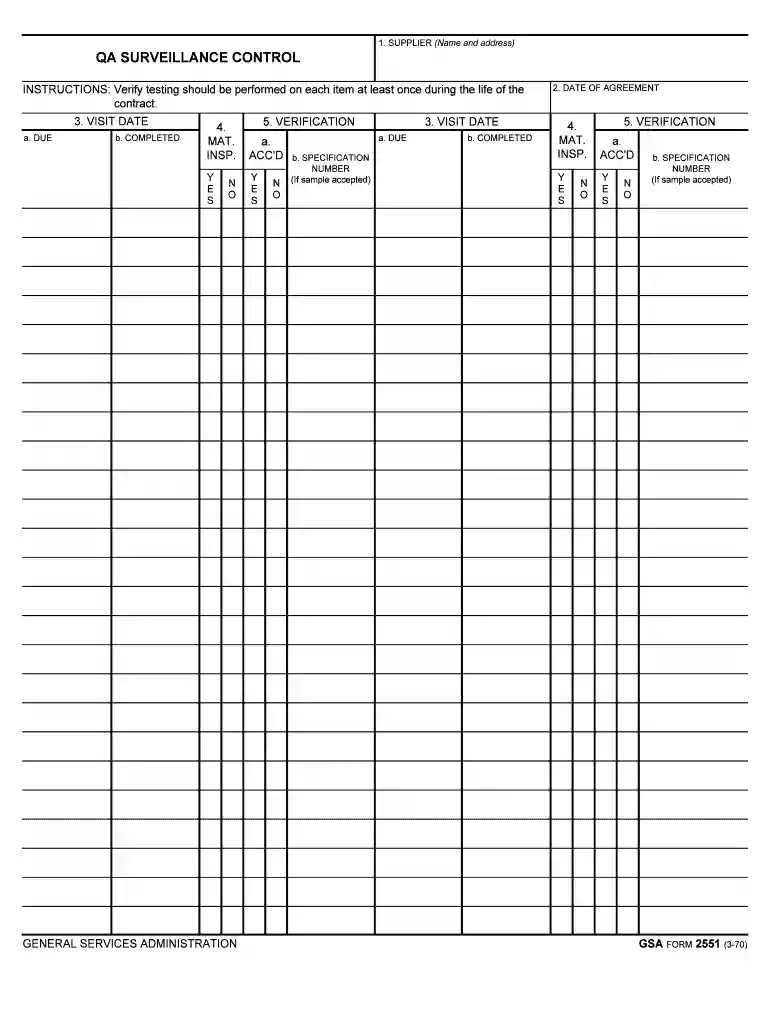
QA Surveillance Control refers to the systematic process utilized by organizations to monitor, verify, and ensure the quality of their suppliers’ outputs and procedures. This control mechanism serves to validate that products or services meet predefined standards throughout the production cycle. It often involves testing each item at least once during a contract’s duration, verifying inspections, and recording acceptance statuses to ensure compliance and quality assurance.
How to Use the QA Surveillance Control
To effectively employ QA Surveillance Control, organizations should:
- Identify Objectives: Clearly define the quality standards and benchmarks that need to be met.
- Select Suppliers: Evaluate and choose suppliers that align with organizational quality expectations.
- Plan Inspections: Schedule regular inspections and audits to review supplier processes and output quality.
- Record Findings: Document findings meticulously, including visit dates and inspection results.
- Feedback and Improvement: Provide feedback to suppliers on areas needing improvement and track corrective actions.
Steps to Complete the QA Surveillance Control
Completing the QA Surveillance Control involves a multi-step process:
- Initiate a Contract: Develop a contract that includes quality requirements agreed upon by both parties.
- Conduct Initial Assessment: Evaluate the supplier's capability to meet quality standards through initial audits.
- Set Testing Frequency: Define how frequently items will be tested throughout the contract term.
- Perform Inspections: Implement routine inspections to verify compliance with quality standards.
- Review and Record: Thoroughly review inspection results, emphasizing any non-compliance issues and acceptance status.
- Execute Corrective Actions: When discrepancies are found, initiate corrective actions and monitor their implementation.
Why QA Surveillance Control is Important
QA Surveillance Control is crucial for ensuring:
- Product Quality: Guarantees that all products meet or exceed quality expectations, reducing defects and recalls.
- Compliance: Assures adherence to contractual and regulatory standards.
- Cost Efficiency: Reduces waste by identifying issues early in the production process.
- Supplier Relationship Management: Fosters better communication and trust between organizations and their suppliers through consistent engagement and feedback.
Key Elements of the QA Surveillance Control
Several fundamental elements are integral to an effective QA Surveillance Control system:
- Testing and Inspection: Regularly scheduled tests and inspections to validate supplier output.
- Documentation: Comprehensive logging of inspection results, visit dates, and resolution of any discrepancies.
- Feedback Mechanism: Structured feedback loops for continuous supplier performance improvement.
- Compliance Checks: Ensuring all supplier processes meet relevant regulatory standards and quality controls.
Legal Use of the QA Surveillance Control
The legal use of QA Surveillance Control ensures that organizations and their suppliers are abiding by applicable laws and regulations:
- Contractual Obligations: Legally binding agreements should detail quality expectations and assessment procedures.
- Industry Standards: Surveillance controls should align with industry-specific legal requirements to mitigate risks.
- Data Privacy: All quality documentation and data collection must comply with data protection regulations, ensuring supplier confidentiality.
Examples of Using the QA Surveillance Control
Practical examples of employing QA Surveillance Control include:
- Automotive Industry: Implementing rigorous QA surveillance to ensure vehicle parts meet safety standards.
- Food and Beverage Industry: Conducting regular quality checks to adhere to food safety regulations.
- Technology Firms: Utilizing surveillance controls to oversee the quality of components supplied by technology vendors.
Important Terms Related to QA Surveillance Control
Several terms are closely related to QA Surveillance Control, including:
- Non-Conformance: Deviation from defined standards or specifications.
- Audit Trail: Documented records tracing the history of the quality control process.
- Quality Benchmarking: Setting standard performance measures to evaluate quality.
- Corrective Action: Steps taken to rectify identified quality issues and prevent recurrence.
State-Specific Rules for QA Surveillance Control
While the QA Surveillance Control system is broadly applicable, some states may have specific requirements:
- California: May require additional documentation for environmental compliance tracking.
- Texas: Might focus on specific safety audits depending on the industry segment.
- Florida: Could necessitate enhanced supplier quality reporting in certain regulated industries.
By understanding and implementing QA Surveillance Control effectively, organizations can safeguard against quality lapses, promote supplier transparency, and enhance their overall operational efficiency.