01. Edit your form online
Type text, add images, blackout confidential details, add comments, highlights and more.

Type text, add images, blackout confidential details, add comments, highlights and more.

Draw your signature, type it, upload its image, or use your mobile device as a signature pad.

Send it via email, link, or fax. You can also download it, export it or print it out.
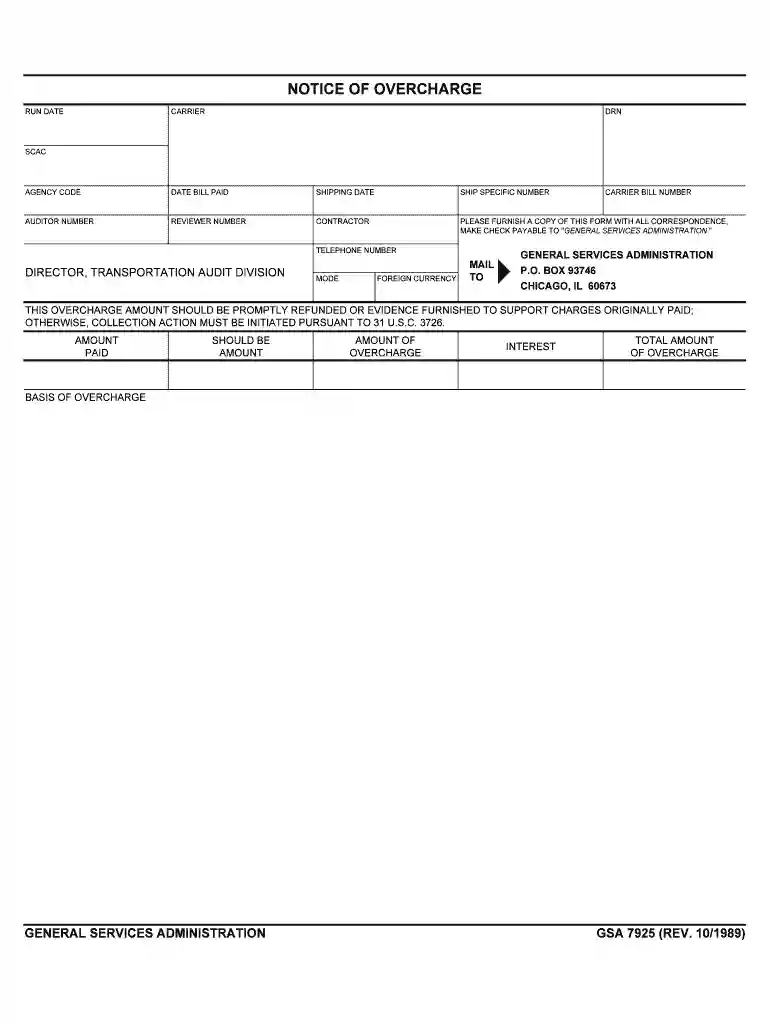
The "OverCharge Claims - UPS Freight" form is a document used primarily by businesses to address discrepancies in freight charges billed by UPS. This form is typically employed when a company believes an overcharge has occurred in their UPS freight shipment billing. Overcharge claims are essential tools that allow freight customers to seek refunds or adjustments on incorrect billing amounts, thereby ensuring accurate financial transactions between UPS and its clients.
The primary purpose of the overcharge claim form is to provide a structured way for customers to dispute and potentially recover overcharged amounts. By using the standardized process provided by UPS, businesses can efficiently address billing errors without unnecessary delays or bureaucratic hindrances.
Freight transactions involve significant volumes of goods and financial resources. Therefore, ensuring accurate billing is crucial for maintaining trust and financial stability. This form acts as a safeguard, offering a way to manage and correct overcharges systematically.
Gather Shipping Documentation: Before initiating a claim, collect all relevant documents such as original invoices, proof of delivery, and any communication with UPS regarding the shipment in question.
Complete the Claim Form: Fill out the "OverCharge Claims - UPS Freight" form with details such as shipment reference numbers, dates, and specific charges being disputed. Ensure all information is accurate to avoid delays in processing.
Attach Supporting Documents: Include copies of all supporting documents that validate the claim. This could involve invoices, receipts, or correspondences that corroborate the overcharge.
Submit the Form: Submit the claim form through the preferred channel (online, mail, or in-person) as specified by UPS. Each method may have different procedures, so it's vital to adhere to the guidelines provided by UPS.
Track the Status: Keep track of the claim status through UPS's tracking system or by contacting customer service. This helps ensure the claim is being processed and allows for timely follow-up if necessary.
For instance, if a business shipped goods using UPS Freight and was billed for expedited services that were not rendered, the business could file an overcharge claim by detailing the discrepancy, showing original service agreements, and demonstrating the service level differences in supporting documents.
Start with Shipment Details: Enter the shipment's tracking number, date of shipment, and other pertinent identifiers to ensure the claim is correctly associated with the original transaction.
Identify the Overcharge: Clearly state the charges in question, including the amount to be claimed, and provide a detailed description of the overcharge without omitting any relevant information.
Provide Evidence: Attach all evidence, such as the original invoice and proof of payment, to support the claim. Include any communication with UPS that might provide context to the dispute.
Review for Accuracy: Before submission, review all entries and document attachments to ensure accuracy and completeness.
Submit as Instructed: Follow UPS's instructions for submission, whether digitally or via mail, ensuring all parts of the form are signed and dated.
In cases where multiple shipments are involved, ensure each overcharge claim is documented separately. For discrepancies involving rare or complex shipping routes, additional documentation may be necessary to substantiate the claim.
Complete and precise information ensures that the claim is processed without unnecessary delays. Discrepancies or omissions can result in the claim being denied or returned for additional information.
Ensure all documents are legible and duplicates are retained for personal records. Organizing documents in a logical sequence matching the claim form’s sections can facilitate quicker review and processing by UPS.
Each method has its own set of advantages and potential drawbacks. While online submission is typically the quickest, it requires digital access and capabilities. Mail and in-person submissions provide tangible records but may take longer to process.
Financial Loss: Ignoring overcharges can lead to cumulative financial discrepancies, affecting cash flow and profit margins.
Business Reputation: Regular inattention to billing inaccuracies may harm business relationships with logistics providers.
While there are generally no legal penalties directly tied to ignoring overcharges, failure to address inaccuracies can lead to financial audits and scrutiny of business practices. Maintaining accurate financial records is both important and prudent to fulfill regulatory obligations.
The "OverCharge Claims - UPS Freight" form is provided and managed by UPS, and it is distributed through their logistics and customer service channels.
Using the correct form issued by UPS ensures the claims process aligns with UPS’s procedures, which can streamline processing times and increase the chances of a favorable outcome.
We've got more versions of the OverCharge Claims - UPS Freight form. Select the right OverCharge Claims - UPS Freight version from the list and start editing it straight away!
At DocHub, your data security is our priority. We follow HIPAA, SOC2, GDPR, and other standards, so you can work on your documents with confidence.