01. Edit your form online
Type text, add images, blackout confidential details, add comments, highlights and more.

Type text, add images, blackout confidential details, add comments, highlights and more.

Draw your signature, type it, upload its image, or use your mobile device as a signature pad.

Send it via email, link, or fax. You can also download it, export it or print it out.
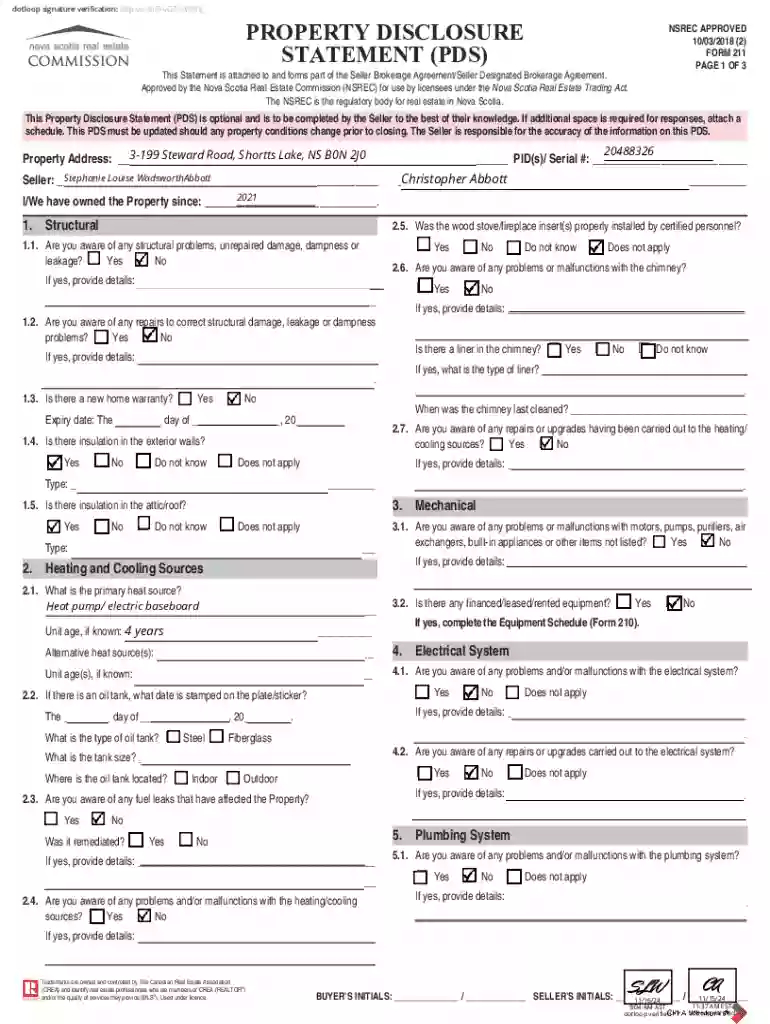
The Property Disclosure Statement (PDS) is an essential real estate document utilized in the United States to inform potential buyers about the condition of a property. This statement is typically required by real estate commissions, such as the Nova Scotia Real Estate Commission, and it serves as a formal declaration from sellers about known property conditions or defects. The PDS covers a wide array of property aspects, including structural integrity, plumbing, electrical systems, and environmental concerns. Sellers are legally obligated to provide accurate and truthful information on the form, updating it if circumstances change before the sale is closed. The primary purpose of the PDS is to empower buyers to make informed decisions by providing transparency during the property transaction process.
The Property Disclosure Statement comprises several critical components designed to cover various aspects of a property's condition. These elements include:
Structural Integrity: Details regarding the foundation, walls, and roofing systems, ensuring buyers are aware of any physical defects or repairs.
Mechanical Systems: Information on heating, cooling, and ventilation systems, which are crucial for assessing a property's livability and comfort.
Plumbing and Electrical Systems: Disclosure of any known issues with the water supply, sewerage systems, and electrical wiring within the property.
Environmental Concerns: Addresses potential hazards like asbestos, lead paint, or radon gas that could affect the property's safety.
Zoning Compliance: Whether the property complies with current zoning regulations, which can impact how the property can be used or modified.
Completing the PDS accurately is crucial for compliance and transparency in a property transaction. Follow these steps for successful completion:
Review the Form: Understand each section of the PDS to ensure comprehensive knowledge of what needs to be disclosed.
Gather Information: Collect details about the property's systems, previous repairs, and any known issues from maintenance records or inspections.
Fill Out the Form: Complete each section of the PDS honestly, providing clear, concise, and accurate information concerning the property.
Consult Professionals: If uncertain about certain aspects, consult with property professionals or inspectors to provide detailed insights.
Update as Necessary: If conditions change or new issues arise before the sale, update the PDS promptly to reflect these changes.
In the United States, the legal framework surrounding the PDS enforces certain obligations on sellers. These documents are legally binding and help prevent disputes by documenting all known property defects. Failure to disclose pertinent information can lead to legal ramifications, including the potential cancellation of a sale or lawsuits for misrepresentation. The PDS must be completed and signed by the seller before being provided to potential buyers, typically during the initial stages of the buying process. The document helps establish a transparent transaction process, minimizing the risks of post-sale disputes or claims.
Different states may have unique regulations and requirements concerning the Property Disclosure Statement. Some states have standardized forms that must be used during property transactions, while others may offer flexibility in documentation format. Furthermore, states might differ in terms of what specific information must be disclosed and the legal consequences of failing to complete the PDS according to state guidelines. Understanding these state-specific variations is crucial for compliance and ensuring a smooth transaction. Consulting with a local real estate attorney or agent can provide clarity on these regional differences.
Sellers are required to disclose any known issues that could significantly affect a property's value or desirability. This includes latent defects not easily identifiable during a casual property inspection, such as foundation problems or water damage that has been temporarily covered up. The PDS mandates full disclosure of any repairs undertaken during ownership, as well as any ongoing issues that might affect future property use. Sellers are also required to disclose any legal encumbrances, such as easements or liens, which might impact the buyer's plans for the property.
The PDS plays a critical role in real estate transactions for several reasons:
Transparency: It creates a transparent environment where buyers and sellers have open access to crucial information.
Risk Mitigation: Helps in mitigating risks associated with acquiring a property by bringing potential issues to light.
Legal Protection: Provides legal protection to sellers by documenting their disclosure efforts, which can be a defense in case of future disputes.
Informed Decision-Making: Equips buyers with the knowledge to make informed decisions, potentially preventing purchasing regrets.
Various scenarios illustrate the practical application of the PDS:
Selling an Older Home: A seller of a 1920s-era house uses the PDS to disclose original electrical wiring and past termite treatments.
Condo Transactions: A condo owner provides a PDS detailing shared property expenses, recent common area repairs, and any pending assessments.
Environmental Disclosures: A property situated near an industrial area includes disclosures about any past chemical spills or mitigation measures taken.
Each of these examples highlights the necessity and utility of a thorough and accurate PDS in ensuring a successful property transaction.
We've got more versions of the Property Disclosure Statement (pds) form. Select the right Property Disclosure Statement (pds) version from the list and start editing it straight away!
At DocHub, your data security is our priority. We follow HIPAA, SOC2, GDPR, and other standards, so you can work on your documents with confidence.