01. Edit your form online
Type text, add images, blackout confidential details, add comments, highlights and more.

Type text, add images, blackout confidential details, add comments, highlights and more.

Draw your signature, type it, upload its image, or use your mobile device as a signature pad.

Send it via email, link, or fax. You can also download it, export it or print it out.
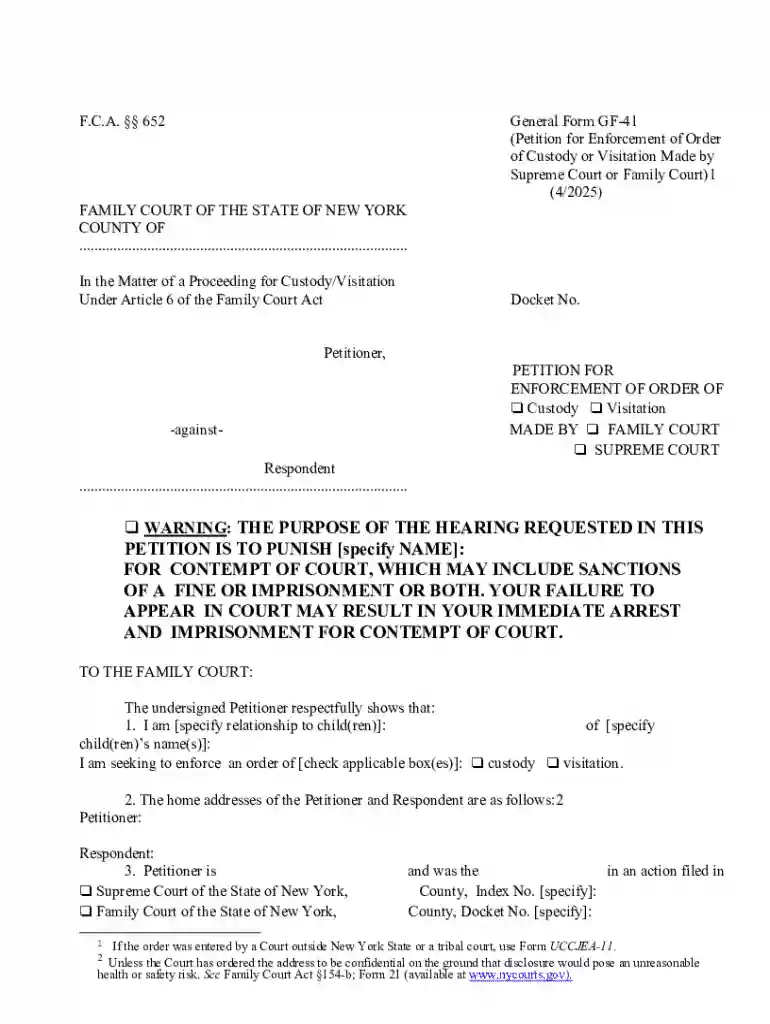
A "Pet Enforcement Order made by another court" is a legal directive issued by a court different from the one that originally made the custody or visitation decision. This order compels compliance with the terms established in the original order, typically addressing the enforcement of custody or visitation arrangements. Understanding this concept is crucial for ensuring that all parties adhere to legal responsibilities concerning the care and visitation of minors, which might involve multiple jurisdictions. For example, if a parent relocates with a child and custody terms are not honored, the involved parties can request a Pet Enforcement Order from a court in a new location to uphold the original order's terms.
Utilizing a Pet Enforcement Order effectively involves several steps. First, identify the specific terms of the original custody or visitation order that are not being honored. You should gather evidence of non-compliance, such as missed visitation schedules or written communications that contradict the agreed terms. Present this to the court when requesting enforcement. The court then reviews the evidence and decides whether to issue an enforcement order. This move can incentivize compliance from the non-adhering party, posing potential legal repercussions for continued non-compliance. Importantly, documentation and clear communication with the court are vital in these proceedings.
Completing a Pet Enforcement Order requires adherence to procedural guidelines. Begin by obtaining the proper forms from the court's website or office. Fill out these forms comprehensively, providing all necessary details such as the names of both parties involved, the original court order, and specific violations. Supporting documentation should be well-organized, including correspondence or third-party affidavits. Finally, submit these documents to the appropriate court clerk. Be mindful of the court's deadlines for filing and any required fees. Regular follow-up with the court can ensure timely processing of your petition.
Several critical elements underpin the Pet Enforcement Order. These include:
These elements ensure that the court has all necessary information to make an informed decision.
The enforcement order's legal application is vital for preserving the integrity of custody or visitation arrangements, particularly when individuals move between states within the United States. It ensures that the rights of both parents and children are protected. This legal tool is essential when one party is not adhering to original terms, posing potential risks to the child's well-being or the custodial parent's rights. Courts consider the original order's terms and the jurisdictional reach to ensure proper enforcement.
Pet Enforcement Orders are typically used by individuals seeking to enforce court-decided custody or visitation arrangements. Common users include:
Understanding who can petition for enforcement allows the relevant parties to utilize this legal process effectively.


Each state may have unique statutes governing the enforcement of custodial arrangements, reflecting differences in jurisdictional powers and legal interpretations. For instance, some states may prioritize mediation before issuing enforcement orders, while others might offer more direct approaches. Knowledge of state-specific rules, like any pre-filing requirements or exemptions, can significantly impact the order's execution. Parties involved should consult state statutes or seek professional legal advice to ensure compliance with local laws when pursuing an enforcement order.
Timing is crucial in the enforcement process. Petitioners must be aware of deadlines for filing their petition with the court to avoid missing crucial dates which could delay enforcement. Courts generally have set schedules for processing such petitions, and it's important to comply with these timelines to expedite the resolution of disputes. Keeping a clear calendar with all court-related deadlines and notes about required appearance or document submissions is advisable.
Understanding and leveraging these aspects of the Pet Enforcement Order process can ensure the execution of lawful custody and visitation terms, ultimately safeguarding the well-being of the children involved and maintaining legal compliance across jurisdictions.
We've got more versions of the Pet Enforcement Order made by another court form. Select the right Pet Enforcement Order made by another court version from the list and start editing it straight away!
At DocHub, your data security is our priority. We follow HIPAA, SOC2, GDPR, and other standards, so you can work on your documents with confidence.