






Definition & Meaning
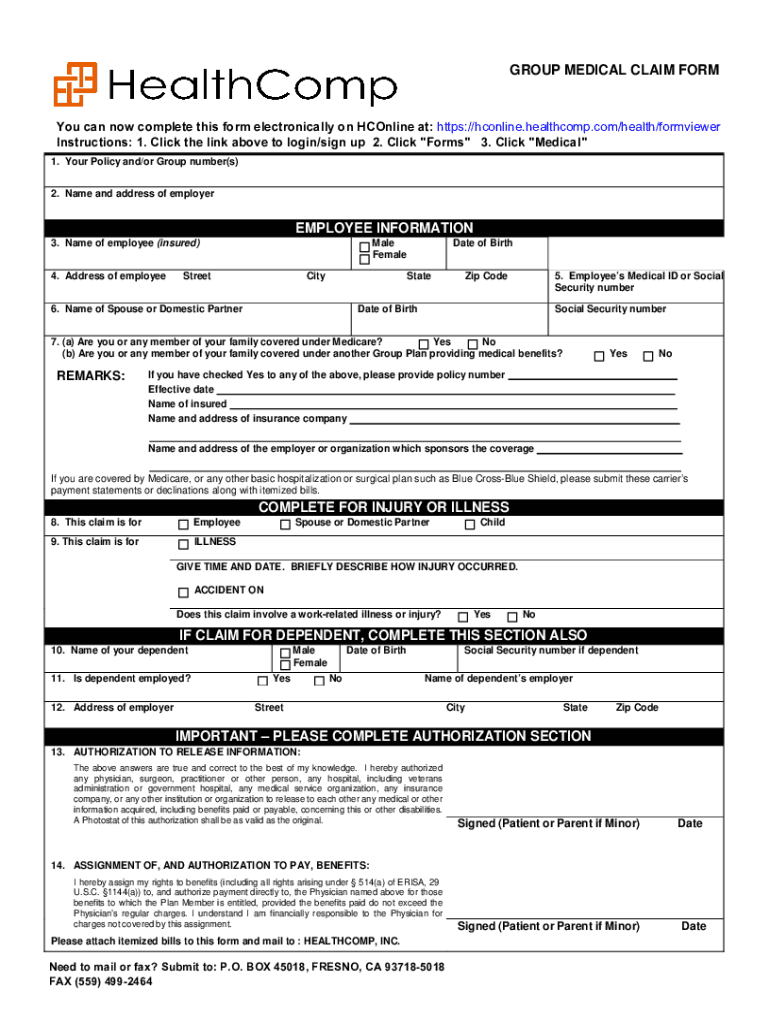
The Group Medical Claim Form is a standardized document that enables employees to submit claims for medical benefits electronically. It facilitates the process of requesting reimbursements for medical expenses incurred by the employee or covered dependents. Typically, it requires details such as personal and insurance information, conditions relating to the illness or injury, and an authorization for the release of medical information. This form streamlines claims submission, ensuring a consistent approach to medical benefit requests. The structure of the form aims to capture all necessary details to process claims efficiently and support the administration of group health plans.
How to Use the Group Medical Claim Form: Easy to Modify and Download
-
Access and Download: Access the form through platforms like HCOnline, or download it from trusted sources that provide editable formats. This flexibility aids users in filling out the form digitally or printing it for manual completion.
-
Fill Out Personal Information: Enter the required personal details, including your full name, employee ID, and contact information. Ensure accuracy to prevent delays in processing your claim.
-
Provide Insurance Details: Supply all necessary insurance information, such as policy number and group health plan details. This data verifies your coverage and eligibility for the claim.
-
Describe the Medical Condition: Clearly outline the medical condition being claimed, detailing how it occurred, particularly if it's related to an injury or illness.
-
Include Itemized Bills: Attach or reference all itemized bills from healthcare providers to support your claim. Ensure that they align with the provided details for validation.
-
Authorization and Signature: Authorize the release of medical information and provide any necessary signatures. This step is crucial for compliance with privacy regulations and facilitates communication between healthcare providers and insurers.
-
Submission: Submit the completed form through the designated channels — electronically via platforms like HCOnline, or through traditional mail methods, as directed by your health plan.
Steps to Complete the Group Medical Claim Form
-
Gather Necessary Documents: Before beginning, collect all relevant documentation, including itemized medical bills, insurance policy information, and personal identification paperwork.
-
Review the Instructions: Carefully read any instructions provided with the form to understand the fields you need to complete and the order in which information should be provided.
-
Input Personal and Insurance Information: As you fill out the form, cross-reference your inputs with your insurance documents to ensure accuracy.
-
Detail the Medical Situation: Write a concise explanation of the medical event, correlating with any attached documents, to provide a clear narrative for review by the insurer.
-
Cross-Verify Entries: Double-check all entered data for accuracy. Confirm that names, numbers, and details match with connected documents.
-
Sign and Date: Complete the form by signing any required sections and providing the date of submission.
-
Submit and Track: Once submitted, keep track of your claim status through the platform used, whether it is HCOnline or another method. This tracking ensures that any issues can be promptly addressed.
Who Typically Uses the Group Medical Claim Form: Easy to Modify and Download
-
Employees of Corporations with Group Health Plans: These individuals use the form to claim reimbursement for medical expenses covered under their employer-sponsored health insurance plans.
-
Family Members and Dependents: Dependents of employees who are included in family health insurance plans may be eligible to use this form, provided they appear as covered recipients under the policy.
-
HR Departments: Human Resource professionals guide employees in completing these forms properly and managing submissions efficiently.
-
Insurance Providers: These entities assist members in understanding how to complete the form adequately to ensure timely and accurate processing of claims.


Key Elements of the Group Medical Claim Form: Easy to Modify and Download
-
Detailed Personal Information Section: Captures the claimant's identifying data, essential for validating eligibility and linking the claim to the correct individual.
-
Insurance Policy Details: Includes policy numbers and coverage specifics, ensuring that all claims align with the stipulated benefits.
-
Medical Condition Description: A dedicated section for detailing the nature of the medical issue aligns submitted claims with corresponding medical treatments and expenses.
-
Authorization Section: Allows the release of medical information, facilitating transparent communication between medical facilities and insurers while conforming to legal standards.
-
Itemized Billing Section: Ensures all claims are substantiated with a detailed list of charges from healthcare providers, aiding efficient processing and reimbursement.
Important Terms Related to Group Medical Claim Form
-
Policy Number: A unique identifier assigned by the insurer to denote specific health coverage under an employee’s plan, required for claim validation.
-
Deductible: A specific amount that the employee needs to pay out-of-pocket before the insurance coverage begins to cover expenses.
-
Co-Pay: The fixed amount paid by the insured for specific medical services, highlighted in claims to detail cost-sharing requirements.
-
Network Providers: Healthcare providers listed under the employee's plan that may offer services at reduced costs and influence the coverage eligibility.
-
Pre-Authorization: Approval from the insurance company for certain medical services, necessary for claims involving specialized treatments or high expense procedures.
Legal Use of the Group Medical Claim Form: Easy to Modify and Download
-
Compliance with Health Privacy Laws: The form must be completed and submitted in line with privacy regulations like HIPAA to ensure sensitive medical information is protected.
-
Authorization for Information Release: Insists on proper consent for the sharing of medical data with insurers and necessary third parties involved in claim processing.
-
Legally Binding Submission: Submitting the form implies agreement to the terms and conditions set by the insurance policy, highlighting responsibility for providing accurate and truthful information.
-
Disputes and Appeals: Establishes a formal pathway for resolving disagreements over claim decisions, facilitating legal recourse and detailed review procedures if needed.
Form Submission Methods (Online / Mail / In-Person)
-
Online Submission: Utilizing platforms like HCOnline allows for quick and efficient electronic submissions that facilitate tracking and speedier processing.
-
Mail Submission: Traditional paper submission methods require mailing the form to the specified insurer’s address, accompanied by all necessary attachments and copies.
-
In-Person as Directed by Employers: Some workplaces allow or require the submission of completed forms directly to the HR department for initial review and forwarding.
-
Real-Time Submission Confirmation: Electronic submissions often provide immediate confirmation and tracking IDs, enabling users to monitor processing easily.
Examples of Using the Group Medical Claim Form: Easy to Modify and Download
-
Routine Medical Expenses: Employees frequently use this form to claim reimbursements for routine check-ups, preventive screenings, and other standard medical visits covered by their insurance plans.
-
Specialist Treatments: When visiting specialists, employees can attach the required referrals and documentation to substantiate claims for higher-level care.
-
Prescription Medicines: Claims can be filed against prescriptions that fall under the insurance coverage, highlighting co-pays and deductibles within the form.
-
Emergency Care Situations: Offers a reliable method to file claims related to emergency treatments, where quick and effective claim submission is critical for ensuring financial reimbursement.
State-Specific Rules for the Group Medical Claim Form
-
Different Regulations and Coverage Mandates: Variations in state laws might affect what medical services are covered, requiring users to be aware of their state-specific rights and coverage parameters.
-
Impact on Claim Processing Times: Depending on state guidelines, insurance providers may have distinct processing times and claim settlement protocols.
-
State-Required Information: Some states might necessitate additional documentation or details specific to regional health care regulations within claim submissions.
Required Documents
-
Insurance Card Copy: Required to validate identity and policy details.
-
Itemized Medical Bills: Essential for evidencing each charge being claimed.
-
Referral Paperwork (if applicable): Necessary for specialist or non-standard treatment claims.
-
Prescriptions Receipts: Required documentation if pharmacy expenses are included.
-
Consent Forms: For unconscious patients or those represented by guardians, legal consent documents for claim authorization.
-
Employer-Provided Documents: Some claims may necessitate additional forms or attestations provided by the HR department for completion.