






Definition & Meaning
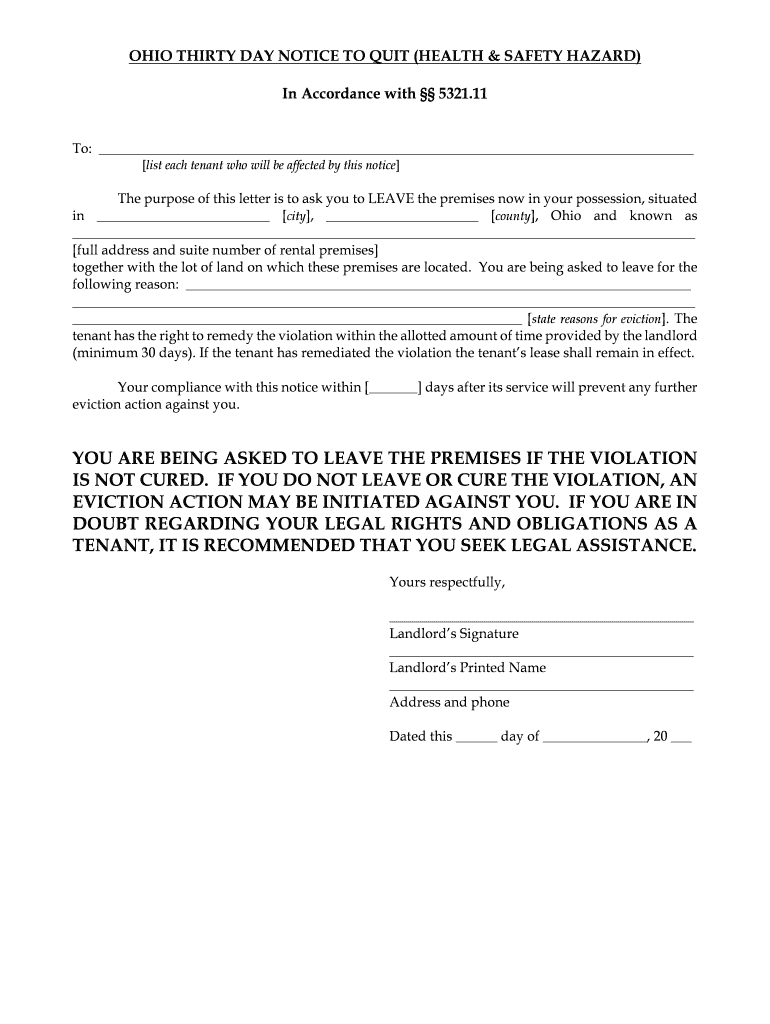
The "Ohio 30-Day Notice to Quit for Health and Safety Hazards" is a legal document used by landlords to notify a tenant that they must vacate the rental property within thirty days due to violations impacting health or safety. This type of notice typically arises when a tenant's actions or neglect create a living environment that no longer meets the required legal standards for health and safety. The document clearly outlines the landlord's concerns and provides the tenant with an opportunity to remedy the situation before eviction proceedings are initiated. In essence, it serves both as a formal warning and a step in the eviction process.
How to Use the Ohio 30-Day Notice to Quit
When using the thirty-day notice, landlords must ensure the document is completed accurately and comprehensively. Here is a step-by-step guide:
- Identify the Tenant and Property: Include the full names of all tenants and the address of the rental property.
- Specify Violations: Clearly state the health or safety violations observed on the premises. This could include issues like unsanitary conditions, illegal activities, or failure to maintain the property.
- Include Remedies: Outline any actions the tenant can take to rectify the situation and avoid eviction.
- Sign and Date: The landlord must sign and date the notice to authenticate it.
- Deliver Notice: Serve the notice to the tenant according to Ohio state laws, which may include direct hand delivery, posting the notice on the door, or mailing.
Steps to Complete the Ohio 30-Day Notice to Quit
Completing the "Ohio 30-Day Notice to Quit" requires precision and adherence to legal requirements to ensure its enforceability:
- Gather Information: Collect necessary details about the tenant, property, and specific violations.
- Draft the Notice: Use a template or legal standard form to ensure all required information is included.
- Detail Violations and Solutions: Clearly articulate what needs to be rectified along with any possible corrective measures.
- Consult with Legal Experts: Although optional, consulting an attorney can provide assurance that the notice meets all legal standards.
- Create Copies: Make copies of the notice for records and future reference in case of legal follow-up.
Who Typically Uses the Ohio 30-Day Notice to Quit
Primarily, landlords or property managers use this notice when dealing with tenants who breach the terms of their rental agreements in ways that affect health and safety. Occasionally, legal representatives acting on behalf of landlords may also issue this notice. The document is used within the legal framework of tenancy agreements and eviction processes, making it a staple in the landlord's toolkit to manage tenant compliance effectively.


State-Specific Rules for the Ohio 30-Day Notice
Ohio has specific regulations governing how and when a landlord can issue a "Notice to Quit." Here are some key aspects:
- Compliance with Ohio Law: The notice must adhere to the Ohio Revised Code regarding tenant-landlord relationships to be valid.
- Service of Notice: Ohio law requires landlords to follow prescribed methods of serving notices, ensuring tenants receive sufficient time to respond.
- Tenant's Right to Remedy: Tenants typically have the opportunity to correct the situation that led to the notice within the thirty-day period.
Key Elements of the Ohio 30-Day Notice to Quit
Understanding the essential components of this notice can enhance its effectiveness:
- Tenant's Information: Name and contact details.
- Property Address: Full address of the rental property.
- Detailed Description of Violations: Explicitly mention each health and safety hazard.
- Compliance Deadline: Specify the date by which tenants must vacate or correct issues.
- Landlord's Contact Information: Provide clear instructions on how tenants can contact the landlord for questions or clarifications.
Legal Use of the Ohio 30-Day Notice to Quit
This notice must be used according to legal guidelines. Any deviation can lead to challenges in eviction proceedings. Legal experts recommend documenting all communications and attempts to address violations to strengthen the landlord's position if further legal action becomes necessary. The document's legal enforceability hinges on its adherence to state statutes and procedural accuracy.
Important Terms Related to the Ohio 30-Day Notice
Familiarity with certain legal terminologies can assist both landlords and tenants in understanding their rights and obligations:
- Eviction Process: Legal steps landlords follow to remove a tenant from the property.
- Health and Safety Violation: Any condition within a rental property that breaches health or safety standards.
- Tenant Remediation: Actions tenants can take to rectify violations and avoid eviction.
- Service of Notice: The method through which the landlord delivers the notice, which varies based on legal requirements.
Understanding and utilizing this notice effectively is key for landlords trying to enforce tenant compliance and maintain property standards.