






Definition and Meaning
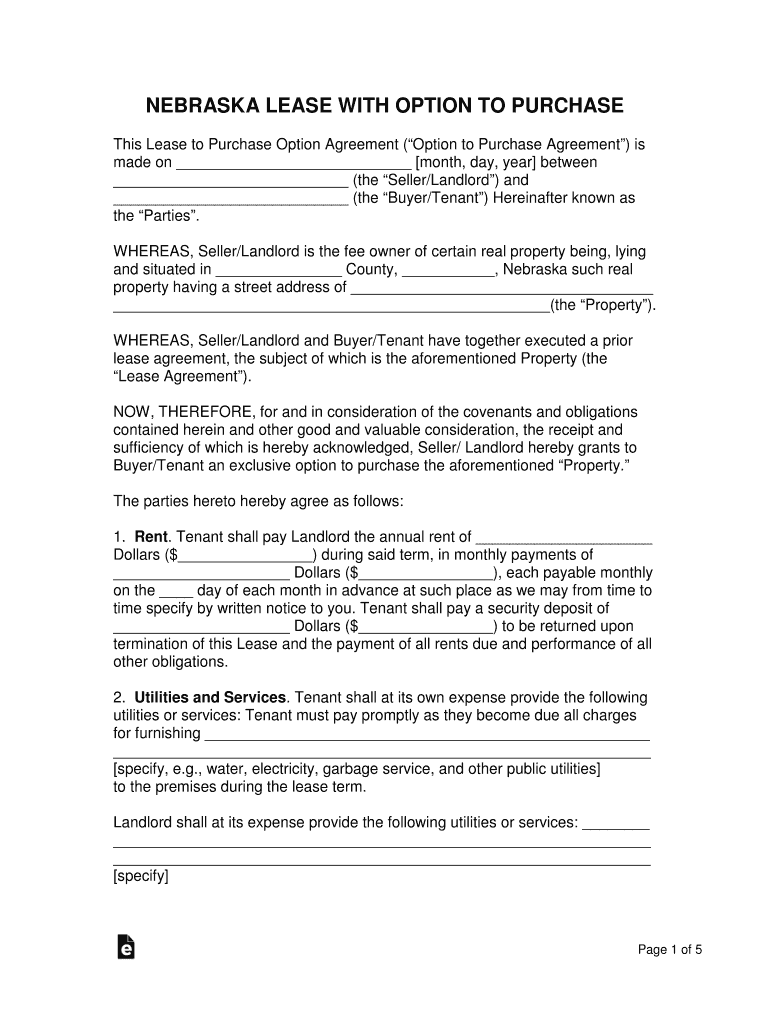
The "Free Nebraska Lease Agreement with Option to Purchase" is a legal contract allowing a tenant to lease a property with the option to purchase it at a later date. This agreement is prevalent in real estate, offering flexibility for both landlords and tenants. It outlines the renting period, rental amount, and conditions under which the tenant may buy the property. This structure is beneficial for those who wish to test a property or need time to arrange finances before purchasing.
Key Components
- Lease Terms: Specifies the duration of the lease and monthly rent.
- Option Fee: A consideration amount that might be required to secure the purchase option.
- Purchase Price: Terms for determining the property's sale price.
- Option Period: The timeframe in which the tenant can exercise the purchase option.
- Default Consequences: Penalties or actions if either party fails to fulfill the contract terms.
Steps to Complete the Free Nebraska Lease Agreement with Option to Purchase
The process of completing this agreement involves several stages to ensure all legal obligations are met and both parties understand the terms.
- Initial Consultation: Both parties should discuss their intentions and conditions.
- Drafting the Agreement: Incorporate essential details such as rent, lease length, and purchase conditions.
- Review Legal Requirements: Verify all clauses comply with Nebraska state laws.
- Signatures and Notarization: Parties must sign, and the document might require notarization for validity.
- Distribute Copies: Ensure both parties receive signed copies for their records.
Tips for Completion
- Legal Advice: Consult a real estate attorney to review the agreement.
- Clarity in Terms: Clearly outline payment structures and responsibilities.
- Exact Dates and Figures: Precise details prevent future disputes regarding terms.
Key Elements of the Free Nebraska Lease Agreement with Option to Purchase
This agreement comprises several essential elements that define the responsibilities and rights of both the landlord and tenant.
Essential Sections
- Identification of Parties: Clearly names the landlord and tenant.
- Property Description: Provides a precise description of the property under lease.
- Rent Payment Terms: States the amount, due date, and payment method.
- Maintenance Responsibility: Outlines who manages property upkeep.
- Purchase Option Clause: Details the conditions for exercising the purchase option.
Financial Components
- Security Deposit: Amount held by the landlord against potential damages.
- Option Fee and Credit: Fees associated with holding the purchase option may apply toward the purchase.
Legal Use of the Free Nebraska Lease Agreement with Option to Purchase
Legally binding in Nebraska, this agreement serves as a transitional arrangement between renting and owning.
Legal Considerations
- Governing Law: Adheres to Nebraska state statutes.
- Dispute Resolution: Procedures for resolving disputes, e.g., mediation or arbitration.
- Disclosure Requirements: Necessary disclosures about property conditions or legal encumbrances.
Best Practices
- Stay Informed: Stay updated with state laws that might affect agreement terms.
- Seek Legal Assistance: Before signing, ensure all obligations and rights align with legal standards.
Important Terms Related to Free Nebraska Lease Agreement with Option to Purchase
Understanding relevant terminology is vital for effective communication and compliance with the agreement.
Core Definitions
- Lease: Legal possession of property without transference of ownership.
- Option to Purchase: The right but not the obligation to buy the leased property.
- Default: Failure to meet financial or legal obligations outlined in the agreement.
Common Misunderstandings
- Lease vs. Rent: Lease usually refers to a long-term arrangement, whereas rent indicates short-term use.
- Option Fee vs. Down Payment: Option fee is for securing purchase rights, not an initial payment toward property ownership.
State-Specific Rules for the Free Nebraska Lease Agreement with Option to Purchase
Different states have unique legal requirements for lease agreements, including those with purchase options.
Nebraska-Specific Regulations
- Landlord-Tenant Laws: Ensure conformity with Nebraska's landlord-tenant regulations.
- Real Estate Practices: Aligns with standard practices in Nebraska's real estate market.
- Contract Enforcement: Nebraska courts mandate clear terms for enforceability.
Key Considerations
- Notification Requirements: Obligations for informing tenants of specific rights or changes.
- Zoning Laws: Compliance with local zoning and property usage laws.
Examples of Using the Free Nebraska Lease Agreement with Option to Purchase
Various scenarios illustrate the practicality and strategic use of this agreement.
Case Scenarios
- First-Time Buyers: Allows them to live in and learn about the property before committing to purchase.
- Relocating Professionals: Offers flexibility and security when relocating to a new area for work.
- Investors: Provides rental income while exploring the potential for property appreciation.
Practical Outcomes
- Smooth Transition to Ownership: Gradual shift from tenant to owner without the need for immediate full financing.
- Mitigated Risks for Buyers: Opportunity to exit the agreement if the property doesn't meet expectations before purchase.
Who Typically Uses the Free Nebraska Lease Agreement with Option to Purchase
This agreement is suitable for a diverse range of users, particularly in real estate.


Typical Users
- Tenants Seeking Ownership: Those desiring homeownership but need time for financial readiness.
- Property Investors: Investors looking to leverage rental income and capitalize on future market increases.
- Real Estate Agents and Landlords: Professionals facilitating flexible property agreements that benefit both parties.
Common Scenarios
- Economic Uncertainty: Provides a fallback for tenants uncertain about committing to a purchase.
- High-Demand Markets: Appeals to tenants wanting to secure a purchase in competitive areas.