






Definition and Impact of Provider Supply and Regulation
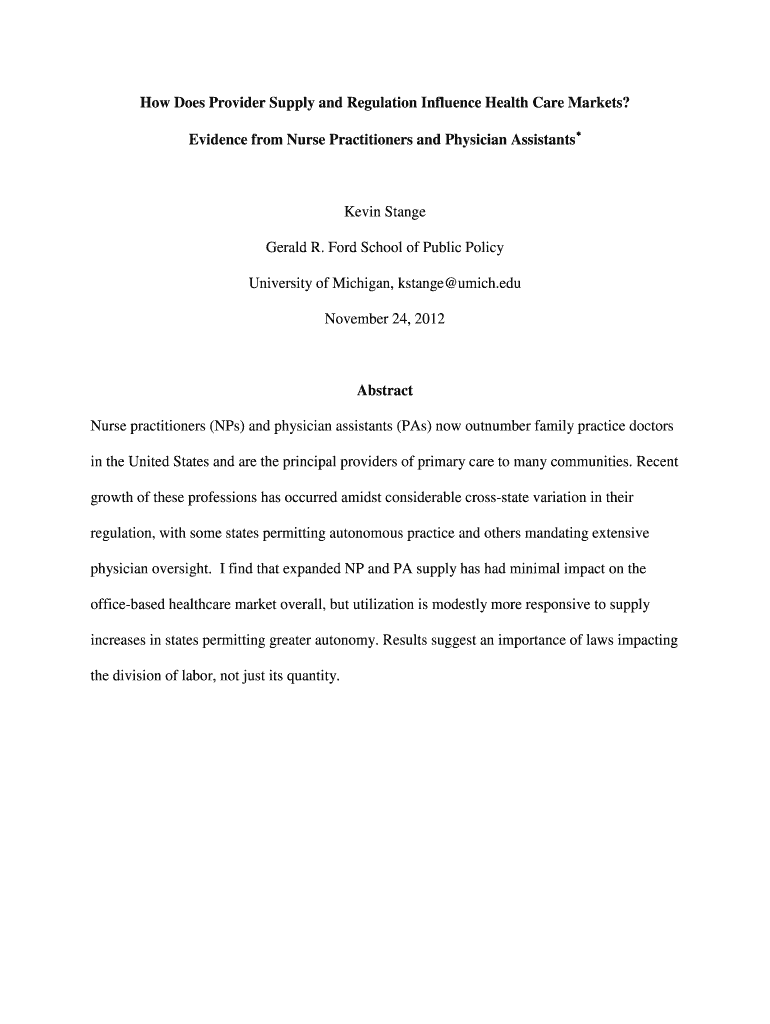
The dynamics of provider supply and regulation play a crucial role in shaping healthcare markets. These factors determine the availability of healthcare professionals, such as nurse practitioners (NPs) and physician assistants (PAs), whose supply affects healthcare access, utilization, and costs. Regulatory environments influence how these professionals operate, particularly in states that grant greater autonomy. Such conditions can lead to modest increases in primary care utilization. Understanding these elements helps highlight the relationship between supply regulation and healthcare delivery outcomes.
Steps to Analyze Provider Supply Influence
- Identify Key Players: Determine the healthcare professionals affected by supply and regulation, focusing on NPs and PAs.
- Assess Regulatory Environment: Examine state-specific regulations that impact the autonomy and scope of practice for these providers.
- Evaluate Healthcare Access and Utilization: Consider how changes in supply and regulation affect patient access to services and overall healthcare utilization.
- Analyze Cost Implications: Study how provider supply and regulations impact the costs of healthcare services, noting any variations in pricing.
Importance of Analyzing Provider Supply and Regulation Influence
Understanding how provider supply and regulation influence healthcare markets is essential for several reasons:
- Healthcare Accessibility: Identifies how regulations and supply shortages can limit patient access to necessary care.
- Cost Control: Provides insights into the financial implications of regulatory environments and provider availability.
- Policy Development: Informs policymakers about the significance of regulatory adjustments to enhance healthcare delivery.
Key Elements of Provider Supply and Regulation Dynamics
- Scope of Practice: Defines the range of services that NPs and PAs are authorized to perform, which varies by state.
- Autonomy Levels: States with more lenient regulations allow NPs and PAs greater independence, impacting healthcare access and delivery.
- Supply Chain: Addresses the availability of qualified healthcare providers in various regions and how it affects service delivery.
State-Specific Rules and Their Impact
State-specific regulations profoundly affect how provider supply and regulations shape healthcare markets:
- Autonomy Variations: Some states provide greater freedom to NPs and PAs, potentially increasing healthcare service utilization.
- Licensing Requirements: Different states impose distinct licensing criteria that influence the number of practicing healthcare professionals.
- Reimbursement Policies: Variations in how providers are reimbursed by insurers can also impact supply and practice autonomy.
Examples Illustrating Provider Supply Impacts
- Case of Increased NP Supply: In states where NPs have more autonomy, a modest increase in primary care usage has been observed.
- PAs in Rural Areas: Enhanced supply and relaxed regulations have led to increased healthcare access in underserved rural communities.
Understanding Legal and Regulatory Context
The regulation of healthcare providers is framed by several legal and regulatory guidelines:
- Federal Standards: Although state-specific, federal laws also provide overarching frameworks for healthcare provider regulation and practice.
- State-Specific Regulations: Each state has unique laws governing the practice and autonomy of NPs and PAs, impacting market dynamics.
Provider Supply Variants and Alternatives
- Expanding Scopes: Consider proposals to expand the roles of NPs and PAs in states with restrictive regulations.
- Telehealth Options: Utilize telemedicine as a way to maximize provider supply and access in areas with limited physical presence.
Implications for Different Business Types
Different healthcare-related business entities benefit in varying ways from provider supply and regulation:
- Independent Practices: Benefit from flexible regulations that allow greater use of NPs and PAs to meet patient needs.
- Large Healthcare Systems: More likely to adapt by integrating diverse roles within their organizational structures to optimize service delivery.
By thoroughly understanding these aspects, stakeholders can better comprehend how provider supply and regulation influence healthcare markets, leading to more informed decisions and policies that ensure effective healthcare delivery.