






Definition and Meaning
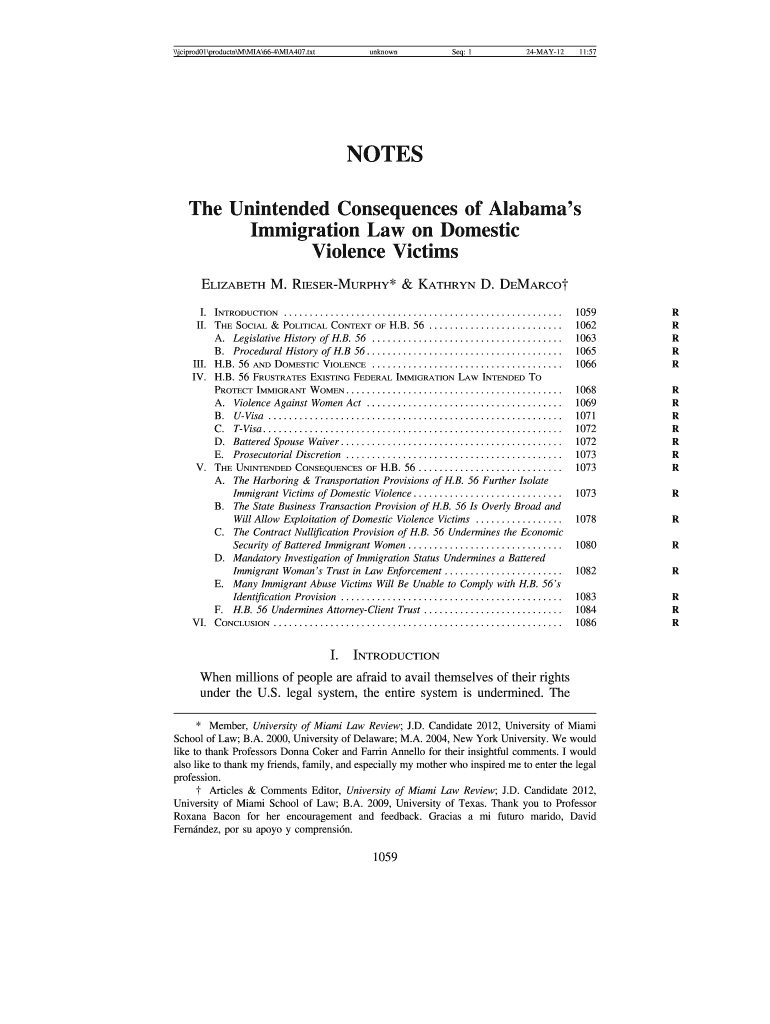
"The Unintended Consequences of Alabama's" refers to the unforeseen outcomes resulting from Alabama's immigration law, H.B. 56. This law, initially intended to address issues related to illegal immigration, has had broader impacts beyond its original scope. The legislation sought to enforce stricter immigration enforcement but inadvertently created several challenges and barriers, particularly affecting immigrant communities in Alabama. More specifically, immigrant women who are victims of domestic violence now face significant hurdles in seeking assistance and protection due to fears of deportation and increased isolation.
Impact on Immigrant Women
The law significantly affects immigrant women by creating obstacles that make it difficult for them to escape abusive environments. While these women are protected under federal laws designed to aid battered immigrants, the enforcement of H.B. 56 complicates their ability to access these protections. They may hesitate to report abuse or seek help due to concerns about detainment or deportation, which exacerbates their vulnerability and leads to further exploitation.
Additional Unintended Outcomes
Furthermore, the law's stringent measures have led to a range of unintended social and economic issues. These include labor shortages in industries heavily reliant on immigrant workers and a general climate of fear within immigrant communities that affects community engagement and trust in local authorities. Understanding these unintended consequences helps inform discussions on creating more humane and effective immigration policies.
Key Elements of the Law
Understanding H.B. 56 requires examining the key components of the law that led to the unintended consequences. One primary element was the requirement for law enforcement to ascertain the immigration status of individuals during any lawful stop, detention, or arrest. Additionally, the legislation imposed penalties on businesses employing undocumented workers and restricted access to services for undocumented immigrants.
Enforcement Provisions
These enforcement provisions aimed at deterring illegal immigration mistakenly compounded issues for legal immigrants and further marginalized vulnerable populations. For example, its impact on immigrant women seeking legal protection is a direct result of these strict enforcement measures, which are often more punitive than preventative.
Impact on Local Services
Aside from enforcement, the law also restricted undocumented individuals' access to vital services, such as housing and healthcare. This created further challenges within communities, as many afraid of repercussions opted to avoid seeking help altogether, fostering a culture of silence and increased risk of exploitation.
Steps to Complete the Legal Requirements
For those directly affected or needing to engage with aspects of H.B. 56, it's crucial to understand the steps involved in navigating the legal context created by the law. This involves utilizing available federal legal protections and ensuring compliance where necessary to minimize risks.
Gathering Required Documentation
Affected individuals should secure necessary legal documentation, such as visas or residency papers, to better protect themselves under the law. Assisting agencies and legal advisors can provide guidance in compiling these documentation requirements, a vital step for those needing to validate their status in compliance with federal laws.
Seeking Legal Assistance
It's advisable for those dealing with the complexities of H.B. 56 to seek legal advice. Legal experts can provide precise guidance tailored to individual circumstances, particularly if individuals face challenges under the law. Organizations supporting immigrant rights can offer resources and services for those needing assistance in this area.
Legal Use of the Law
While H.B. 56 has been criticized for its harsh measures, it still plays a role in legal practices within Alabama. Performing due diligence and ensuring compliance are essential for both individuals and businesses operating under states with similar legislative frameworks. Understanding how to legally navigate this context helps mitigate potential exposure to punitive measures.
Business Adjustments
Businesses operating in Alabama need to comply with employment regulations under H.B. 56. This includes verifying the immigration status of employees and ensuring all hiring practices adhere to the legal standards prescribed by the law.
Community Support Programs
Community organizations have developed programs aimed at mitigating the law's impact. These programs offer educational and legal resources to ensure affected populations understand their rights and can legally navigate the often challenging terrain created by such legislation. Engaging with these programs offers a pathway to better compliance and less fear-induced non-engagement.
State-Specific Rules and Variations
While H.B. 56 is specific to Alabama, its framework has inspired similar legislative actions in other states. However, each state adapts these programs differently, leading to state-specific variations in enforcement and impact. Understanding these differences is crucial for those dealing with immigration-related issues across various jurisdictions.