Center for Japanese Studies 2025

Get Form
Center for Japanese Studies Preview on Page 1

Here's how it works

01. Edit your form online
Type text, add images, blackout confidential details, add comments, highlights and more.
02. Sign it in a few clicks
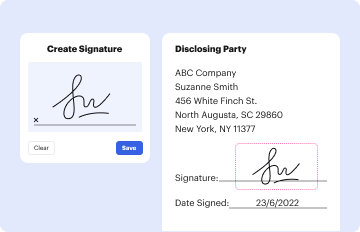
Draw your signature, type it, upload its image, or use your mobile device as a signature pad.
03. Share your form with others
Send it via email, link, or fax. You can also download it, export it or print it out.

How to use or fill out Center for Japanese Studies with our platform

Form edit decoration
9.5
Ease of Setup
DocHub User Ratings on G2
9.0
Ease of Use
DocHub User Ratings on G2
  1. Click ‘Get Form’ to open the Center for Japanese Studies application form in the editor.
  2. Begin by entering your name (Last, First Middle) and UM ID in the designated fields. Ensure accuracy as this information is crucial for processing your application.
  3. Fill in your email address and phone number to facilitate communication regarding your application status.
  4. Provide your local home address, including street, city, state, and zip code. This helps us reach you if needed.
  5. Indicate whether you are a graduate or undergraduate student and complete the relevant fields such as degree, department/program, year, and concentration/minor.
  6. Answer the question regarding need-based financial aid by selecting 'Yes' or 'No'.
  7. Select the level of JLPT you are taking (N1 or N2) from the options provided.
  8. Outline your budget for the trip by filling in amounts for registration fee, airfare, ground transportation, and lodging. Remember to attach supporting documentation.
  9. In the provided space, write a statement explaining why you are taking the JLPT and how it aligns with your academic and career goals.
  10. Review the agreement section carefully. By signing and dating this section, you acknowledge understanding all requirements related to this grant.

Start filling out your application today using our platform for free!

be ready to get more

Complete this form in 5 minutes or less

Get form

Got questions?

We have answers to the most popular questions from our customers. If you can't find an answer to your question, please contact us.
Contact us
Tuition fees naturally vary based on the length of the course. The typical tuition is around 150,000 to 200,000 yen for a 3-month full-time program. In addition, most schools charge a registration fee of around 5,000 to 20,000 yen and an insurance fee of 10,000 yen per year in case of long-term programs.
University of Hawaii at Manoa, UCLA, UC Berkeley, University of San Francisco, University of Washington, University of Chicago, and Ohio State University have really good Japanese language programs from what I know.
Japanese Language Classroom for Foreigners To be eligible to apply, you must be a resident of Taito-ku, or work or study there. Furthermore, it is required that you have a Japanese residence card or special permanent resident certificate. The classes divided in 3 levels and there are no tuition fees.
Japan has a high-quality of education Japan has an excellent education system and is the top-performing OECD country in reading literacy, math and sciences. The average Japanese student scores 529, well above the OECD average 486.
Almost all public/national universities require the same tuition fee, which is about 540,000 yen per year. Additionally, there is an entrance fee for the first year, which costs approximately 290,000 yen. These fees are affordable for the average Japanese person.

People also ask

The curriculum of the Japanese Language and Culture major focuses on acquiring the modern and classical forms of the language, engaging in informed and critical reading of a wide range of East Asian texts within their historical and cultural contexts, and developing effective writing skills and critical thinking.
Types of Japanese Lessons Offered Most groups in Tokyo offer free Japanese classes for all student levels. Some groups may choose not to accept beginner level foreign residents.
Studying in Japan doesnt have to be expensive. In fact, hundreds of scholarships are available to help international students study in Japan for free. The first step is to research the different types of scholarships and find out whether you need to apply before arriving in Japan or after youre already there.

Related links