






Definition & Meaning
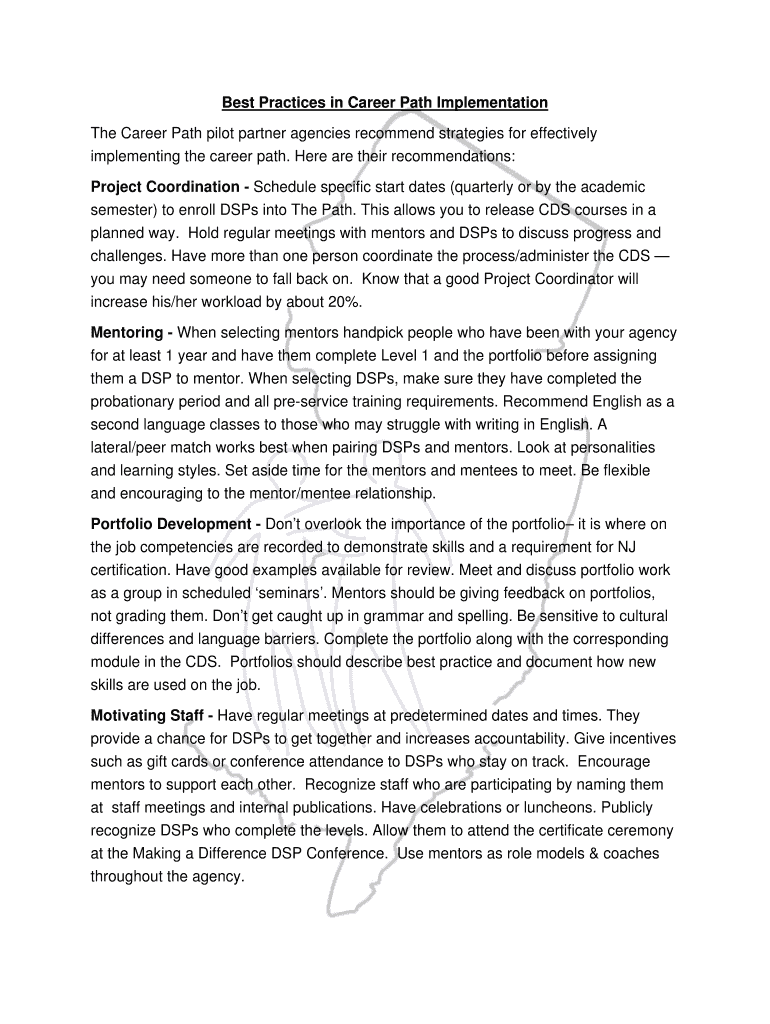
The term "Best Practices in Career Path Implementation" refers to the systematic method of developing structured career development strategies for employees. This concept involves the design and execution of well-defined career paths that enhance workforce skills, motivate employees, and align with organizational goals. It is particularly relevant for organizations aiming to nurture talent and provide clear progression avenues for Direct Support Professionals (DSPs) within an agency. By adopting these best practices, agencies can ensure that their staff are equipped with the necessary tools and training to succeed, thereby boosting overall productivity and employee satisfaction.
Steps to Complete the Best Practices in Career Path Implementation
- Assessing Current Structure: Begin by analyzing the existing career path frameworks within your organization. This step involves understanding which elements are working and which need improvement.
- Identifying Key Roles: Clearly define and document the key roles within the organization that require career path implementation. Focus on roles that directly impact service delivery, such as DSPs.
- Developing Career Pathways: Design specific career progression pathways that outline potential job roles, responsibilities, and skill requirements for each position. Ensure this is scalable across the organization.
- Training and Development: Establish a comprehensive training program that aligns with the career paths identified. This should include certifications, workshops, and on-the-job training opportunities.
- Performance Evaluation: Implement a performance management system to regularly assess employee performance. Use this data to provide constructive feedback and plan future career moves.
- Feedback and Adjustment: Finally, gather ongoing feedback from employees and stakeholders to refine and adjust the career path strategies, ensuring they remain relevant and effective.
Key Elements of the Best Practices in Career Path Implementation
- Clear Role Definitions: Every position within the career path should be clearly defined, detailing responsibilities, required skills, and expected outcomes.
- Skill Development: Focus on developing a broad set of skills that are critical to career advancement, such as leadership, communication, and technical abilities.
- Mentorship Programs: Implement mentorship and coaching programs to provide guidance and support to employees navigating their career paths.
- Recognition and Reward Systems: Establish systems to recognize and reward employee contributions and achievements as they advance along their career paths.
- Flexible Pathways: Design career paths that allow for lateral moves as well as upward mobility, providing individuals with options to explore different career opportunities within the organization.
Why Should You Implement Best Practices in Career Path Implementation
Implementing best practices in career path design can provide numerous benefits for an organization. Firstly, it can lead to increased employee engagement and retention, as staff are more likely to stay with a company that offers clear growth opportunities. Additionally, structured career paths enhance employee motivation, as they provide a roadmap for achieving personal and professional goals. For agencies that rely heavily on the skills of DSPs, implementing structured career paths can improve service delivery and quality, leading to better outcomes for service beneficiaries.
Who Typically Uses the Best Practices in Career Path Implementation
- Human Resource Managers: HR professionals use these best practices to structure employee development programs and ensure all staff have access to growth opportunities.
- Direct Support Professionals (DSPs): DSPs utilize these frameworks to map out their career growth within an organization.
- Organizational Leaders: Leadership teams capitalize on these practices to align employee career goals with the strategic objectives of the company.
- Talent Development Specialists: These specialists utilize career path implementation to design training and development initiatives that foster professional growth.


Examples of Using the Best Practices in Career Path Implementation
- Case Study - DSP Agency: A midsize DSP agency adopted a structured career path framework, and within two years, they reported a 30% increase in employee retention. The program included mentorship and skill development workshops that enabled DSPs to transition into supervisory roles.
- Corporate Environment: A Fortune 500 tech company integrated career path best practices within its employee development strategy, leading to enhanced job satisfaction scores. The program focused on technical skills advancement and leadership training, offering employees a clear pathway to senior management roles.
Legal Use of the Best Practices in Career Path Implementation
In the United States, career path implementation must comply with employment laws and regulations. Organizations must ensure that their career advancement opportunities are equitable and non-discriminatory, following guidelines set forth by the Equal Employment Opportunity Commission (EEOC). Implementing these best practices allows companies to provide fair and legally sound career advancement options, promoting diversity and inclusion within the workplace.
States-Specific Rules for the Best Practices in Career Path Implementation
While career path frameworks are generally applicable across the U.S., some states may have additional labor laws and regulations impacting their implementation. For instance, California has specific requirements regarding employee development plans and reporting, while New York may focus more on workforce diversity. It is essential for organizations to stay informed about state-specific employment laws that could affect the execution of career path programs to ensure compliance and effectiveness.