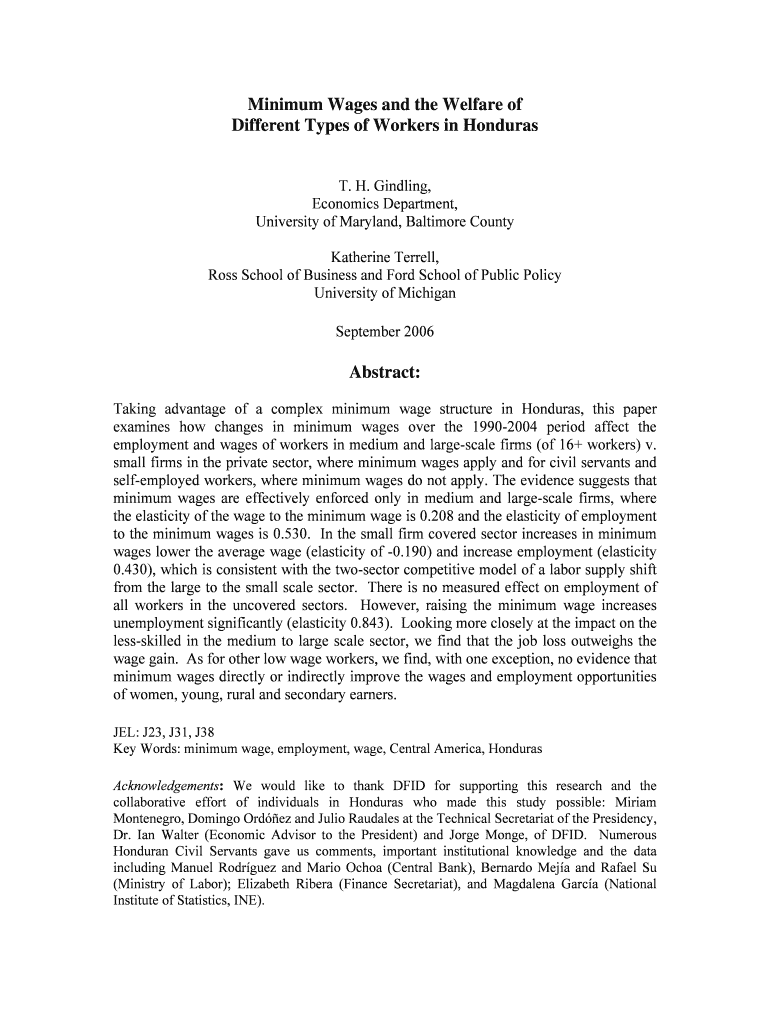







Definition of the Umbc Minimum Wage Analysis
The "Minimum Wages and the Welfare of Different Types of Workers - Umbc" refers to a detailed examination of the impact of minimum wage policies on various worker demographics, emphasizing how these policies influence employment and wages. The analysis investigates the repercussions of setting minimum wage levels on different sectors and types of businesses, such as large firms versus small ones. Its scope includes exploring the welfare outcomes for low-wage workers and identifying any unintended consequences that arise from policy implementations.
Key Elements of the Analysis
- Sectoral Impact: This analysis delves into how minimum wage changes specifically affect diverse sectors like large and small firms, highlighting the variance in enforcement and economic outcomes.
- Worker Welfare: The study scrutinizes if and how low-wage workers benefit, exploring facets like wage increments and potential job losses.
- Firm Size Dynamics: Detailed scrutiny of how different firm sizes endure or capitalize on minimum wage adjustments, with attention to employment trends within these businesses.
Steps to Conduct the Minimum Wage Analysis
- Identify Relevant Data: Gather historical data on wages, employment rates, and firm sizes to ensure comprehensive analysis.
- Segment the Market: Divide the market into sectors such as small, medium, and large firms, and assess the minimum wage impact on each category.
- Analyze Worker Welfare Changes: Evaluate the shifts in wages and employment status among various worker groups, particularly focusing on low-wage workers.
- Policy Impact Assessment: Determine the broader impacts of minimum wage policies on both workers and business structures within the economy.
Who Typically Engages with this Analysis?
- Economists and Policy Makers: They leverage this analysis to understand the implications of wage policies and make informed decisions.
- Business Leaders: Firm owners and managers use the insights to adjust their strategies in response to policy changes.
- Academics and Researchers: This demographic utilizes the data to explore socioeconomic trends and contribute to further scholarly articles.
State-Specific Rules and Considerations
Every state in the U.S. may have unique regulations and enforcement nuances regarding minimum wage statutes. The Umbc analysis will consider these state-by-state differences to enrich the specificity and applicability of its findings. Examining local legislation and incorporating these findings into broader analyses ensures the real-world relevance of its conclusions across different jurisdictions.
Examples of Policy Effects on Different Workers
- Low-Wage Workers: In larger firms, they might see wage increases but also risk job losses, whereas in smaller firms, minimum wages could inadvertently result in reduced average wages.
- Firm Owners: Large firm owners might face challenges in sustaining employment levels, whereas small firm owners might re-strategize staffing or wage offerings.
Implications for Various Business Entities
- Small Businesses: May experience shifts in wage structures and employment patterns due to variable enforcement and economic pressures.
- Large Corporations: Need robust strategies to manage increased wage costs without compromising employment levels.
- Start-Ups and Expanding Companies: Must plan their growth strategies in alignment with potential wage policy changes to sustain operational viability.
Filing and Compliance Guidelines
Entities engaging with the Umbc analysis should ensure compliance with official filing requirements related to any applied policies, staying informed on submission methods, be it online, mail, or in-person avenues.
Versions and Alternatives to the Umbc Analysis
There are likely various versions or similar analyses available that explore minimum wage impacts in different countries or regions, providing comparative insights for global business leaders and policymakers. Each version might be tailored to specific economic conditions or industry sectors.