






Definition and Purpose of the Qualifying Exam Proposal
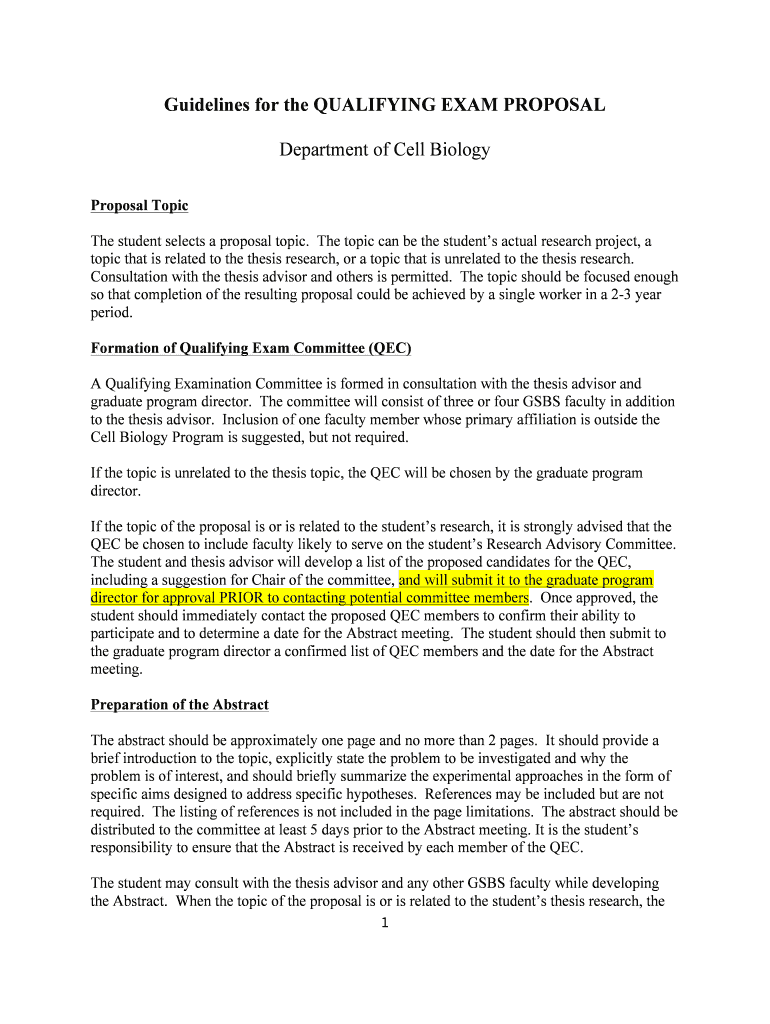
The Qualifying Exam Proposal is a crucial document within the academic process, primarily serving as a roadmap for a student's research plans. It outlines the specific topic the student intends to explore, along with the methodologies and theoretical frameworks they will employ. This proposal is more than a mere formality; it reflects the student's scholarly preparation and sets the stage for their future research endeavors. In academic fields such as cell biology, the proposal must align with departmental expectations and scholarly standards, ensuring that the research question is both original and feasible.
Steps to Complete the Qualifying Exam Proposal
-
Select a Research Topic
- Begin by identifying a research area that is both innovative and aligns with current scientific discourse.
- Conduct a preliminary literature review to ensure the topic's originality and significance.
-
Form a Qualifying Examination Committee (QEC)
- Engage faculty members relevant to your research area to form your QEC.
- Ensure a balance of expertise to provide comprehensive feedback on your proposal.
-
Prepare the Abstract and Proposal
- Draft a concise abstract summarizing your research question, objectives, and methods.
- Structure the proposal to include an introduction, literature review, methodology, and anticipated outcomes.
- Follow the departmental guidelines for formatting and submission.
Key Components of the Proposal
-
Introduction
- Clearly define the research problem and its significance within the field.
- State the objectives and research questions succinctly.
-
Literature Review
- Analyze current research, identifying gaps that your study will address.
- Justify the necessity of your proposed research within the context of existing knowledge.
-
Methodology
- Describe the research design, including data collection and analysis methods.
- Ensure the methods are suitable for addressing the research question and are within ethical standards.
Responsibilities of the Student and Committee Members
-
Student Responsibilities
- Meet deadlines and adhere to guidelines established by the department.
- Actively engage with committee members, seeking feedback and incorporating revisions.
-
Committee Responsibilities
- Provide constructive feedback, helping refine the student's proposal for clarity and rigor.
- Assess the feasibility and academic merit of the proposed research.
Eligibility Criteria
The eligibility to submit a Qualifying Exam Proposal often depends on a student's academic standing and coursework completion. Most departments require students to have completed core courses and maintained a minimum GPA. Additionally, students must demonstrate a foundational understanding of their research topic through prior coursework or related experience. This ensures that students are adequately prepared to undertake independent research at a sophisticated academic level.


Legal Use and Compliance
When preparing the Qualifying Exam Proposal, it is crucial to adhere to academic integrity guidelines. This includes proper citation and acknowledgment of all sources and avoiding any form of plagiarism. Compliance with these guidelines not only upholds the integrity of the academic community but also fortifies the credibility of the research work. Students must also adhere to any institutional regulations regarding research involving human subjects or animals, where applicable.
Important Terms Related to the Proposal
- Research Question: The central question the research aims to answer, guiding the entire study.
- Methodology: The systematic plan for data collection and analysis.
- Feasibility: The practicality of the proposed research within given constraints, such as time, resource availability, and ethical considerations.
Potential Outcomes of the Examination
- Pass: The proposal is accepted as is, allowing the student to proceed with their research.
- Conditional Pass: Minor revisions are required before proceeding.
- Re-examination: Significant revisions or re-submission is needed.
- Failure: The proposal does not meet the required standards, with specific feedback provided for improvements.
Form Submission Methods
Proposals are typically submitted through departmental online portals, ensuring that they align with institutional guidelines for digital submissions. In cases where physical submission is required, students must print and deliver their documents to the designated departmental office, ensuring they meet any specified deadlines.
Developing Fillable Forms for Proposals
DocHub simplifies the creation and management of fillable forms, which can be particularly beneficial for departments handling multiple proposals. By converting proposal submission guidelines into interactive templates, institutions can streamline the submission process and ensure all necessary information is effectively captured.
Digital vs. Paper Version
While some institutions still offer both digital and paper submissions, the trend is moving towards fully digital formats for ease of access, efficiency, and environmental considerations. Digital versions allow for quicker feedback and revisions, with platforms like DocHub supporting comprehensive editing and collaboration tools.