







Definition and Meaning
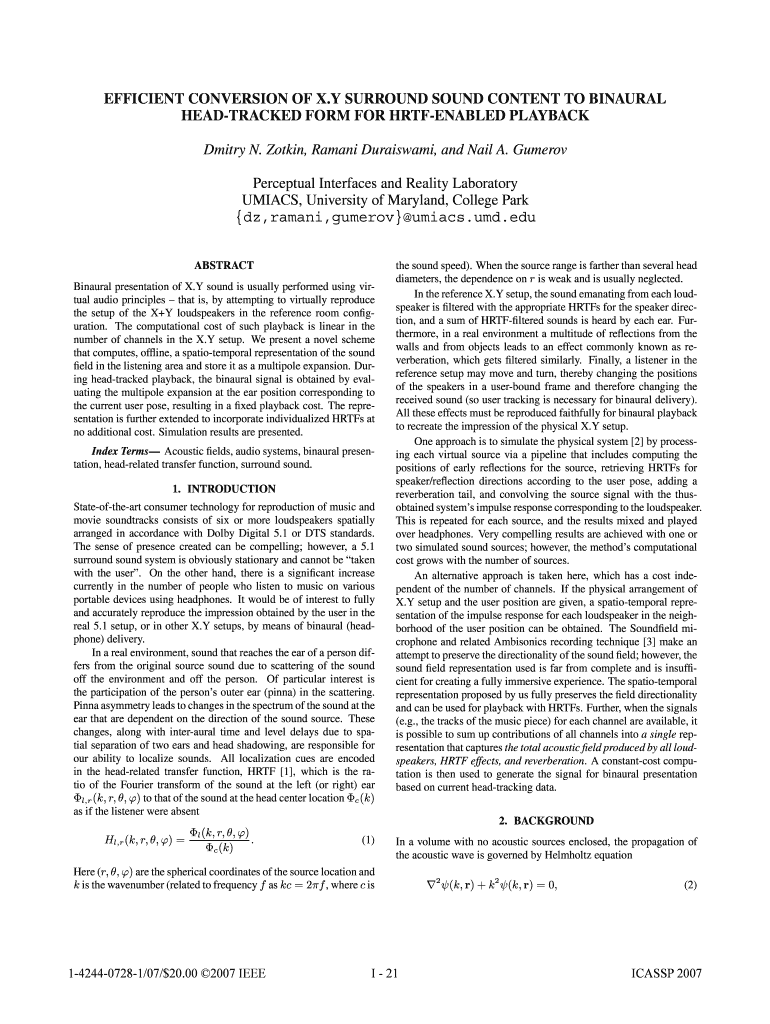
The Efficient Conversion of X.Y Surround Sound Content to Binaural Head-Tracked Form for HRTF-Enabled Playback (PL) involves a process used to transform multi-channel audio formats into a format that can be experienced through headphones using Head-Related Transfer Functions (HRTFs). This technique aims to emulate surround sound using binaural audio that adjusts as the listener's head moves, creating a realistic auditory experience similar to that of a physical surround sound setup. The primary goal is to deliver immersive audio experiences through portable stereo headphones, making sophisticated soundscapes accessible anywhere.
How to Use the Efficient Conversion Process
-
Access Conversion Tools: Start by identifying and accessing the right tool or software capable of performing the conversion. This could be specialized audio software that supports HRTF-based audio processing.
-
Set Up HRTF Profiles: Utilize personalized HRTFs if available. These profiles should be preloaded into the conversion software to ensure the audio output is tailored to the listener's unique ear shape and head dimensions.
-
Import Surround Sound Content: Load the source audio content, typically in formats like 5.1 or 7.1 surround sound, into the software, ensuring all channels are correctly mapped.
-
Configure Parameters: Adjust settings such as head-tracking sensitivity and spatial resolution to achieve the desired audio effect.
-
Begin Conversion: Initiate the efficient conversion process by allowing the system to computationally map the spatial audio information onto a binaural format.
-
Validate and Test: Listening tests should be conducted to verify the converted audio quality and spatial accuracy. Adjust parameters as needed based on the listening environment and personal preference.
Key Elements of the Conversion Process
-
Spatio-Temporal Mapping: The process involves complex computations to accurately render sound sources in a virtual 3D space using HRTFs, which requires efficient algorithms to keep processing demands low.
-
Channel Management: Efficient handling of audio channels is crucial in preserving the integrity of the original surround sound mix during conversion.
-
Head-Tracking Integration: The converted binaural audio reacts to head movements, providing a dynamically adjusted soundscape. This requires sensors or software capabilities to track head position in real time.
-
Preintegration of HRTFs: Individualized HRTFs facilitate a more accurate audio experience. Neglecting this aspect can compromise the spatial accuracy of the conversion.
Steps to Complete the Conversion
-
Install Necessary Software: Download and install any required software that supports surround to binaural conversion with HRTF capabilities.
-
Check System Compatibility: Ensure your hardware, such as headphones and any head-tracking equipment, is compatible with the conversion tool.
-
Upload Audio Content: Import your surround sound tracks into the software interface, ensuring no loss in channel data during the upload process.
-
Set Conversion Preferences: Customize conversion settings to suit listening needs, including spatial arrangement, head-tracking sensitivity, and HRTF sets.
-
Run the Conversion: Execute the process and wait for the software to complete the transformation of the audio content into a binaural format.
-
Test and Adjust: Conduct necessary quality checks and tests to affirm the conversion's fidelity and make any further tweaks.
Benefits of This Conversion Process
-
Portability: Allows users to enjoy a full-fledged surround sound experience through standard headphones, making it suitable for mobile consumption.
-
Cost-Effectiveness: Reduces the need for expensive multi-speaker setups at home or in professional settings.
-
Flexibility: Accommodates a wide range of audio content types and environments, from video games to cinematic scores.
-
Enhanced User Experience: Provides an immersive auditory experience by adapting sound based on head movements, enhancing realism and depth.
Who Typically Uses This Conversion Process
-
Audio Engineers: Professionals looking to deliver surround sound experiences in compact formats.
-
Video Game Developers: Creators focusing on immersive soundscapes that adjust dynamically based on player movement.
-
Content Creators: Filmmakers and producers aiming to provide intimate audiophile experiences without traditional surround sound setups.
-
Home Theater Enthusiasts: Users who wish to enjoy the nuances of surround sound without investing in large speaker arrays.
Software Compatibility
-
Audio Editing Tools: Check for compatibility with popular audio editing software that can handle multi-channel audio and has the ability to apply HRTFs.
-
Playback Devices: Verify that typical playback devices, such as VR headsets or advanced headphones, support binaural audio formats.
-
File Format Support: Ensures that the conversion software and playback systems support a variety of formats like WAV or FLAC for optimal audio fidelity.
Examples of Using This Process
-
Gaming Experience Enhancement: A gamer uses this conversion to immerse themselves in a 3D auditory environment with sound coming from various directions as inferred by their head movements.
-
Music Production: A music producer converts a multi-channel mix into a binaural track, allowing listeners to experience a live concert setting through their headphones.
-
Virtual Reality Applications: VR developers employ this approach to sync real-time audio changes with the visual stimuli of the VR experience, further blurring the lines between virtual and reality.
Important Terms
-
HRTF: Head-Related Transfer Function; a response describing how an ear receives sound from a point in space, crucial for simulating realistic audio environments.
-
Binaural Audio: A method of recording and playing back sound that uses two microphones to create a 3D stereo sound sensation for the listener.
-
Spatial Audio: Audio that gives the perception of sound coming from a specific direction around the listener, often used in 3D audio settings.
-
Surround Sound Formats: Refers to multi-channel audio formats like 5.1 and 7.1, where sound is distributed across multiple speakers surrounding the listener.
This structure provides a comprehensive breakdown of the efficient conversion of X.Y surround sound content to binaural head-tracked audio for HRTF-enabled playback. Each section delves deep into practical applications and necessary components, facilitating increased understanding and utility for the reader.




