






Definition and Purpose of the Checklist for Vacating Laboratories
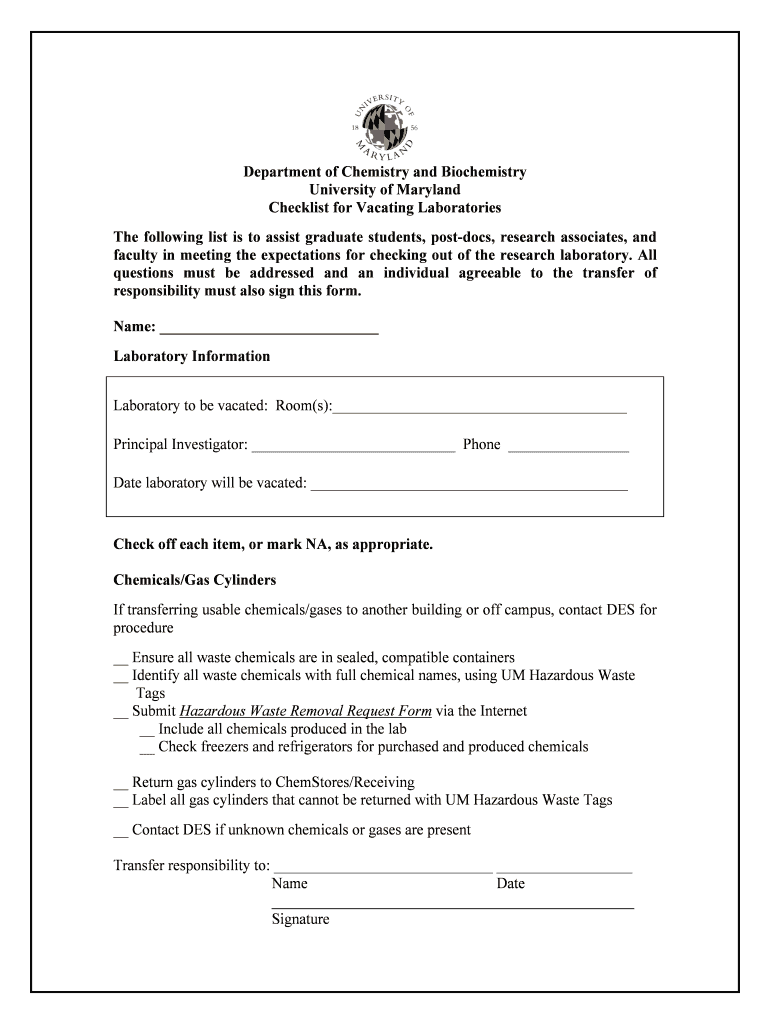
The "Checklist for Vacating Laboratories - Department of Chemistry and" provides a structured framework for individuals leaving a research lab, ensuring all necessary steps are taken for a safe and compliant exit. It facilitates a smooth transition by addressing various responsibilities such as the management of chemicals, hazardous materials, and equipment. The checklist is especially crucial in university settings, like the University of Maryland's Department of Chemistry and Biochemistry, where numerous stakeholders are involved in maintaining lab safety and compliance.
Key Elements of the Checklist
This checklist comprises several critical components that guide users through the vacating process:
- Chemical Handling: Ensure all chemicals are properly labeled, stored, or disposed of according to safety protocols.
- Hazardous Materials: Secure safe removal and documentation of hazardous and radioactive materials following regulatory standards.
- Equipment Decommissioning: Outline steps to safely decommission lab equipment, including cleaning and repairs if needed before leaving the lab.
- Departmental Clearance: Confirm clearance from various departments and adhere to any institutional guidelines.
By integrating these elements, the checklist serves as a comprehensive aid for individuals transitioning out of laboratory roles.
Steps to Complete the Checklist
Completing the checklist requires methodical adherence to its outlined steps:
- Initial Review: Familiarize oneself with the checklist's requirements and objectives.
- Documentation: Accumulate all necessary documentation regarding chemicals, materials, and equipment in use.
- Departmental Communication: Engage with relevant departmental representatives for guidance and clearance.
- Final Inspections: Conduct a final walkthrough with a lab supervisor to ensure all conditions are met for vacating.
This step-by-step approach minimizes the risk of oversight and ensures all tasks are properly executed.
Who Typically Uses the Checklist
The checklist is primarily utilized by:
- Graduate Students: Ensure compliance when concluding research work.
- Post-Doctoral Researchers: Transition smoothly out of academic assignments or positions.
- Faculty Members: Vacate labs following tenure or sabbatical transitions.
- Research Associates: Leave labs efficiently while maintaining institutional integrity.
These users leverage the checklist to fulfill responsibilities and uphold safety standards.


Important Terms Associated with the Checklist
Understanding specific terms within the checklist enhances clarity and execution:
- Radioactive Materials: Substances that emit radiation, requiring stringent handling and disposal procedures.
- Decommissioning: Process of formally closing out equipment and workstations, ensuring all safety measures are in place.
- Clearance: Official approval by authoritative figures within departments confirming all checklist items are resolved.
Familiarity with these terms aids users in comprehending and executing checklist tasks effectively.
Legal Considerations and Compliance
Failure to adhere to the checklist can result in legal and institutional repercussions:
- Non-Compliance Penalties: Consequences for neglecting checklist steps may include fines or delays in academic transitions.
- Safety Regulations: Adherence to established safety regulations is non-negotiable to prevent potential hazards.
- Documented Proof: Maintain adequate records as legal evidence of compliance with checklist directives.
Understanding these legal aspects is essential for fulfilling obligations and protecting institutional and personal interests.
Digital vs. Paper Copies of the Checklist
Options include using either digital or paper versions of the checklist:
- Digital Version: Offers benefits such as easy access, real-time updates, and integrated signature solutions.
- Paper Version: Preferred by individuals who require physical documentation.
Each format has advantages, allowing flexibility based on user preference and institutional procedures.
Examples and Case Studies in Checklist Use
Various case studies illustrate the checklist's application across different scenarios:
- University-wide Transitions: Demonstrates how institutions streamline lab transitions by mandating checklist completion.
- Large-scale Laboratory Closures: Highlights steps involved when entire labs are decommissioned or repurposed.
- Individual Transitions: Showcases personal experiences of academics ensuring compliance during lab exits.
These examples provide practical insights into successfully navigating the checklist process.
Software Compatibility and Integration
For digital checklist management, understanding software compatibility is crucial:
- DocHub Integration: Offers seamless document management, including editing, signing, and sharing capabilities.
- Cloud Storage Access: Enables users to store and retrieve checklist data from platforms like Google Drive.
Effective use of compatible software can enhance convenience and efficiency in completing the checklist requirements.