






Key Elements of the Florida Lease to Purchase Option Agreement
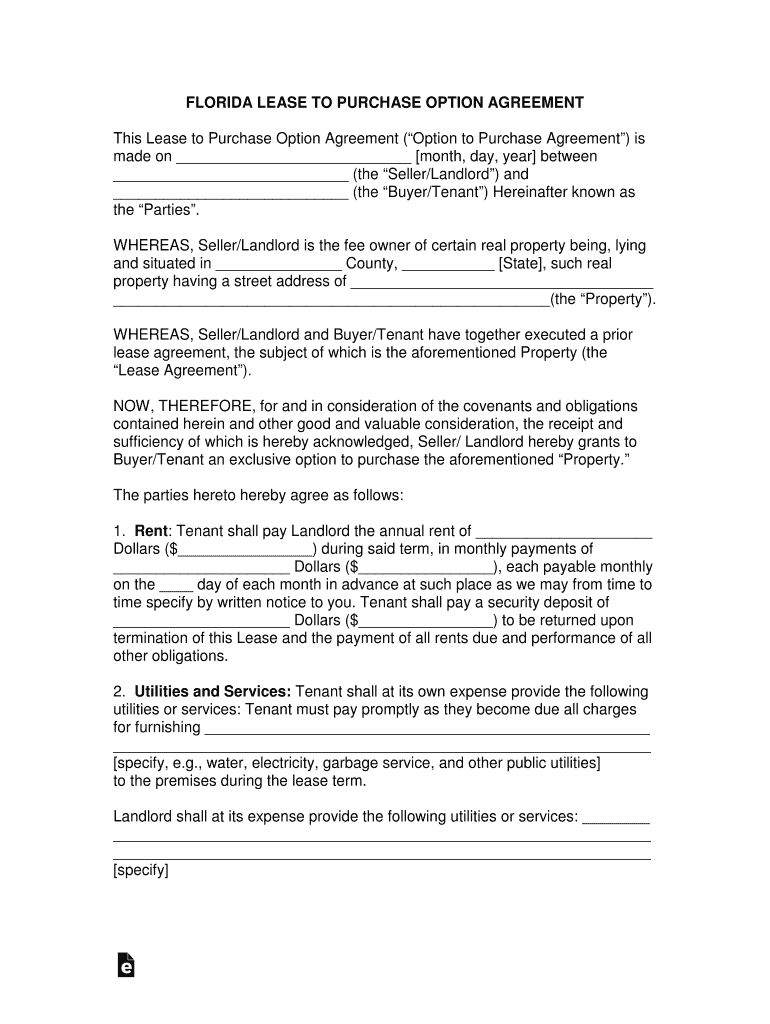
The Florida Lease to Purchase Option Agreement is a critical legal document that outlines the terms under which a tenant can lease a property with the opportunity to purchase it later. This agreement includes various clauses that detail the rights and responsibilities of both parties involved. Key elements include clauses on rental payments, maintenance obligations, and the procedure for exercising the purchase option. Additionally, it covers conditions in which the agreement might be terminated and the implications of default. Understanding these elements is essential for both landlords and tenants to ensure compliance and protect their interests.
- Rental Payments: Specifies the amount, frequency, and method of rent payment.
- Maintenance Obligations: Details responsibilities for property upkeep between landlord and tenant.
- Purchase Option Procedure: Outlines the steps and conditions for the tenant to initiate the property purchase.
Steps to Complete the Florida Lease to Purchase Option Agreement
Completing the Florida Lease to Purchase Option Agreement involves several steps to ensure all legal and practical aspects are addressed.
- Gather Necessary Information: Collect personal details of both parties, property description, rent amounts, and purchase price.
- Negotiate Terms: Discuss and agree on rental rates, duration, maintenance responsibilities, and the specifics of the purchase option.
- Draft Agreement: Prepare the legally binding document, incorporating all agreed terms and conditions.
- Review: Both parties, ideally with legal counsel, should review the agreement to ensure understanding and compliance with Florida law.
- Sign and Notarize: Finalize the agreement with signatures and have it notarized to validate its legality.
Legal Use of the Florida Lease to Purchase Option Agreement
This agreement serves a dual purpose: offering a residential lease and a future purchase agreement. Governed by Florida law, it must comply with state-specific legal requirements. Landlords and tenants can use it to establish clear terms for renting with an option to buy. The agreement protects both parties by providing a structured legal framework, addressing financing disclaimers, and offering provisions for lease termination and consequences of breach. Adhering to these legal stipulations helps in avoiding disputes and ensures the enforceability of the contract.
Important Terms Related to the Florida Lease to Purchase Option Agreement
Understanding specific terminology is crucial for parties involved in a Lease to Purchase Option Agreement.
- Option Fee: A non-refundable fee paid by the tenant for the exclusive right to purchase the property at a later date.
- Lease Term: The duration of the lease period before the purchase option can be exercised.
- Purchase Price: The agreed-upon price for the property, established at the start of the lease agreement.
- Default Conditions: Scenarios that constitute a breach, such as failure to pay rent or non-compliance with lease terms.
Who Typically Uses the Florida Lease to Purchase Option Agreement
This agreement is predominantly used by individuals who wish to transition from renting to home ownership. Ideal candidates include:
- First-Time Homebuyers: Individuals who need time to improve credit or save for a down payment.
- Investors: Those looking to lock in a purchase price while evaluating property value and market conditions.
- Landlords: Property owners seeking to secure potential future buyers while generating rental income.


State-Specific Rules for the Florida Lease to Purchase Option Agreement
Florida laws impose specific rules regarding lease-purchase agreements, ensuring both tenant and landlord rights are protected. The agreement must conform to state guidelines about landlord-tenant relationships, rental laws, and property sales. It must provide clarity on radon gas disclosures, as Florida law mandates landlords to inform tenants about the dangers of radon in residential buildings. Legal compliance ensures the enforceability of the agreement and provides protection against legal challenges.
Examples of Using the Florida Lease to Purchase Option Agreement
Real-world scenarios illustrate the practical application of this agreement.
- Case Study 1: A couple chooses this agreement to live in their dream home while solidifying financing options and credit status over three years.
- Case Study 2: An investor uses this option to assess the property's appreciation potential before finalizing a purchase, minimizing investment risk.
- Case Study 3: A landlord reduces vacancy periods by attracting tenants who may later become buyers, ensuring steady rental income and eventual property sale.
Required Documents for Completing the Agreement
To execute a legally binding Florida Lease to Purchase Option Agreement, both parties need specific documents:
- Property Title Deed: Verifies ownership details and legal description of the property.
- Identification Documents: Government-issued IDs for all parties involved to confirm identity and signature validity.
- Proof of Income: Necessary to determine tenant’s ability to meet rental and purchase obligations.
- Credit Report: Helps landlords assess the financial reliability of tenants.
Why Should You Consider the Florida Lease to Purchase Option Agreement
Opting for a Florida Lease to Purchase Option Agreement offers several benefits:
- Flexibility: Tenants can experience living in a property before committing to purchase.
- Financial Strategy: Buyers have time to strengthen their financial situation, benefiting from locked-in purchase prices.
- Security for Sellers: Landlords secure potential buyers while collecting rental income.