






Definition & Meaning
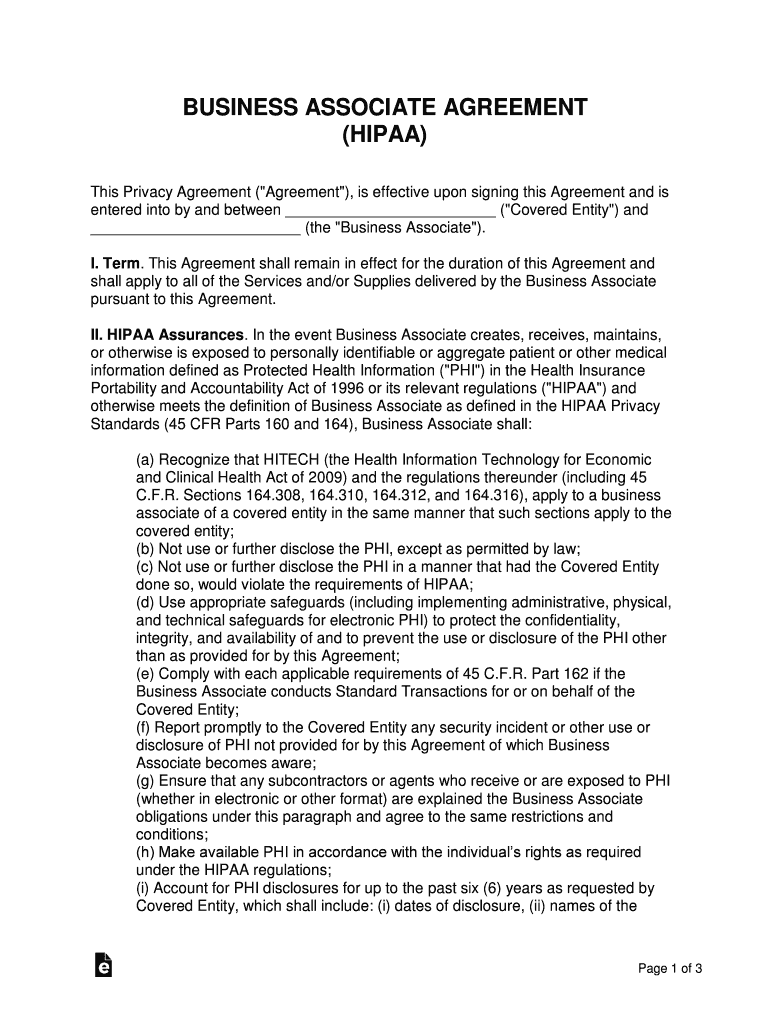
The Business Associate Agreement (HIPAA) is a vital legal document that establishes a formal relationship between a healthcare provider or covered entity and a business associate. This agreement is specifically designed to ensure that any third-party service providers accessing or handling Protected Health Information (PHI) comply with the Health Insurance Portability and Accountability Act (HIPAA) requirements. The primary goal is to protect the confidentiality and integrity of patient data, outlining the duties and responsibilities of business associates in managing PHI in a secure manner. Typically, the terms of the BAA include adherence to HIPAA regulations, maintaining safeguards for PHI, and specific protocols for breach notification.
Key Elements of the Business Associate Agreement
A well-constructed Business Associate Agreement should contain several critical elements to ensure compliance and protect patient information. Key components include:
- Definition of Terms: Clearly outlined definitions for PHI, business associate, and covered entity set the groundwork for mutual understanding.
- Scope of Work: Describes the specific tasks and services the business associate will perform, emphasizing the use of PHI.
- Safeguards: Details the technical, physical, and administrative measures implemented to protect PHI from unauthorized access or disclosure.
- Breach Notification Procedures: Establishes the timeline and method by which the business associate must report any breaches of unsecured PHI to the covered entity.
- Termination Clause: Specifies the conditions under which the BAA can be terminated, including procedures for returning or destroying PHI.
- Subcontractor Requirements: Ensures that any subcontractors used by the business associate are also bound by the same HIPAA compliance obligations.
Legal Use of the Business Associate Agreement
The Business Associate Agreement plays a pivotal role in the legal framework of HIPAA compliance. It serves as a binding contract that holds business associates accountable for the secure handling of PHI. This agreement not only underscores the legal obligations of protecting patient data but also provides a mechanism for redress in instances of non-compliance. Should a business associate fail to adhere to the agreed-upon safeguards or breach PHI, the BAA ensures that the covered entity has legal recourse to address these violations.
How to Use the Business Associate Agreement
To effectively implement a Business Associate Agreement, covered entities should follow a structured process. Initially, identify all business associates who have access to PHI in the course of work with the covered entity. Draft a comprehensive BAA tailored to the specific services provided, taking care to include all essential elements mentioned earlier. It is crucial to have legal counsel review the agreement to ensure compliance with HIPAA regulations. Once signed, continuously monitor and audit the business associate's practices to verify ongoing compliance with the agreement's terms.
Steps to Complete the Business Associate Agreement
Completing a Business Associate Agreement involves several core steps:
- Identify Relevant Parties: Determine which third-party service providers qualify as business associates.
- Draft the Agreement: Use a standard template or seek legal counsel to draft an agreement that addresses all necessary components.
- Review and Negotiate: Work with the business associate to review and negotiate terms, ensuring mutual understanding and agreement.
- Obtain Signatures: Once both parties agree on the terms, secure signatures to formalize the agreement.
- Maintain Compliance: Regularly review and update the BAA as needed to reflect changes in services or regulations.
Important Terms Related to Business Associate Agreement
Understanding specific terms related to the Business Associate Agreement is crucial for accurate application and compliance. Key terms include:
- Covered Entity: Any healthcare provider, health plan, or healthcare clearinghouse that transmits PHI in electronic form.
- Business Associate: A person or entity that performs activities involving the use or disclosure of PHI on behalf of a covered entity.
- PHI (Protected Health Information): Any information about health status, provision of healthcare, or payment for healthcare that can be linked to an individual.
Examples of Using the Business Associate Agreement
Several scenarios illustrate the practical use of the Business Associate Agreement. For instance, when a hospital outsources its billing functions to a third-party service provider, a BAA is necessary to ensure the protection of patient billing information. Similarly, if a healthcare provider engages an IT support company to manage its electronic health records, a BAA must be executed to hold the IT provider accountable for safeguarding sensitive patient data.
Why You Should Have a Business Associate Agreement
A Business Associate Agreement is critical for any covered entity that partners with outside vendors or service providers accessing PHI. The BAA provides legal protection by ensuring compliance with HIPAA requirements, reducing the risk of data breaches and associated penalties. It also clarifies the roles and responsibilities of each party, promoting transparency and accountability, essential for maintaining patient trust and organizational reputation.
Business Types that Benefit Most from Business Associate Agreement
Various business types that interact with healthcare providers stand to benefit from a Business Associate Agreement. These include IT service firms, billing companies, cloud storage providers, legal services, and any other entities dealing with PHI as part of their service delivery. By establishing a BAA, these businesses not only comply with legal obligations but also enhance their credibility and trust with healthcare clients by demonstrating a commitment to data security.