






Definition and Purpose of the DBPR HR-7022 - Commissary Service Notification
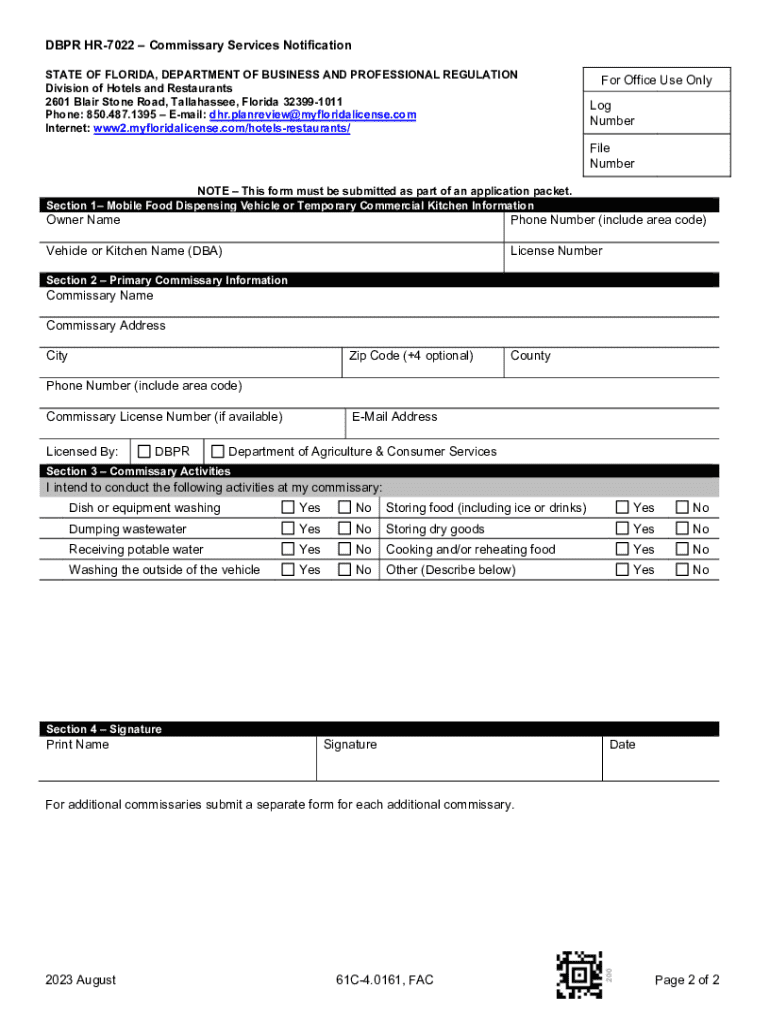
The DBPR HR-7022 - Commissary Service Notification is a crucial form issued by the Florida Department of Business and Professional Regulation (DBPR). It serves as a notification and informational document specific to commissary services associated with mobile food dispensing vehicles and temporary commercial kitchens. This form is part of the application process for complying with Florida’s food service regulations. It is designed to facilitate the provision of essential details regarding culinary operations that require the use of a commissary for food preparation, storage, and cleaning. By completing this form, business owners ensure that their mobile or temporary operations are supported by a recognized and approved commissary facility, thus complying with public health and safety standards.
Who Typically Uses the DBPR HR-7022 - Commissary Service Notification
Primarily, the DBPR HR-7022 form is utilized by entrepreneurs and businesses operating mobile food dispensing vehicles or temporary commercial kitchens in Florida. These include food truck owners, catering businesses, and temporary kitchen operators who require an established facility for various activities such as food preparation, storage, and utensil cleaning. In addition to business owners, commissary operators themselves may need to provide supporting documentation and compliance confirmations as part of the overall submission process. The form helps ensure that these businesses have access to adequate infrastructure to support safe and hygienic food service operations.


Steps to Complete the DBPR HR-7022 - Commissary Service Notification
-
Gather Required Information: Assemble all necessary business and personal details relevant to the commissary and the mobile or temporary kitchen operation.
-
Owner and Vehicle Details: Fill in specific fields for owner identification, vehicle or kitchen type, and registration details.
-
Commissary Information: Provide comprehensive details about the commissary. This includes its location, contact information, and the scope of services it provides.
-
Intended Commissary Activities: Describe the types of activities that will be undertaken at the commissary, focusing on food preparation and storage, cleaning, and waste disposal.
-
Signature Section: Complete the form by signing it, ensuring all details are verified and accurate.
-
Submit with Application Packet: Ensure the completed form is included within the broader application packet submitted to the DBPR for review alongside any additional required documentation.
Key Elements of the DBPR HR-7022 - Commissary Service Notification
-
Owner Information: It requires precise identification details about the owner(s) of the food business.
-
Vehicle or Kitchen Identification: Includes fields to enter specifics of the mobile food dispensing vehicle or temporary kitchen.
-
Primary Commissary Details: Critical data about the designated commissary, such as name, address, and contact details.
-
Commissary Activities: A section to outline the operations intended at the commissary, ensuring clarity on how the facility supports the food business.
-
Signature Affirmation: Signatures of the responsible parties to certify that all information is accurate and that the business complies with Florida’s regulations.
Legal Use and Compliance
Completing and submitting the DBPR HR-7022 enables legal compliance for mobile and temporary food service operations within Florida. It aligns with the state’s food safety laws by ensuring that these businesses have access to appropriate commissary facilities that meet health and safety standards. Non-compliance, such as failure to submit the form or provide complete and accurate information, could lead to penalties, including fines or the suspension of business operations. Therefore, understanding and adhering to these requirements is essential to maintain operational legality and public trust.
Required Documents for Submission
To accompany the DBPR HR-7022 form, several documents may be required:
-
Proof of Commissary Agreement: A signed agreement or lease evidencing the relationship between the food business and the commissary.
-
Business Licenses and Permits: Current licenses confirming legality and ability to operate as a mobile or temporary food business.
-
Health and Safety Compliance Certificates: Documentation that verifies compliance with local health regulations for food preparation and management at the commissary.
Ensuring all required documents are accurate and submitted alongside the form is essential for a smooth application process.
Form Submission Methods
The DBPR HR-7022 - Commissary Service Notification can be submitted via several methods:
-
Online Submission: Businesses can submit the form and accompanying documents through the DBPR’s portal, facilitating quick and efficient processing.
-
Mail Submission: Hard copies can be mailed to the appropriate DBPR address, although this may result in longer processing times.
-
In-Person Submission: For those preferring direct interaction, the form can be submitted in person at a DBPR office, allowing for immediate receipt confirmation.
Each method has its advantages, and businesses can choose the one that best fits their needs and timeline.
State-Specific Rules and Considerations
Being a Florida-specific form, the DBPR HR-7022 is governed by rules that may not apply in other states. Understanding these regulations is crucial for compliance:
-
State Health Codes: Compliance with Florida’s health codes governing food safety and commissary operations is mandatory.
-
Regional Variations: Additional regional or county regulations might necessitate further documentation or compliance checks.
-
Environmental Considerations: Adherence to local environmental protection laws, especially concerning waste management and disposal at commissary facilities.
By familiarizing themselves with these state-specific rules, business owners can ensure they fulfill all necessary requirements for legal operation.
Penalties for Non-Compliance
Non-compliance with the requirements associated with the DBPR HR-7022 can result in significant penalties:
-
Fines and Fees: Monetary penalties imposed for failing to submit the form or adhere to its directives.
-
License Suspension or Revocation: Operating licenses can be suspended or revoked, impacting business viability.
-
Legal Repercussions: Potential legal actions stemming from violations of state health and business operation codes.
Understanding the form’s importance and the potential consequences of non-compliance reinforces the critical nature of ensuring accurate and timely submissions.