
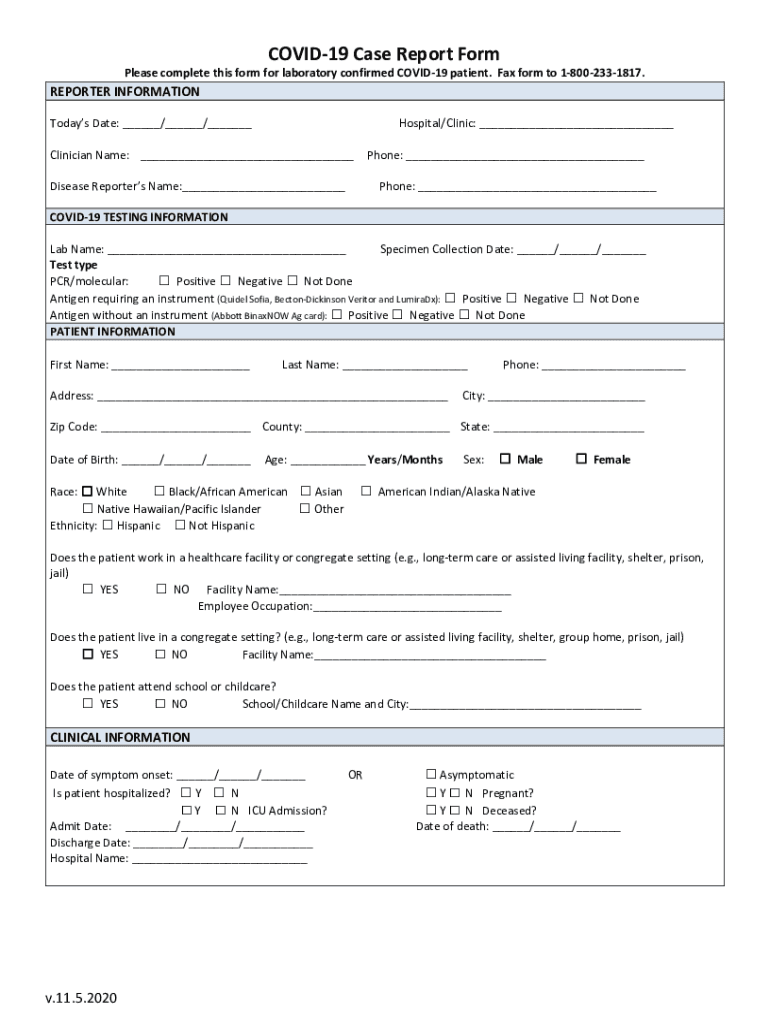







Definition and Purpose of the Form
The "Information for Health Departments on Reporting Cases of COVID-19" is a standardized document used by health departments to report laboratory-confirmed cases of COVID-19. This form serves as a critical tool in monitoring the spread of the virus, aiding in public health responses. It includes sections for detailing the demographics of confirmed patients, specifics about COVID-19 testing, and the clinical and hospitalization status of the patients. By systematically collecting this information, the form supports the accurate tracking and management of COVID-19 cases across various jurisdictions.
Steps to Complete the Form
Completing the "Information for Health Departments on Reporting Cases of COVID-19" involves several clear steps to ensure accuracy and completeness:
- Gather Patient Information: Collect patient demographics including age, gender, and race, ensuring personal identifiers comply with privacy regulations.
- Detail Testing Data: Record specific data about the COVID-19 test such as the type of test, date administered, and results.
- Document Clinical Information: Include clinical symptoms observed, the onset date of symptoms, and any underlying health conditions.
- Update Hospitalization Status: Note whether the patient was hospitalized, dates of admission and discharge, and the outcome of the hospital stay.
- Submit the Form: After verifying all details for accuracy, submit the form through the appropriate channels as mandated by local health authorities.
Who Typically Uses this Form
This form is predominantly utilized by healthcare providers, including hospitals, clinics, and public health officials. Epidemiologists and data analysts within health departments use the data collected to form epidemiological models and inform health policy decisions. Furthermore, public health authorities at the state and federal levels, including the Centers for Disease Control and Prevention (CDC), rely on these reports to coordinate broader COVID-19 prevention and control efforts.
Important Terms Related to the Form
- Laboratory-confirmed: Refers to diagnosis confirmed through laboratory tests like PCR (polymerase chain reaction) testing.
- Epidemiology: A branch of medicine that deals with the incidence, distribution, and control of diseases.
- Quarantine and Isolation: Terms related to restricting movement of those exposed or infected to prevent disease spread.
- Contact Tracing: A process of identifying and notifying people who may have come into contact with an infected person.
Legal Use and Compliance
The use of the form is governed by strict legal and regulatory guidelines to ensure data integrity and patient confidentiality. This includes compliance with the Health Insurance Portability and Accountability Act (HIPAA) which mandates the protection of patient health information. Health departments are obligated to report cases in a timely manner according to local laws, contributing to national databases that help track and manage the pandemic.
Key Elements of the Form
The form is structured to collect comprehensive data across several critical areas:
- Reporter Information: Details of the individual completing the report including contact information and healthcare facility.
- Patient Demographics: Information on age, gender, ethnicity, and residence.
- Testing Details: Types and dates of tests conducted, and lab results.
- Clinical Features: Symptomatic details, comorbidities, and other health details.
- Outcome and Hospitalization: Hospital admission status, ICU admission, and discharge outcomes.
Form Submission Methods
Forms can be submitted via multiple methods depending on the infrastructure of the reporting health department:
- Online Submission Systems: Many health departments provide secure portals for uploading completed forms electronically, ensuring instant transmission.
- Mail: Some jurisdictions may still allow physical submission through postal services, although this method is less favored due to time constraints.
- In-Person: Although rare, in-person submission at designated health department offices may be possible, especially in rural or low-tech areas.
Digital vs. Paper Versions
The transition to digital platforms has made online submission more common. Digital forms support real-time data entry, reduce processing time, and improve accessibility across various devices. However, paper forms might still be employed in certain areas with limited digital infrastructure, ensuring all regions can effectively report cases regardless of technological capability.
Eligibility Criteria for Reporting
Reporting is mandatory for all laboratory-confirmed COVID-19 cases. Healthcare providers are responsible for ensuring prompt and accurate submission of this information following a confirmed diagnosis. The data from these reports play a vital role in shaping health interventions and policy decisions to curb the spread of COVID-19.


Examples of Using the Form
Consider a scenario in a large urban hospital identifying a surge of COVID-19 cases. Each confirmed case's symptoms, testing details, and hospitalization status are recorded using this form. These reports then feed into a central database used by epidemiologists to model infection rates, informing decisions about lockdowns and resource allocation. Alternatively, a public health team might employ the data from these forms to identify hotspots where additional testing sites or vaccination drives are needed.
State-Specific Rules and Differences
While the core components of the form remain consistent, state health departments may impose additional requirements or variations tailored to local needs. For instance, some states might require additional fields regarding travel history or data on recent vaccinations. These variations cater to specific public health priorities within different geographic areas, reflecting the diverse epidemiological patterns across the United States.




