






Definition & Meaning
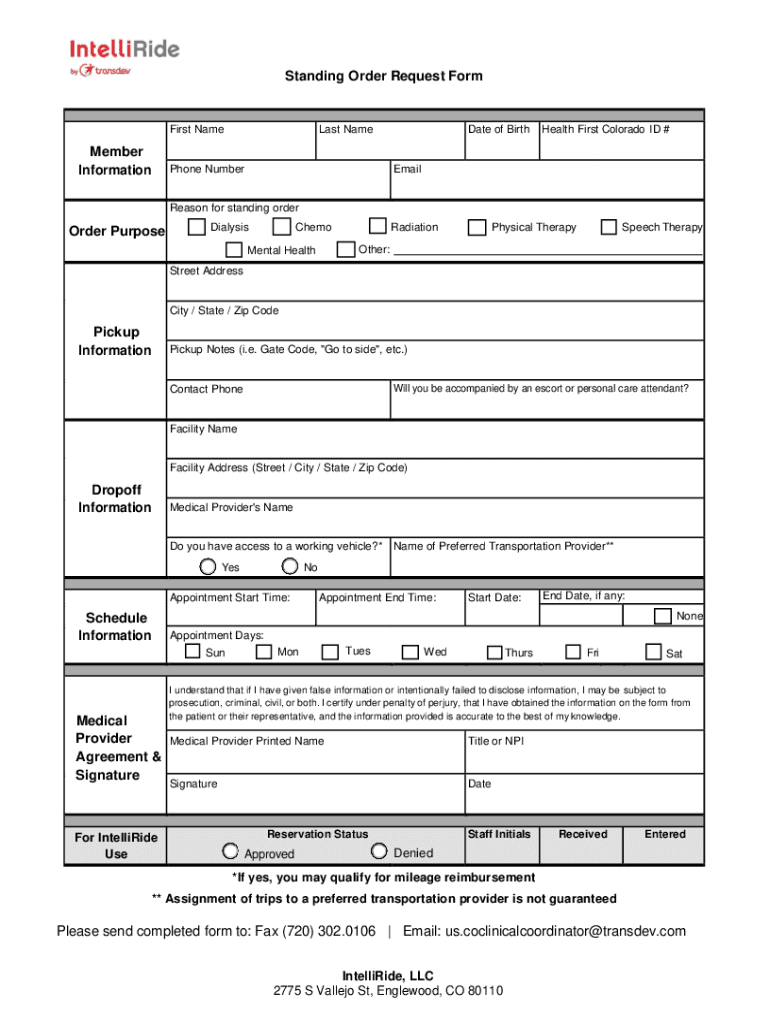
The "Mileage Reimbursement Verification Form Standing Order" is a critical document used to verify and authorize the reimbursement of mileage expenses. It is often utilized by organizations to compensate employees or members for travel expenses incurred during the course of their duties. The form typically includes details about the trip, such as the date, purpose, distance traveled, and the reimbursement amount per mile. This standing order component implies that the document serves as a recurring authorization for similar processes, streamlining the reimbursement workflow.
Key Elements of the Mileage Reimbursement Verification Form Standing Order
The form contains several essential components that ensure an individual's mileage reimbursement is properly documented and processed:
- Member Details: This section captures the personal information of the individual requesting reimbursement, including name, contact information, and employee ID or member number.
- Travel Information: Details of the trip, such as start and end dates, the odometer readings, and the total miles traveled.
- Purpose of Travel: A description of the purpose for which the travel was undertaken, which can include client meetings, deliveries, or attending business conferences.
- Rate per Mile: The reimbursement rate per mile, which should align with the organization's policy or IRS guidelines.
- Total Reimbursement Calculated: A calculated field that multiplies the total miles traveled by the reimbursement rate per mile to derive the total amount due.
Steps to Complete the Mileage Reimbursement Verification Form Standing Order
Completing this form requires careful attention to detail to ensure accuracy and compliance with organizational policies:
- Fill Out Personal Information: Enter your full name, contact details, and any relevant identification numbers.
- Document Travel Specifics: Record the travel start and end dates, starting and ending odometer readings, and the total distance traveled.
- State the Purpose: Clearly explain the reason for the travel to validate business necessity.
- Verify Reimbursement Rate: Confirm that the per-mile reimbursement rate reflects the organization's current policy.
- Calculate Total Reimbursement: Use the provided calculations to ensure the total reimbursement amount is accurate before submission.
How to Use the Mileage Reimbursement Verification Form Standing Order
The form serves multiple functions within organizational processes:
- Expense Verification: It provides evidence of travel expenses incurred by employees, which is essential for budgeting and financial planning.
- Audit Trail: It creates a comprehensive record that can be used for auditing purposes to verify the legitimacy of travel claims.
- Standardization: Encourages a consistent approach to mileage reimbursement across the organization, facilitating easier processing and approval.
Who Typically Uses the Mileage Reimbursement Verification Form Standing Order
The form is widely used by various stakeholders within an organization:
- Employees: Individuals who travel for business purposes and wish to claim mileage reimbursement.
- Human Resources and Finance Departments: Responsible for processing the forms, ensuring claims are within policy, and issuing reimbursements.
- Managers and Supervisors: Often required to verify and approve the travel details and purposes listed on the form.


Legal Use of the Mileage Reimbursement Verification Form Standing Order
Ensuring the form's proper use is vital for compliance with legal and financial regulations:
- IRS Compliance: The form aids in adhering to IRS mileage reimbursement rates and documentation requirements to maintain tax deductibility.
- Record Keeping: Properly completed forms serve as legal documentation in disputes or audits regarding travel expense claims.
- Policy Adherence: Guarantees that reimbursement claims align with both company policies and federal regulations.
State-Specific Rules for the Mileage Reimbursement Verification Form Standing Order
Mileage reimbursement practices may vary slightly by state due to differing regulations or policies:
- California: Businesses might apply additional reimbursement provisions under labor laws.
- New York: Employers must adhere to state-specific transportation guidelines when documenting and reimbursing travel expenses.
- Texas: May have unique tax implications affecting how reimbursement is reported and processed.
IRS Guidelines for Mileage Reimbursement
The Internal Revenue Service (IRS) provides specific guidelines organizations must follow:
- Reimbursement Rates: IRS provides annual updates on standard mileage rates, which are essential for calculating reimbursements accurately.
- Documentation Requirements: Keeps track of dates, mileage details, and the business purposes of the trip.
- Tax Implications: Ensures that both organizations and employees comply with applicable tax laws to prevent issues during tax filing.
Each block in this content provides in-depth information on the various aspects of the Mileage Reimbursement Verification Form Standing Order, ensuring comprehensive guidance and utility for users.