






Definition and Meaning of a Private Agreement
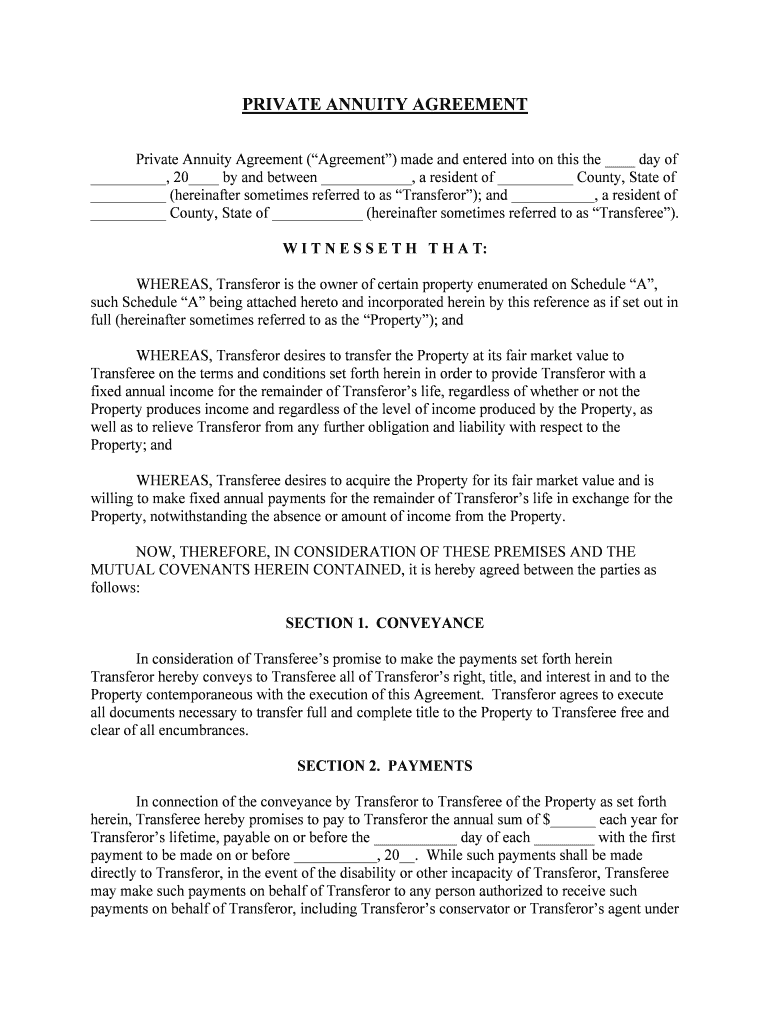
A private agreement is a legally binding contract executed between two or more parties intended to outline their rights and responsibilities concerning a specific matter. Unlike public contracts, these agreements are typically negotiated and concluded without public oversight, offering the parties privacy regarding the terms and conditions. A common example of a private agreement is a private annuity agreement, where the transferor conveys property to a transferee in exchange for fixed annual payments. The content and enforcement of such contracts are generally governed by state laws and can cater to various personal and business arrangements, providing flexibility tailored to the involved parties' specific needs.
Private agreements allow for tailored arrangements that suit the particular preferences of the involved parties, giving them substantial control over the agreement's terms. This flexibility is particularly beneficial when dealing with specialized transactions, such as transferring property or establishing long-term payment plans devoid of public scrutiny.
Key Elements of the Private Agreement
Understanding the structural components of a private agreement can ensure that all necessary contractual elements are appropriately addressed. Generally, a private agreement should include:
- Identification of Parties: Clearly states the legal names and addresses of all parties involved.
- Objective or Subject Matter: Details the purpose of the agreement and the specific obligations of each party.
- Consideration: Specifies what each party will give or receive, such as money, services, or other valuable items.
- Terms of Payment or Performance: Outlines how, when, and under what conditions payments or services must be delivered.
- Duration and Termination Conditions: Defines how long the agreement will last and the conditions under which it can be terminated.
- Confidentiality Clause: Ensures that information related to the agreement remains private between involved parties.
- Governing Law: Specifies which jurisdiction's laws will govern the agreement.
Including these elements in the agreement ensures clarity and helps prevent disputes by making the parties' expectations explicit.
Who Typically Uses the Private Agreement
Private agreements are utilized by various entities and individuals, depending on their specific needs:
- Individuals and Families: Often use them for estate planning, property transfers, private loans, or familial financial arrangements to maintain discretion.
- Small Businesses: Use them in employee contracts, supplier agreements, or partnership terms to establish business operations without public disclosure.
- Corporations: Engage in private financing contracts, mergers, acquisitions, or licensing agreements to protect business strategies and confidential information.
Each user group leverages the privacy and customization that these agreements offer to secure arrangements that best fit their strategic or personal goals.


Steps to Complete the Private Agreement
Completing a private agreement involves a structured process designed to ensure that all parties are clear on the terms and obligations:
- Drafting the Agreement: Begin by identifying the parties, describing the subject, and detailing obligations and terms.
- Negotiation: Engage with the other party to discuss and amend the terms until all parties are satisfied with the agreement.
- Legal Review: Consult with a legal professional to review the agreement for compliance, potential loopholes, and enforceability.
- Finalization: Make any final adjustments based on legal feedback and ensure that all parties have a complete understanding.
- Signing: Once finalized, all parties should sign the document in front of witnesses or a notary, if required.
- Distribution and Storage: Provide each party with a signed copy and store the agreement securely for future reference.
Following these steps can help ensure that the private agreement is valid, enforceable, and protective of the parties' interests.
Legal Use of the Private Agreement
The legal use of private agreements intersects with various aspects of contract law and requires careful consideration:
- Enforceability: To be legally binding, an agreement must include an offer, acceptance, mutual consideration, and the capacity to contract.
- Compliance with State Law: Contracts should be crafted in accordance with applicable state laws, which may influence terms like interest rates or contractual disputes.
- Dispute Resolution Clauses: Often included to set terms for arbitration or mediation to resolve conflicts outside the court system.
Utilizing expert legal guidance when crafting or finalizing a private agreement can prevent potential disputes and ensure that the agreement aligns with applicable laws.
State-specific Rules for the Private Agreement
Private agreements must comply with the state-specific laws where the agreement is executed. Factors may include:
- Interest Rate Limits: Some states have usury laws that cap the interest rate a private agreement can legally impose.
- Title Transfer Laws: Various states have different rules for transferring ownership of property within a private agreement.
- Notarization Requirements: Certain contractual agreements may necessitate notarization to be considered valid under state laws.
Understanding state-specific rules can prevent inadvertent non-compliance and ensure that the agreement maintains its intended legal force.
Examples of Using the Private Agreement
Private agreements serve diverse purposes across various scenarios:
- Property Exchange: A private annuity agreement can be utilized for property transactions where a transferor receives periodic payments from the transferee.
- Loan Agreements: Individuals may draft personal loan agreements with friends or family, stipulating repayment terms without involving financial institutions.
- Freelance Contracts: Independent contractors frequently use private agreements to define project scopes and payment terms with clients.
These examples demonstrate the versatility and adaptability of private agreements across both personal and professional spectrums.
Penalties for Non-Compliance
Failure to adhere to the terms outlined in a private agreement can result in several potential penalties:
- Legal Proceedings: Breach of contract may lead to lawsuits and associated legal expenses aimed at enforcing the agreement.
- Financial Penalties: Non-compliance might incur financial penalties or damage settlements, decided by the court.
- Credit Impact: For agreements involving financial obligations, failure to meet terms can impact credit ratings and borrowing capabilities.
Addressing potential penalties within the agreement, such as defining breach consequences, can provide safeguards and clarity for all parties involved.