





Definition and Meaning of Health Reimbursement Guidelines
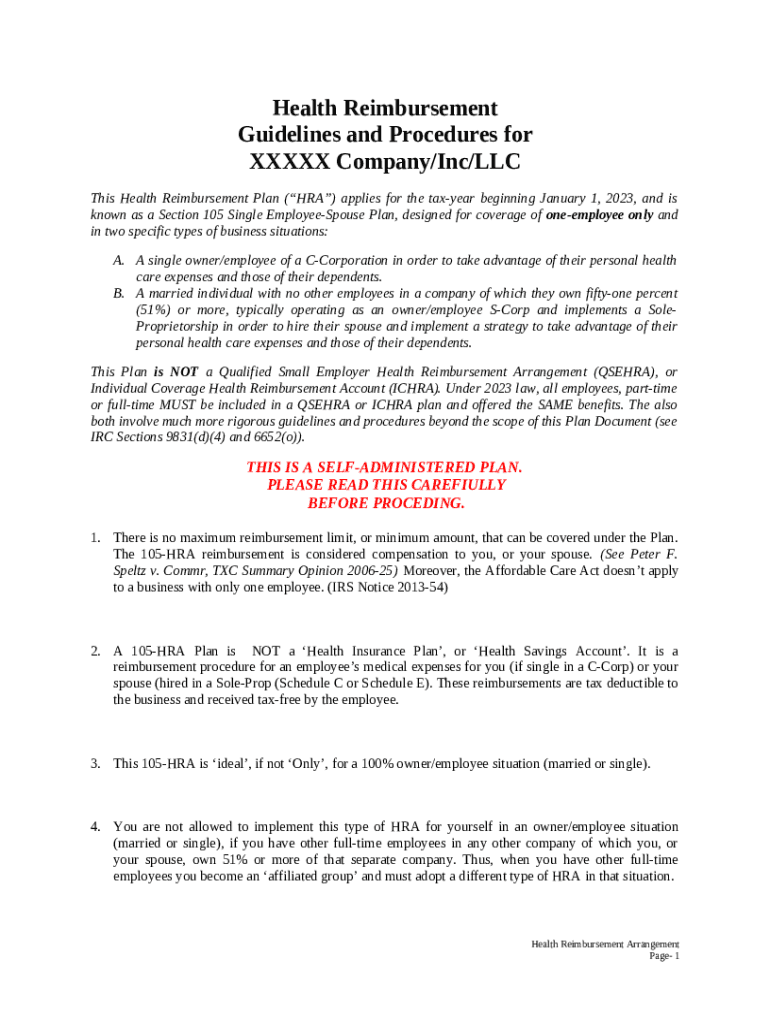
Health Reimbursement Guidelines and Procedures refer to a set of structured practices and standards that businesses must adhere to when managing Health Reimbursement Arrangements (HRAs). These guidelines ensure that companies comply with relevant IRS regulations while offering reimbursements for employee medical expenses. An HRA allows employers to reimburse employees for qualified medical costs, providing a tax-advantaged benefit plan that is not classified as typical health insurance. Understanding these guidelines is crucial for businesses wishing to offer HRAs as part of their employee benefits package.
Key Elements of the Health Reimbursement Guidelines
- Eligibility Requirements: Businesses must define which employees are eligible for the HRA, often based on roles, working hours, or employment duration.
- Reimbursement Procedures: Clear processes must be in place for submitting and approving claims, including required documentation and timelines for reimbursement.
- Documentation Standards: Detailed records, including receipts and proof of expenses, must be maintained to comply with IRS regulations.
- Compliance with IRS Regulations: Ensuring that the HRA is aligned with IRS requirements involves regular audits and updates to the plan documentation.
How to Use Health Reimbursement Guidelines and Procedures
Understanding and properly utilizing Health Reimbursement Guidelines is essential for both employers and employees. The guidelines lay down the framework for setting up, managing, and maintaining HRAs within an organization.
- Drafting a Plan Document: Create a plan document outlining the scope, eligibility, and terms of the HRA.
- Employee Communication: Inform employees about the availability and benefits of the HRA, detailing the process to claim reimbursements.
- Reimbursement Request Submission: Employees should submit claims with necessary documents as per the plan's guidelines.
Tips for Effective Use
- Regular Training Sessions: Conduct training sessions to ensure that all stakeholders understand the guidelines thoroughly.
- Usage Reports: Regularly generate reports to track HRA usage and make informed adjustments to the plan.
Steps to Complete the Health Reimbursement Guidelines and Procedures
Completing the Health Reimbursement procedures involves several steps that need to be meticulously followed to ensure compliance and efficiency.
- Developing the HRA Plan: Define the guidelines around who can use the HRA and the types of expenses covered.
- Setting Up the Reimbursement Process: Establish a system for employees to submit expenses for approval.
- Compliance Checks: Regularly review the plan's compliance with IRS rules and make necessary adjustments.
- Reviewing and Updating: Periodically review the guidelines to accommodate any changes in regulations or company policies.
Important Terms Related to Health Reimbursement Guidelines
Understanding specific terminology is critical for navigating the Health Reimbursement Guidelines effectively.
- Qualified Medical Expenses: These are IRS-approved expenses that can be reimbursed through an HRA.
- Plan Administrator: The individual or entity responsible for managing the HRA plan, ensuring compliance and processing reimbursements.
- Establishment Date: The official start date of the HRA, which must be documented and adhered to for compliance purposes.
Glossary of Terms
- Section 105 Plan: A particular type of HRA plan governed by Section 105 of the Internal Revenue Code, often used for single-employee setups.
- Tax Advantages: The benefits people receive from HRAs, as they allow reimbursements to be tax-deductible for employers and tax-free for employees.
IRS Guidelines Pertaining to Health Reimbursement
IRS guidelines are a core aspect of proper HRA management, ensuring that all reimbursement activities comply with federal tax laws.
- Tax Benefits: HRAs offer benefits that are tax-free to the employee and tax-deductible for the employer.
- Compliance: Employers must ensure all reimbursements comply with IRS stipulations, such as maintaining documentation for expenses.
- Reporting Requirements: Employers may need to include HRA information in their tax filings, depending on the size of the plan.
Navigating IRS Compliance
- Regular Updates: Stay informed on any changes in IRS regulations regarding HRAs.
- Audit Preparedness: Maintain accurate records to be prepared for possible IRS audits or inquiries.
Eligibility Criteria for Health Reimbursement Guidelines
Eligibility criteria determine who can avail of the benefits offered by an HRA within a company. These criteria should be clearly defined in the plan documents.
- Employee Classifications: Determine which roles or types of employees qualify for the HRA, potentially covering full-time, part-time, or specific job functions.
- Duration of Employment: Some HRAs may require a minimum duration of employment before an employee becomes eligible.
- Dependents Coverage: Guidelines often specify whether dependents of the employee are also eligible for reimbursements.

Determining Eligibility
- Consistent Policy Application: Apply eligibility rules consistently across the organization to avoid discrimination.
- Periodic Reviews: Re-evaluate eligibility criteria periodically to reflect any changes in employment law or company policy.
Required Documents for Health Reimbursement Submission
Submitting reimbursement requests necessitates several key documents to ensure that claims are processed in compliance with the established guidelines.
- Expense Receipts: Proof of expense, such as receipts or invoices, to validate the reimbursement claim.
- Proof of Payment: Documentation that expenses have been paid, which could include bank or credit card statements.
- Claim Form: A completed claim form that outlines the details of the expenses and justification for reimbursement.
Streamlining Document Submission
- Digital Submissions: Use digital platforms for document submissions to simplify and expedite the process.
- Checklist for Submission: Provide a checklist for employees to ensure all necessary documents are included with each submission.
Penalties for Non-Compliance
Non-compliance with Health Reimbursement Guidelines can result in significant legal and financial penalties.
- IRS Fines: Failure to adhere to IRS requirements for HRAs may result in fines or penalties.
- Tax Implications: Non-compliance could lead to the loss of tax advantages associated with HRAs, affecting both employers and employees.
- Reputational Damage: Non-compliance can impact the employer's reputation, potentially affecting employee satisfaction and retention.
Avoiding Penalties
- Regular Compliance Audits: Conduct audits to identify and correct any compliance issues before they lead to penalties.
- Education: Provide education and training to all relevant personnel to ensure they understand compliance requirements.