





Definition & Meaning
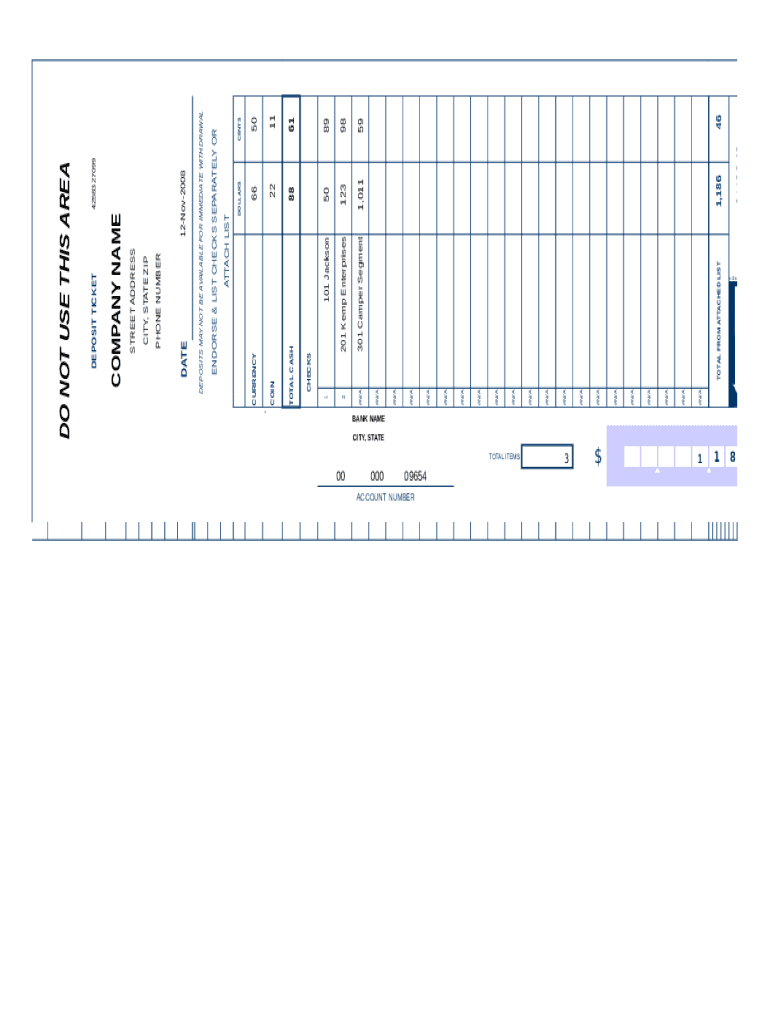
Printable bank deposit slips are documents used to record the details of a deposit transaction at a financial institution. These slips typically include information such as the date of the deposit, the total amount being deposited, and a breakdown of the deposit, including checks, cash, and their respective amounts. Their primary function is to provide a paper trail of the transaction, which is crucial for both the depositor and the bank for record-keeping and verification purposes.
How to Use the Printable Bank Deposit Slips
To effectively use printable bank deposit slips, follow these steps:
- Identification: Start by filling in your name and account number at the top of the slip to ensure the funds are deposited into the correct account.
- Deposit Information: List each check and cash denomination separately. Write the total amount of checks and the total amount of cash in their designated sections.
- Subtotal and Total: Add up all checks and cash for a subtotal, then sum them to compute the total deposit amount.
- Verification: Double-check all entries for accuracy to avoid discrepancies.
- Submission: Hand the completed slip to a bank teller along with physical checks and cash. If using an ATM, insert the slip with your deposit according to the machine instructions.
Steps to Complete the Printable Bank Deposit Slips
Completing a bank deposit slip involves several precise steps:
- Date Entry: Write the current date on the slip for record-keeping.
- Account Number: Enter the account number to ensure accurate processing.
- Check Entries: List each check individually, noting the check number and amount.
- Cash Entry: Count and note the total amount of cash separately.
- Grand Total: Sum all the entered amounts and write the grand total in the total box.
- Endorsing Checks: Ensure all checks are endorsed on the back as required by the bank before submission.
Key Elements of the Printable Bank Deposit Slips
Understanding the key elements of a deposit slip can aid in its correct completion.
- Header Information: Includes bank name and customer details.
- Deposit Date: The day on which the deposit is being made.
- Account Details: Contains spaces for the account number and, sometimes, the branch number.
- Type of Deposit: Sections to differentiate between cash and checks.
- Signature Line: Provides a space for the depositor to sign, confirming the accuracy of the details provided.
Why Should You Use Printable Bank Deposit Slips
Utilizing printable bank deposit slips offers several advantages:
- Accurate Record Keeping: Ensures that all transactions are logged and easily trackable.
- Error Prevention: Helps minimize errors by providing a structured format to list deposit details.
- Proof of Deposit: Serves as a proof of transaction for both personal and business records.
- Efficiency: Facilitates quick processing by readily providing all necessary details to bank tellers.
Who Typically Uses the Printable Bank Deposit Slips
Different entities and individuals rely on deposit slips:
- Individuals: When depositing checks or cash into personal accounts.
- Businesses: To keep accurate records of daily cash and check receipts.
- Nonprofits: For processing donation checks and cash income.
- Students and Minors: Often used when making deposits into savings or a joint account with parents.


Legal Use of the Printable Bank Deposit Slips
Bank deposit slips carry certain legal uses:
- Verification Tool: Acts as a legal document verifying the deposit details which can be used in disputes.
- Audits: Examined during audits as part of financial documentation.
- Fraud Prevention: Helps in identifying discrepancies or potential fraud in financial dealings.
Examples of Using the Printable Bank Deposit Slips
Here are some real-world scenarios:
- Small Business Owners: Use deposit slips nightly to ensure accurate banking of cash and checks collected throughout the day.
- Rental Property Managers: Utilize slips to deposit rent checks received from tenants.
- Freelancers: Record client payments received in check form for services rendered.
- Parents: Depositing savings or allowance into children's accounts as part of financial education efforts.
Digital vs. Paper Version
Decide between digital and paper versions based on convenience and archival needs:
- Digital Versions: Ideal for users comfortable with electronic banking and those who prefer to manage records digitally.
- Paper Versions: Preferred by those requiring a physical record or operating in contexts where digital banking isn't feasible.
Software Compatibility
While traditional paper slips are manual, digital processing aligns with software like QuickBooks and can automate entry into accounting systems for streamlined records and financial reporting. For businesses using software, digital slips can save time and reduce manual entry errors.
Business Types That Benefit Most from Printable Bank Deposit Slips
Several business types find particular utility in using deposit slips:
- Retail Stores: Managing numerous daily transactions needing efficient, reliable income recording.
- Restaurants: Deposit slips assist in quick and organized end-of-day cash management.
- Service-Based Businesses: Particularly those heavily dealing in checks, such as contractors and consultants.
Penalties for Non-Compliance
Failure to accurately use or report on deposit slips can result in:
- Financial Discrepancies: Leading to an audit or misreported income.
- Legal Issues: If discrepancies suggest fraud or tax avoidance.
- Administrative Penalties: Imposed by financial institutions for returning incorrect paperwork.