






Definition & Meaning
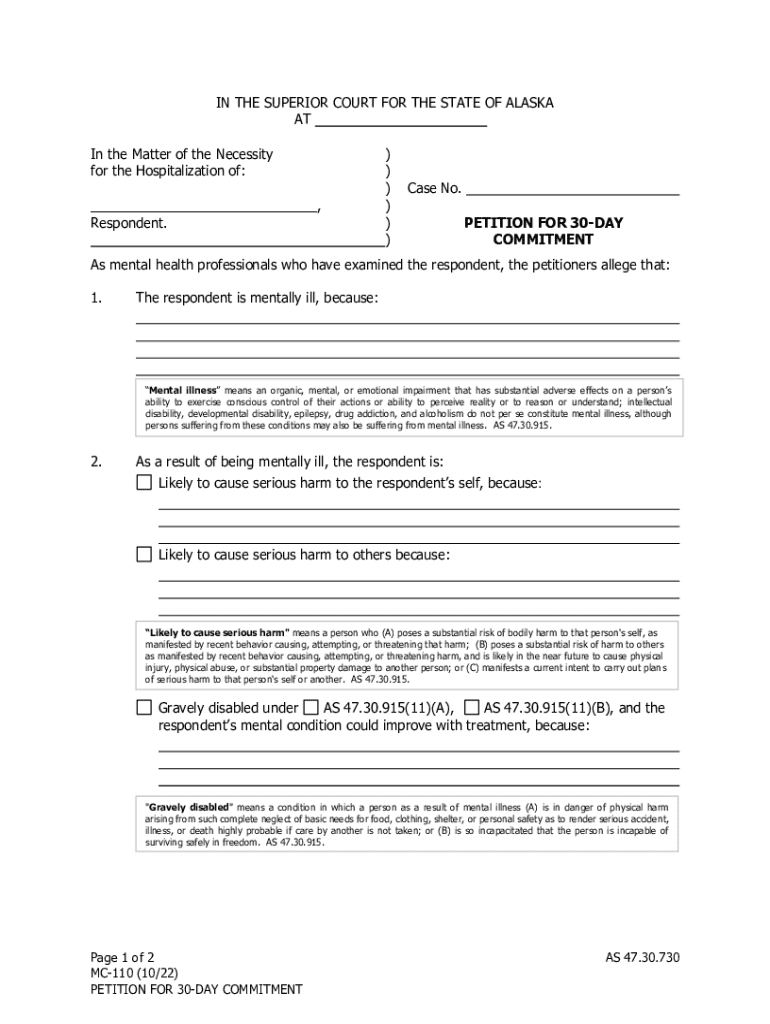
The MC-110 Petition For 30-Day Commitment is a legal document used within the framework of the U.S. mental health care system, specifically for initiating a court-supervised commitment process. It is filed in the Superior Court and aims to secure a 30-day psychiatric treatment for individuals diagnosed with severe mental illnesses. This petition is typically invoked when a person is considered unable to ensure their own safety due to mental health issues or is deemed a potential risk to others. The document outlines clear, evidence-based reasons for commitment and highlights any prior unsuccessful interventions. Mental health professionals play a crucial role in compiling and presenting the evidence necessary to justify such a commitment to the court, ensuring that the process upholds legal standards.
Steps to Complete the MC-110 Petition For 30-Day Commitment
-
Gather Information: Begin by obtaining comprehensive information regarding the respondent's mental health status, behavioral patterns, and any incidents that have raised concern.
-
Consult Mental Health Professionals: Engage with psychiatrists, psychologists, or social workers who have interacted with the respondent and can provide professional assessments and recommendations.
-
Complete the Petition Form: Fill out the MC-110 form, ensuring accuracy and completeness. Include the respondent’s demographic details, history of mental illness, and specific reasons for the need for a 30-day commitment.
-
Attach Supporting Documentation: Include any relevant medical records, psychiatric evaluations, or testimony from mental health professionals that support the necessity of commitment.
-
File the Petition: Submit the completed petition and accompanying documents to the appropriate division of the Superior Court. Ensure compliance with local filing protocols.
-
Attend Court Proceedings: Be prepared to participate in court hearings. Petitioners should be ready to present and discuss the rationale behind the request for commitment, along with any additional evidence as required by the judge.
Key Elements of the MC-110 Petition For 30-Day Commitment
-
Respondent Information: This includes the individual’s full name, date of birth, and residence.
-
Medical History: Details regarding the respondent’s mental health diagnosis, treatment history, and past instances of hospitalization.
-
Rationale for Commitment: Clear reasoning supported by evidence that demonstrates the respondent's incapacity for self-care or their potential danger to themselves or others.
-
Professional Evaluations: Consultations and assessments conducted by certified mental health professionals, along with their declarations, form a critical part of the petition.
-
Proposed Treatment Facility: Information about the intended location for the commitment, ensuring it is a suitable and approved treatmeNT facility for the needs of the respondent.
Who Typically Uses the MC-110 Petition For 30-Day Commitment
-
Mental Health Professionals: Psychologists, psychiatrists, and licensed social workers who assess the severity of a respondent's condition and determine the need for institutional care.
-
Family Members: Relatives who observe significant mental deterioration in a loved one and recognize the necessity for intervention to ensure safety and recovery.
-
Legal Representatives: Attorneys or legal aides representing the interests of the respondent or their family in court proceedings.
-
Court Officials: Judges and court clerks involved in processing and adjudicating the petition to ensure the conduct of the proceedings aligns with legal and ethical standards.


Legal Use of the MC-110 Petition For 30-Day Commitment
The MC-110 petition is applied under strict legal oversight to balance personal liberties with the need for psychiatric intervention. It requires substantial evidence to justify the temporary deprivation of an individual's autonomy. The legal system offers a structured pathway that allows for appeals or reviews, ensuring that the application of the law is just and that the rights of the respondent are not unduly compromised. Additionally, legal guidelines emphasize the importance of exhausting less restrictive means before resorting to court-ordered commitments. This ensures that commitments are a last resort, used only when community-based alternatives are insufficient.
State-Specific Rules for the MC-110 Petition For 30-Day Commitment
Each state may have unique provisions regarding the implementation and processing of the MC-110 form. These variations can affect where and how forms are filed, the roles of mental health professionals, and court procedures. Differences might include:
-
Filing Locations: Designated courts or mental health units where the petition must be submitted.
-
Professional Qualifications: Specific credentials required for health professionals evaluating the respondent.
-
Review Periods: Distinct timelines for reviewing petitions and conducting court hearings.
Examples of Using the MC-110 Petition For 30-Day Commitment
-
A young adult exhibiting extreme paranoia and disconnection from reality, refusing medication, and whose behavior poses a significant risk to roommates and family. The petition facilitates a mandatory 30-day observation period under the guidance of mental health practitioners.
-
An elderly individual with a sudden decline in their mental state, expressing delusions and exhibiting wandering behaviors that endanger their safety and confuse care home staff. Immediate medical intervention is necessary to ensure safety and well-being.
Form Submission Methods
You can file the MC-110 Petition For 30-Day Commitment through various channels, ensuring accessibility and ease:
-
Online Filing: In locations where digital submissions are permitted, use secure portals to upload and submit the completed petition.
-
Mail: Send the completed form and accompanying documents via certified mail to the designated court address to ensure it reaches the relevant authorities safely.
-
In-Person: Submit the petition directly at the courthouse, where you can receive in-person guidance if needed and ensure proper documentation and receipt of submission.