
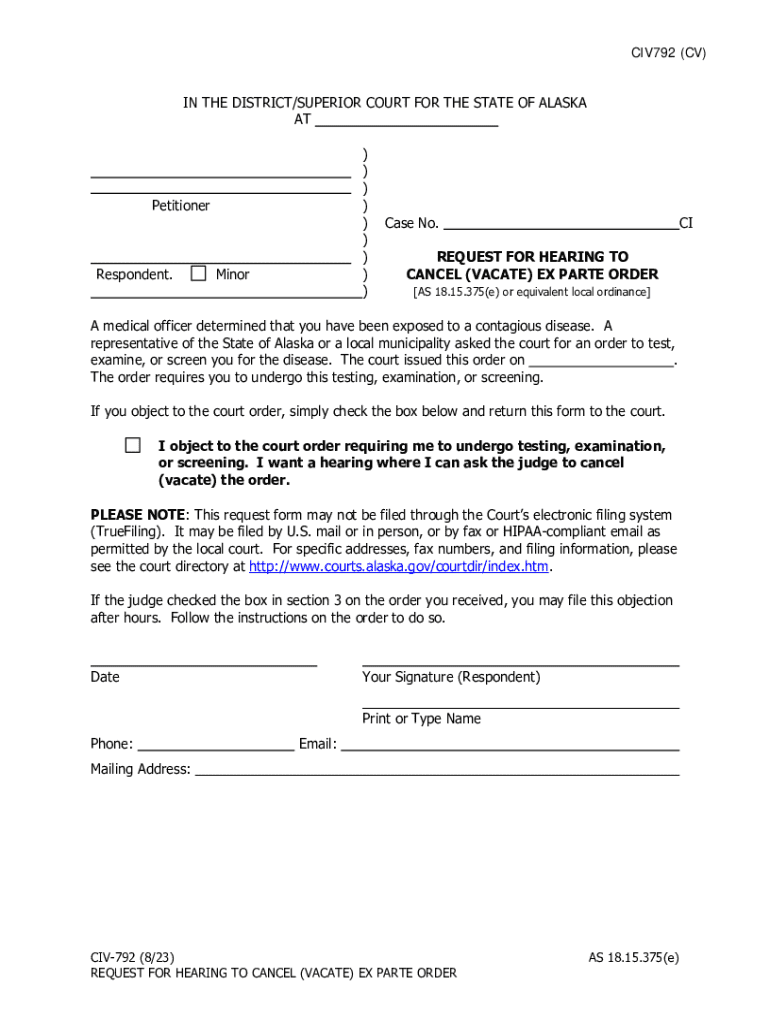







Definition & Meaning of the CIV-792 Request for Hearing to Vacate Ex Parte Order
The CIV-792 Request for Hearing to Vacate Ex Parte Order is a legal document used in Alaska to request that an ex parte court order be set aside. This form is especially relevant in cases involving mandatory testing orders for contagious diseases, allowing respondents to oppose the order and seek a judicial review. By submitting this request, the respondent can argue against the necessity of the order, providing an opportunity for the court to reconsider its prior decision based on any new evidence or arguments presented during the hearing.
How to Use the CIV-792 Request for Hearing to Vacate Ex Parte Order
To effectively use the CIV-792 form, one must first understand the purpose of the original ex parte order they seek to vacate. It is crucial to review the initial court order to identify specific reasons why the hearing is necessary. Users must clearly articulate their objections to the ex parte order in the form, providing a well-founded rationale. Common arguments might include errors in the original proceedings or new evidence that could alter the court's decision. Preparing detailed explanations and supporting documents will enhance the effectiveness of the request.
How to Obtain the CIV-792 Request for Hearing to Vacate Ex Parte Order
The CIV-792 form can be obtained from the Alaska Court System website or directly from the courthouse where the original order was issued. Those seeking the form can also visit legal aid organizations in Alaska for assistance. Court clerks may provide guidance on how to access the form and offer informational brochures detailing the filing process. Some legal offices offer downloadable versions of the form, making it more accessible for individuals without easy access to a courthouse.
Steps to Complete the CIV-792 Request for Hearing to Vacate Ex Parte Order
- Gather Required Information: Collect detailed information about the original ex parte order, including case number, date, and specific terms outlined.
- Fill Out Personal Details: Provide accurate personal information, such as name, contact information, and any relevant identification numbers.
- Articulate Reasons for Hearing: Clearly state the objections to the ex parte order, supported by facts, legal precedent, or new evidence.
- Attach Supporting Documents: Include any documents that will support the request, such as medical records, expert testimonies, or affidavits.
- Submit the Form: Deliver the completed form and attachments to the appropriate court, following any specific filing protocols. Confirm receipt and retain copies for personal records.
Key Elements of the CIV-792 Request for Hearing to Vacate Ex Parte Order
- Case Information: Details of the original case, including the court name, case number, and date of the ex parte order.
- Petitioner Information: Full name, address, and contact details of the individual requesting the hearing.
- Legal Arguments: Grounds for vacating the order, which could be based on procedural mistakes or new facts.
- Supporting Evidence: Documents such as affidavits, letters, and expert opinions to substantiate the request.
- Signatures: Signature of the petitioner, and where applicable, their legal representative, to confirm the form's authenticity.
State-Specific Rules for the CIV-792 Request for Hearing to Vacate Ex Parte Order
In Alaska, specific procedures and timelines govern the filing of a CIV-792 request. It is essential to note the time frame within which the request must be filed after receiving the ex parte order. Missing these deadlines could result in dismissal of the request without a hearing. Additionally, local courts may have unique requirements regarding form submissions, such as electronic filing systems or in-person submissions. Understanding these state-specific regulations can prevent administrative errors that might jeopardize the request's success.
Examples of Using the CIV-792 Request for Hearing to Vacate Ex Parte Order
Consider a scenario where an ex parte order mandates medical testing for a contagious disease. An individual believing the order is excessive can file a CIV-792. They could present new medical evidence refuting the initial risk assessment, arguing for its irrelevance or obsolescence. Another example might involve procedural mishaps during the issuance of the order. The petitioner could showcase instances of procedural deficiency to advocate for vacating the order. Such scenarios underscore the form's utility for a fair judicial process.
Legal Use of the CIV-792 Request for Hearing to Vacate Ex Parte Order
The legal application of the CIV-792 form involves challenging the basis or necessity of an ex parte order. The request prompts judicial review and ensures that affected individuals can voice their concerns regarding the implications of the order. This type of legal action emphasizes due process, offering an avenue for redress and ensuring compliance with constitutional guarantees. Moreover, it seeks to uphold judicial responsibility in issuing orders that significantly impact personal rights, particularly in sensitive matters such as health-related mandates.
Who Typically Uses the CIV-792 Request for Hearing to Vacate Ex Parte Order
Typically, individuals directly affected by the ex parte order utilize the CIV-792 form. This includes respondents ordered to undergo certain actions without initial consent, such as medical testing. Often, legal representatives file this request on behalf of clients seeking judicial intervention. Relevant parties might include patients, health service users, or any other stakeholders impacted by court mandates. Understanding the role of this form enables individuals to seek legal remedies through formal judicial channels.


Important Terms Related to CIV-792 Request for Hearing to Vacate Ex Parte Order
- Ex Parte Order: A court order issued without the presence of all parties, often in urgent situations.
- Judicial Review: A legal proceeding in which a court reassesses the validity of a legal order or decision.
- Vacate: To set aside or annul a previous legal judgment or order.
- Affidavit: A written statement confirmed by oath, used as evidence in court.
- Contagious Disease Mandate: A court directive pertaining to health interventions to prevent disease spread.
By expanding on these blocks, users gain a comprehensive understanding of the CIV-792 Request for Hearing to Vacate Ex Parte Order and its application within the legal framework.




