Definition & Meaning
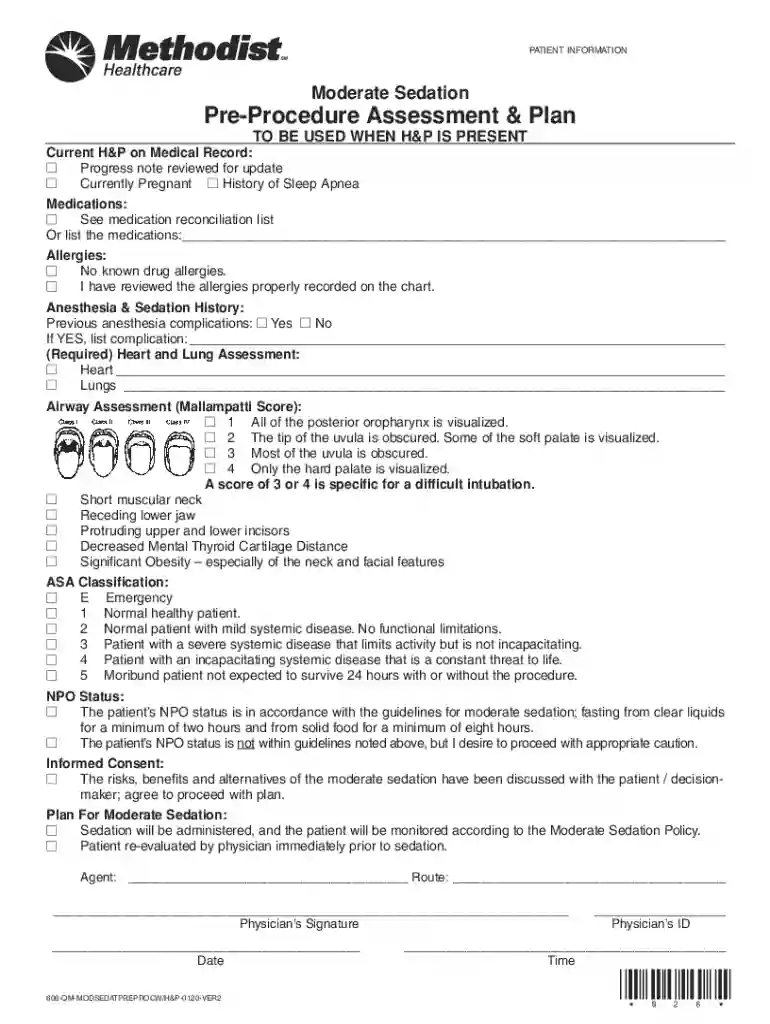
The "Moderate Sedation Pre-procedure Assessment and Plan" is a comprehensive form used in the medical field to ensure the safe administration of moderate sedation to patients undergoing specific procedures. It involves a meticulous review of the patient's medical history, current medications, and potential anesthesia risks. The aim is to formulate a tailored sedation plan that maximizes patient safety and procedural efficacy while minimizing discomfort and complications.
Key Components
- Medical History: Includes previous procedures, past anesthesia experiences, and any known complications to anticipate potential risks.
- Current Medications: A detailed inventory of medications helps identify potential drug interactions that might affect sedation.
- Allergies: Documenting any allergies, particularly to anesthetics or related medications, is crucial to prevent adverse reactions.
Key Elements of the Moderate Sedation Pre-procedure Assessment and Plan
Health Assessments
- Heart and Lung Examination: Ensures any existing conditions, like asthma or heart disease, are stabilized before sedation.
- Airway Evaluation: The Mallampati score is used to predict the ease of intubation, crucial for managing airways under sedation.
Patient Classification
- ASA Classification: Patients are categorized based on their health status to determine sedation suitability and necessary precautions.
- NPO Guidelines: Establish fasting requirements before sedation to reduce the risk of aspiration during the procedure.
Steps to Complete the Moderate Sedation Pre-procedure Assessment and Plan
- Review Medical History: Collect comprehensive patient history, focusing on previous anesthetic interventions and responses.
- Conduct Physical Exam: Evaluate heart and lung function, perform airway assessment, and classify ASA status.
- Verify Medications and Allergies: Ensure there are no potential contraindications with planned sedatives or anesthetics.
- Obtain Informed Consent: Educate the patient about the sedation plan, including risks, benefits, and alternatives to secure informed consent.
- Prepare Sedation Plan: Specify sedation type, dosages, and monitoring protocols tailored to the individual needs.
Why You Should Use the Moderate Sedation Pre-procedure Assessment and Plan
Ensuring patient safety and comfort during procedures requiring moderate sedation is paramount. The assessment and plan serve several essential functions:
- Risk Mitigation: By thoroughly documenting medical and anesthesia histories, potential risks are identified and managed proactively.
- Legal Compliance: Having a detailed plan and obtaining informed consent aligns with legal standards and protects against malpractice claims.
- Quality Care: Structured assessments ensure that all sedation-related factors are considered, enhancing the overall quality of patient care.
Important Terms Related to Moderate Sedation Pre-procedure Assessment and Plan
Common Terminology
- Informed Consent: Legal process of obtaining patient permission after explaining procedure, risks, and alternatives.
- Mallampati Score: A classification system used to predict potential airway management challenges.
- ASA Classification: The American Society of Anesthesiologists' system for assessing the fitness of patients before surgery.
Legal Use of the Moderate Sedation Pre-procedure Assessment and Plan
Compliance and Standards
- ESIGN Act Compliance: Ensures that all signed and documented consent forms are legally recognized under electronic signature laws.
- Patient Privacy: Forms must adhere to laws like HIPAA, safeguarding patient information confidentiality.
- Documentation Requirements: Detailed completion of this form aligns with medical record-keeping laws and helps defend against legal liabilities.
Examples of Using the Moderate Sedation Pre-procedure Assessment and Plan
Practical Scenarios
- Surgical Procedures: Before knee arthroscopy or minor dental surgeries requiring moderate sedation.
- Diagnostic Exams: Used in colonoscopy or endoscopy procedures to minimize patient discomfort.
- Therapeutic Practices: Employed during therapeutic sessions necessitating patient relaxation and stillness for optimal outcomes.