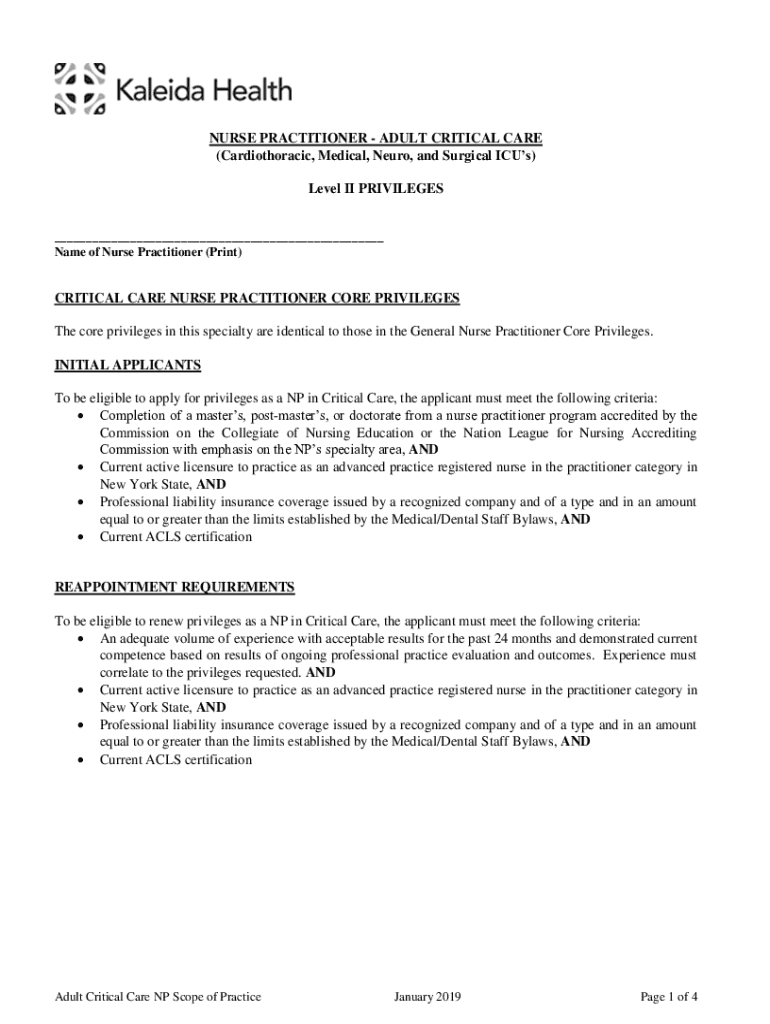







Definition and Role of a Critical Care Nurse Practitioner
A Critical Care Nurse Practitioner (CCNP) is a highly specialized nurse who focuses on providing advanced nursing care in critical care settings. These professionals possess the expertise necessary to manage complex patient conditions in acute and intensive care units. They collaborate closely with physicians and healthcare teams to implement treatment plans for patients experiencing severe health issues. CCNPs are often responsible for diagnosing medical conditions, developing care strategies, and performing procedures to support patient recovery.
Educational and Licensure Requirements
To become a Critical Care Nurse Practitioner, a candidate must complete extensive education and training. Typically, this includes:
- Earning a Bachelor of Science in Nursing (BSN)
- Passing the National Council Licensure Examination (NCLEX-RN)
- Obtaining a Master of Science in Nursing (MSN) or Doctor of Nursing Practice (DNP) with a focus on critical care
- Becoming certified as a Nurse Practitioner (NP) through a recognized body such as the American Association of Critical-Care Nurses (AACN)
- Maintaining active Advanced Cardiovascular Life Support (ACLS) certification
Core Competencies and Responsibilities
Critical Care Nurse Practitioners possess a range of skills and responsibilities crucial to patient care:
- Conducting thorough assessments and making clinical judgments
- Managing life-support equipment, such as ventilators and dialysis machines
- Performing advanced procedures, such as endotracheal intubation and central line insertion
- Monitoring patient progress and making necessary adjustments to care plans
- Facilitating communication among multidisciplinary teams to ensure consistent care
- Educating patients and families about medical conditions and treatment options
Application Process for Credentialing
Initial Application
The path to becoming a credentialed CCNP involves several steps:
- Submit an application to relevant healthcare institutions or certification bodies.
- Provide proof of educational qualifications and nursing licenses.
- Submit evidence of clinical experience in critical care settings.
- Acquire letters of recommendation from healthcare supervisors or mentors.
Reappointment Standards
CCNPs must undergo periodic reappointment to maintain their credentials. This process typically includes:
- Submitting renewal applications
- Providing documentation of ongoing education and skills training
- Demonstrating continued proficiency in critical care procedures through assessments or continuing education credits
Collaborative Practice and Team Dynamics
Importance of Teamwork
Critical Care Nurse Practitioners are integral members of healthcare teams and must excel in collaborative practice. Their responsibilities include:
- Collaborating with physicians, nurses, respiratory therapists, and social workers to deliver holistic care
- Participating in multidisciplinary rounds to discuss patient progress and plan adjustments
- Advocating for patient care improvements and policy changes in critical care settings
Legal and Ethical Considerations
Scope of Practice
CCNPs work under a distinct scope of practice defined by state laws and healthcare regulations. These can include:
- Performing specific procedures like intubations only under physician supervision
- Prescriptive authority limitations varying by state
- Ensuring documentation and patient confidentiality align with HIPAA regulations
Ethical Decision-Making
In critical care, ethical dilemmas are often encountered. CCNPs must navigate challenging issues such as:
- End-of-life care and advanced directives
- Balancing aggressive treatments versus patient quality of life
- Engaging in clear, empathetic communication with distressed families
Technology and Procedures
Technological Proficiency
CCNPs must be comfortable using advanced medical technologies, including:
- Electronic Health Records (EHR) for maintaining detailed patient documentation
- Telehealth platforms to expand access to critical care consultation
- Medical devices like defibrillators, hemodynamic monitors, and diagnostic imaging tools
Innovative Interventions
Staying informed on the latest interventions can enhance patient outcomes, such as:
- Utilizing evidence-based practices for managing septic shock and acute respiratory distress syndrome (ARDS)
- Implementing protocols for rapid sequence intubation and advanced airway management
By diving into the multi-faceted role of a Critical Care Nurse Practitioner, it is evident that these professionals are essential for delivering high-quality, life-saving care in today's complex healthcare landscape.