






Definition and Purpose of Form 5 Practice Agreement
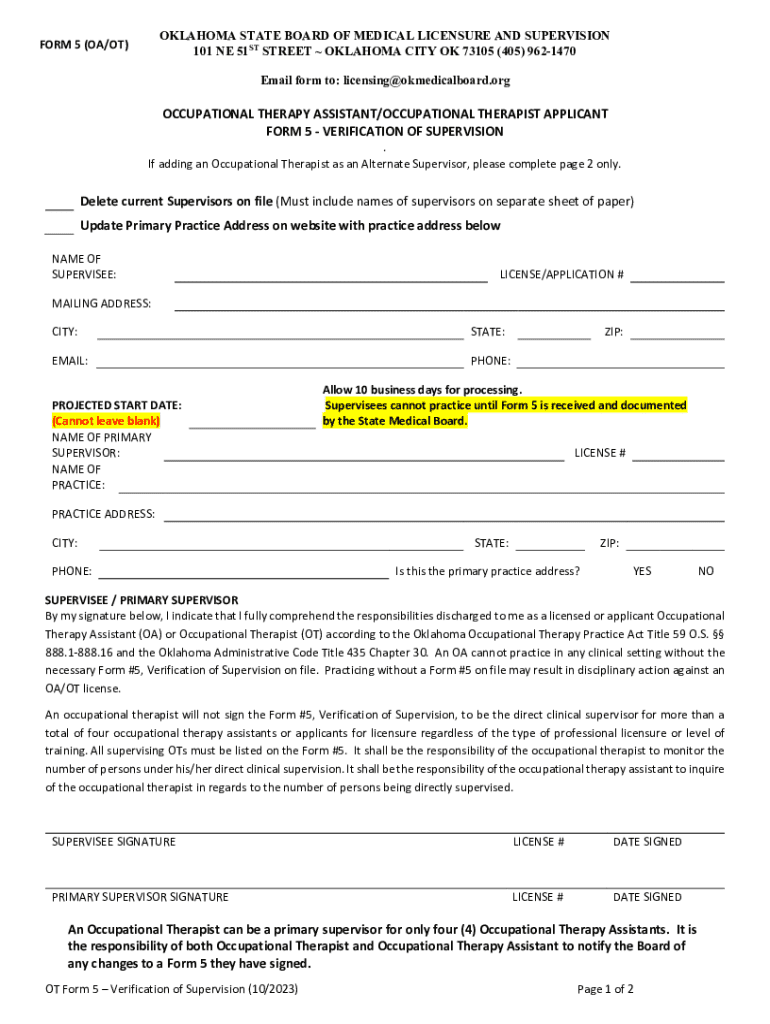
Form 5 Practice Agreement, also known as Verification of Supervision, is a required document for Occupational Therapy Assistants (OTAs) and Occupational Therapists (OTs) practicing in Oklahoma. This form formalizes the supervisory relationship between an OTA and a licensed Occupational Therapist, ensuring that the assistant operates under appropriate oversight in accordance with state regulations. This agreement outlines the roles and responsibilities of both parties, providing a framework for accountability and compliance in the delivery of occupational therapy services.
Steps to Complete the Form 5 Practice Agreement
-
Gather Required Information: Before completing the form, ensure you have all necessary details, including the names and contact information of both the supervisee (OTA) and the primary supervisor (OT).
-
Fill Out Supervisee Details: Enter the full name, contact information, and licensure details of the Occupational Therapy Assistant who will be practicing under supervision.
-
Provide Supervisor Information: Complete the section for the supervising Occupational Therapist, including their full name, license number, and contact information.
-
Specify Practice Location: Clearly delineate where the supervised practice will occur. This includes the address and facility name if applicable.
-
Include Projected Start Date: Indicate the expected start date for the supervision arrangement to ensure compliance with state requirements.
-
Review and Sign: Both the supervisee and the supervisor must review the completed form for accuracy before signing. This typically requires signatures from all parties involved to validate the agreement.
Important Terms Related to Form 5 Practice Agreement
-
Supervision: The process by which a licensed Occupational Therapist oversees the work of an Occupational Therapy Assistant, ensuring compliance with professional standards and legal requirements.
-
Supervisee: The Occupational Therapy Assistant who is receiving supervision from a licensed Occupational Therapist.
-
Primary Supervisor: The licensed Occupational Therapist responsible for the oversight and guidance of the Occupational Therapy Assistant in their professional practice.
Duties and Responsibilities of Supervisors and Supervisees
-
Supervisors: Must provide regular oversight, feedback, and professional guidance to the supervisee. They are accountable for the quality of care provided by the OTA under their supervision.
-
Supervisees: Required to adhere to the guidance and protocols established by their supervisor. They must report any issues or changes in their practice situation to their supervisor promptly.
-
Both Parties: Must notify the Oklahoma Medical Board of significant changes in supervision or if the agreement is terminated.
Legal Use and Compliance
Form 5 Practice Agreement must be filed with the Oklahoma Medical Board before an OTA can begin their practice in the state. This form ensures that all parties adhere to Oklahoma's legal requirements for occupational therapy practice, providing a legally binding record of the supervisory arrangement.
Who Typically Uses the Form 5 Practice Agreement
-
Occupational Therapy Assistants: Who are beginning their careers or transferring their practice to Oklahoma.
-
Licensed Occupational Therapists: Responsible for supervising OTAs, ensuring compliance with state regulations.
-
Healthcare Facilities: Employing OTAs to ensure that all regulatory practices are adhered to concerning supervisory requirements.


State-Specific Rules for the Form 5 Practice Agreement
Oklahoma mandates that OTAs must work under direct supervision, as defined by state law, which requires this formal agreement. The state has specific guidelines dictating the frequency and nature of supervisory interactions, which this form helps to formalize and document, ensuring statewide consistency in occupational therapy practices.
Penalties for Non-Compliance
Failure to file Form 5 before practicing as an OTA in Oklahoma can lead to disciplinary actions, including fines, suspension of licensure, or revocation of the right to practice. Ensuring timely and accurate submission of this form is critical to maintaining professional standing and avoiding legal repercussions.