






Definition and Meaning of the New Combined Hold Harmless
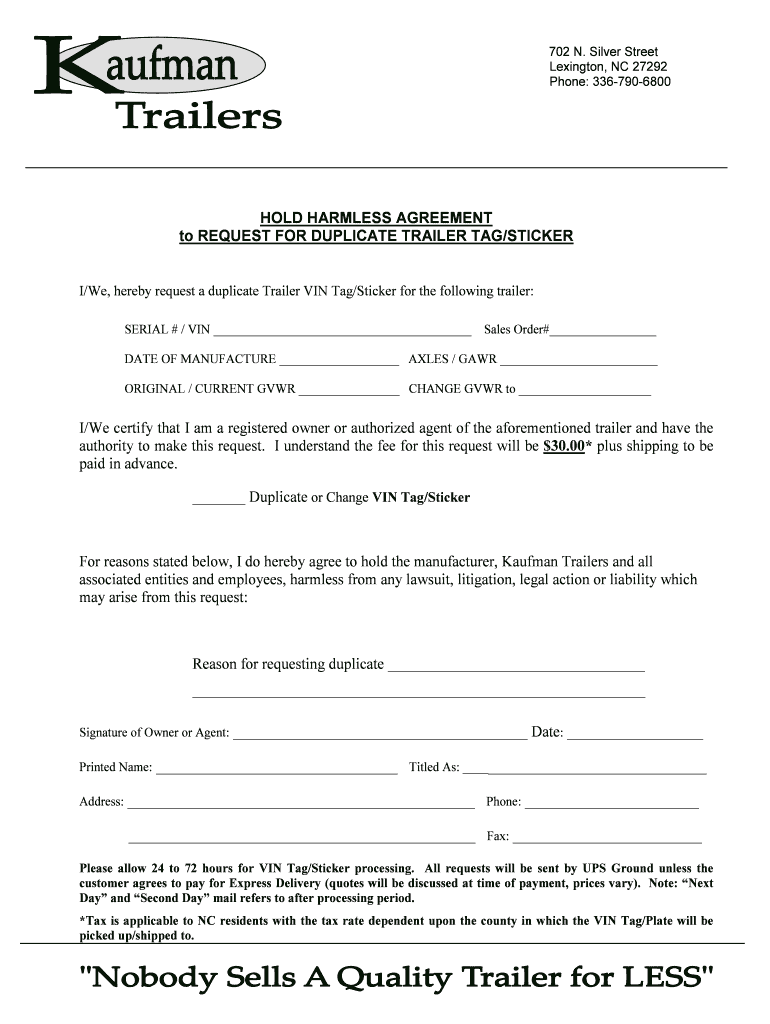
The new combined Hold Harmless Agreement is a legal document designed to protect one party from liability while clearly defining the responsibilities and freedoms of another party. Within the context of trailer manufacturing, for instance, this document often accompanies requests for duplicate trailer Vehicle Identification Number (VIN) tags or stickers. The form assures the issuing authority that the requester will not hold them liable for any legal disputes or claims that may arise from the issuance or use of the duplicate tags or stickers. This standard practice is crucial in mitigating risks and formally certifies the requester's authority to make such requests.
How to Use the New Combined Hold Harmless Form
To effectively use the new combined Hold Harmless form, individuals or businesses should first ensure they fully understand the context and implications of its terms. Typically, this involves:
-
Identifying All Parties Involved: Clearly specify the names and roles of all parties agreeing to the hold harmless provisions. This includes both the party being protected and the one assuming responsibility.
-
Specifying the Scope of Liability: The form should outline the specific areas or situations where liability is being waived. For trailer VIN tags, this may include any discrepancies or issues arising from the usage of said duplicates.
-
Review and Acknowledge Additional Clauses: Be vigilant about any extra conditions that may apply, such as time frames, geographical limitations, or additional responsibilities.
-
Provide Accurate Information: All data entered, especially numerical values like serial numbers, sales orders, and GVWR specifications, must be accurate to ensure the enforceability of the agreement.
Steps to Complete the New Combined Hold Harmless
Filling out the new combined Hold Harmless form requires careful attention to detail. Here are the steps to complete the form:
-
Read the Entire Document: Before filling out any section, thoroughly read the entire agreement to understand its provisions.
-
Gather Necessary Information: Collect all required documents and details, such as the trailer's serial number and GVWR specifications. This ensures you have everything needed for accurate completion.
-
Complete Identifying Sections: Fill in personal or business names, contact information, and any other identifying data.
-
Certify Authority: Acknowledge any statements that certify your authority to make the request, guaranteeing that you have legitimate standing to fill out the form.
-
Add Relevant Dates and Signatures: Ensure all critical areas, such as dates and signature lines, are accurately completed to validate the contract.
-
Review for Accuracy: Double-check all information for accuracy to ensure the form is legally sound and reflects the true intention of the parties involved.
Key Elements of the New Combined Hold Harmless
The new combined Hold Harmless form consists of several essential elements that must be understood clearly:
- Recipient Information: Includes names, addresses, and contact details of both parties.
- Liability Coverage: Defines the specific legal liabilities being waived by one party.
- Circumstance Description: Lists conditions, such as duplication or replacement of VIN tags.
- Certification and Authority Acknowledgment: Affirms the requester's authority to make specific requests.
- Fee and Shipping Details: Covers the required payment details, including a $30 fee and related shipping charges.
- Processing Time: Specifies expected processing durations, typically between 24 to 72 hours.
Legal Use of the New Combined Hold Harmless
The legal validity of the new combined Hold Harmless form rests on several principles:
- Consent: All involved parties must knowingly consent to the terms outlined in the document.
- Clarity: The language used must be clear and unambiguous, detailing each party's obligations and protections.
- Authority: The parties signing the agreement must have the legal capacity and authority to enter into such contracts.
- State Regulations: Comply with any state-specific rules that might impact the form’s applicability and enforceability.
Important Terms Related to the New Combined Hold Harmless
Understanding the terminology associated with the new combined Hold Harmless form is crucial to its proper execution:
- Hold Harmless: A clause within contracts where one party agrees not to hold another party liable for risk or harm under specified conditions.
- Liability: The state of being responsible for something, especially by law.
- Indemnity: Security or protection against a loss or other financial burden.
- VIN (Vehicle Identification Number): An alphanumeric code that uniquely identifies a vehicle.
- GVWR (Gross Vehicle Weight Rating): The maximum weight a vehicle is rated to safely carry.
Examples of Using the New Combined Hold Harmless
Practical uses of the form can be demonstrated through different scenarios:
- Trailer Manufacturers: Often use the form to manage the legal aspects of issuing duplicate VIN tags, exempting them from liability should the duplicate be misused.
- Commercial Exchanges: Businesses engaged in partnerships may use the form to delineate accountability, ensuring all parties have a shared understanding of each other's liability coverage.
- Event Organizers: Frequently utilize such forms to manage liability in venues or public events, ensuring they are not held responsible for participant actions.
State-Specific Rules for the New Combined Hold Harmless
Each state may have its own unique set of guidelines governing the use of hold harmless agreements. These rules could include:
- Requirement for Notarization: Some states may require the agreement to be notarized to be enforceable.
- Specifically Prohibited Clauses: Certain jurisdictions may prohibit specific waivers, especially if they are considered against public policy.
- Variations in Enforcement: Terms may be interpreted differently across state lines, affecting how the agreement is legally upheld.
To ensure full compliance with state laws, consulting with a legal professional familiar with the jurisdictional nuances is advised.