






Definition & Meaning
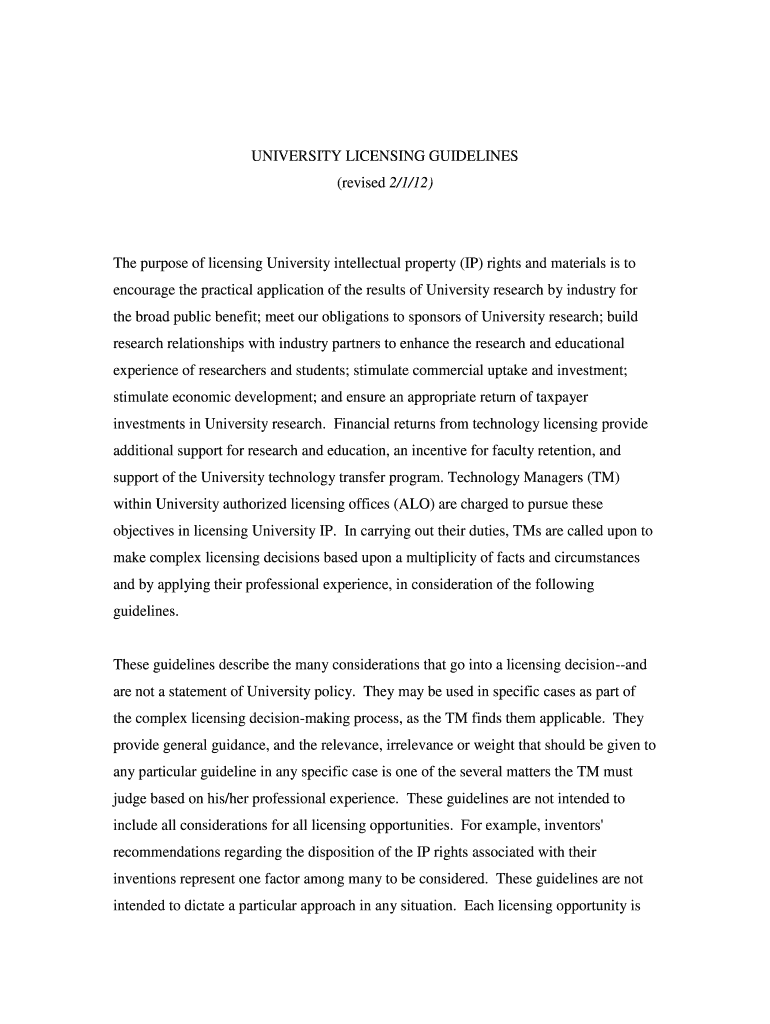
University Licensing Guidelines are comprehensive principles that help manage the licensing process of university intellectual property (IP). These guidelines ensure that the commercialization of research results aligns with the educational mission of the university. The goal is to promote public benefit, sustain research, and guarantee a fair return on investments funded by taxpayers. Technology Managers (TMs) are guided by these guidelines in making informed licensing decisions, considering aspects like the nature of the technology, its market potential, and any existing obligations.
Key Elements of the UNIVERSITY LICENSING GUIDELINES
The guidelines outline several critical elements that shape the decision-making process for licensing university-developed technology:
- Fair Return on Investments: Ensures that public funds used for research yield appropriate returns through licensing agreements.
- Balance Commercialization and Open Access: Encourages a balance between monetizing research discoveries and keeping them accessible for further academic and public use.
- Ethical Considerations and Conflicts of Interest: Addresses potential ethical concerns and conflicts to uphold the university's integrity and mission.
- Educational Mission Alignment: Licensing agreements must align with the overall educational goals and objectives of the university.
- Role of Technology Managers: TMs must consider various factors, such as the innovative nature of the technology and market readiness, before deciding on licensing strategies.
Steps to Complete the UNIVERSITY LICENSING GUIDELINES
- Review the Guidelines Thoroughly: Before initiating any licensing agreements, familiarize yourself with the university's policies and guidelines regarding IP licensing.
- Evaluate the Technology: Assess the technology's commercial viability, potential market impact, and alignment with the university's guidelines.
- Consult with Stakeholders: Engage with relevant departments, TMs, and legal advisors to discuss potential licensing strategies.
- Draft the Licensing Agreement: Ensure that the agreement reflects the guidelines, emphasizing the university's educational mission and ethical standards.
- Negotiate Terms: Work with prospective licensees to finalize terms that offer fair returns while supporting public accessibility to research results.
- Obtain Necessary Approvals: Secure all required approvals from university administration and legal teams.
- Monitor and Review: Regularly review the outcomes of licensing agreements to ensure compliance and address any emerging issues.
Who Typically Uses the UNIVERSITY LICENSING GUIDELINES
Various stakeholders, primarily within the academic and research sectors, utilize these guidelines:
- Technology Managers: Responsible for managing and facilitating the IP licensing process.
- University Legal Teams: Ensure compliance with legal standards and the drafting of legally sound agreements.
- Researchers and Innovators: Researchers may consult the guidelines to understand licensing opportunities for their innovations.
- Prospective Licensees: Companies interested in licensing university technology in accordance with these guidelines.


Legal Use of the UNIVERSITY LICENSING GUIDELINES
The guidelines serve as a legal framework that ensures all licensing agreements meet statutory and federal requirements. They also help universities avoid legal pitfalls and maintain compliance with the Bayh-Dole Act, which governs IP rights in inventions produced with federal funding. These guidelines support ethical commercialization without compromising the university’s core values or its commitment to public service.
Examples of Using the UNIVERSITY LICENSING GUIDELINES
Consider a university developing a new biotech innovation funded by federal grants. Here’s how the guidelines facilitate the process:
- The university follows the guidelines to ensure that IP rights are properly allocated, allowing for potential commercialization.
- A biotech firm expresses interest in licensing the innovation. The university negotiates terms that align with its mission and licensing principles.
- The agreement ensures that the benefits are directed towards public use, with a portion of the royalties reinvested into further university research.
Software Compatibility
While the guidelines themselves are not software-dependent, modern document management platforms like DocHub can be instrumental in creating and sharing licensing agreements electronically. These platforms support a variety of file formats, which is essential for the drafting and storage of digital documents. Additionally, features like digital signatures and real-time collaboration can streamline the process, facilitating smoother negotiations and approvals.
Versions or Alternatives to the UNIVERSITY LICENSING GUIDELINES
While specific university guidelines vary, they often follow a standard framework informed by best practices in academic-commercial partnerships. Alternative guidelines may exist within different universities, often influenced by their unique missions, priorities, and the types of research they conduct. However, the central tenet remains to ensure ethical, legal, and mutually beneficial licensing practices.