






Understanding the Supporting Placement and Data Consistency Strategies
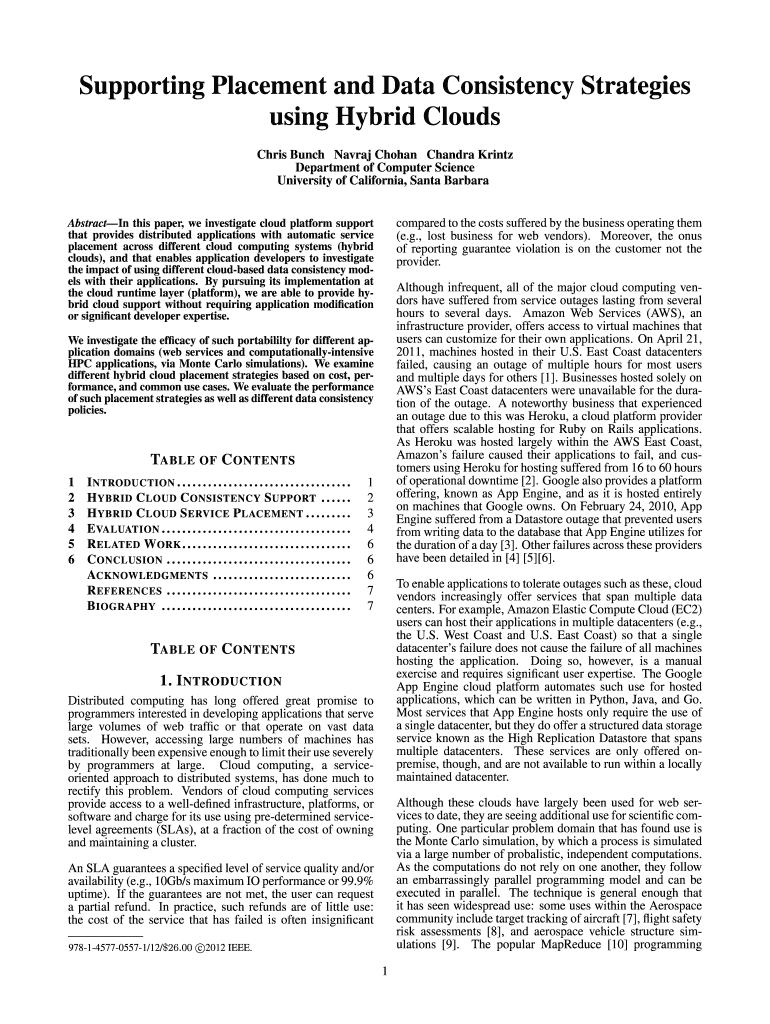
Supporting Placement and Data Consistency Strategies refer to methods used in cloud computing to enhance the placement of services and maintain data consistency across diverse cloud environments. These strategies aim to automate service placement, making it easier for developers to experiment with various data consistency models. It is crucial in hybrid cloud settings, where resources from different clouds are combined to optimize performance and cost-efficiency.
How to Use These Strategies
-
Identify Your Needs: Before implementing any strategy, identify the specific needs of your cloud environment. Determine whether you require high availability, quick access, or data-residency compliance.
-
Select Appropriate Tools: Choose tools and platforms that support automation of service placement and data consistency. Platforms like AppScale can facilitate these processes by providing options to specify consistency settings and deployment strategies.
-
Implement and Monitor: Once the strategies are in place, continuously monitor the performance. Make adjustments based on empirical data to ensure optimal results in service placement and data consistency.
Key Elements of Placement and Consistency Strategies
-
Service Placement Automation: Automates the distribution of services across different cloud systems without manual intervention, ensuring optimal resource use.
-
Data Consistency Models: Enables developers to test various consistency models to ascertain the most effective for their applications.
-
Cross-Cloud Portability: Facilitates seamless movement and integration of applications across different cloud services, enhancing flexibility and efficiency.
-
Fault Tolerance: Incorporates strategies that improve the resilience of services against failures, ensuring reliable application performance.
Steps to Implement Strategies
-
Evaluate Current Infrastructure: Analyze existing infrastructures to understand the environment and identify potential challenges.
-
Choose a Platform: Select a cloud platform that supports the necessary consistency and deployment options, such as AppScale.
-
Configure Settings: Set up specific consistency settings and deployment strategies based on application needs and performance goals.
-
Conduct Trials: Experiment with different models to gather data on performance impacts and refine strategies accordingly.
-
Deploy Solutions: Roll out the chosen strategies across the necessary cloud environments, ensuring all key elements are active.
Importance of Supporting These Strategies
Supporting these strategies is vital for several reasons:
- Optimization: Helps optimize cloud resource utilization, reducing costs while maintaining high performance.
- Scalability: Facilitates easy scaling of services across cloud environments as demand fluctuates.
- Security: Enhances data protection through controlled service placement and consistency assurance across diverse platforms.
Who Typically Uses These Strategies?
- Cloud Service Providers: Adopt these strategies to offer robust, flexible, and competitive services to clients.
- Large Enterprises: Utilize strategies to manage and integrate large, complex cloud deployments.
- Developers and IT Teams: Implement strategies to optimize application performance and reliability in dynamic cloud environments.


Legal Use and Compliance
In the context of hybrid cloud environments, it's important to understand the legal implications:
-
Compliance with Data Laws: Ensure that strategies comply with local and international data laws, including the GDPR and CCPA, particularly when dealing with cross-border data transfers.
-
Security Standards: Maintain adherence to security standards such as ISO/IEC 27001 to protect data integrity and confidentiality.
Examples of Using These Strategies
-
Case Study: Global Retailer: A multinational retailer uses automated service placement and consistency strategies to manage inventory data across several regions, ensuring optimal stock levels and timely restocks.
-
Scenario: Financial Services Firm: A firm implements these strategies to maintain transaction consistency across global data centers, providing reliable customer service despite regional variations.
Required Documents and Compliance
- Documentation: Maintain detailed records of system configurations, strategy deployments, and performance metrics.
- Audit Trails: Ensure all changes and configurations are logged for compliance verification and performance audits.
Digital vs. Paper Versions
While these strategies are inherently digital due to their cloud-based nature, understanding the differences between purely digital environments and those that also require paper documentation can be relevant in regulatory and compliance contexts.
Who Issues the Guidelines?
Guidelines for Supporting Placement and Data Consistency Strategies are often issued by cloud platform providers or industry consortia focused on cloud standards and best practices.
State-by-State Differences
Although primarily standardized at a federal or global level, certain U.S. states may have specific regulations affecting data residency and cloud service placements. It's crucial for users to be aware of these variations when deploying multi-state or cross-cloud environments.
This comprehensive coverage should help anyone using or implementing these strategies to do so effectively, considering both the technical and regulatory aspects involved.