






Definition & Meaning
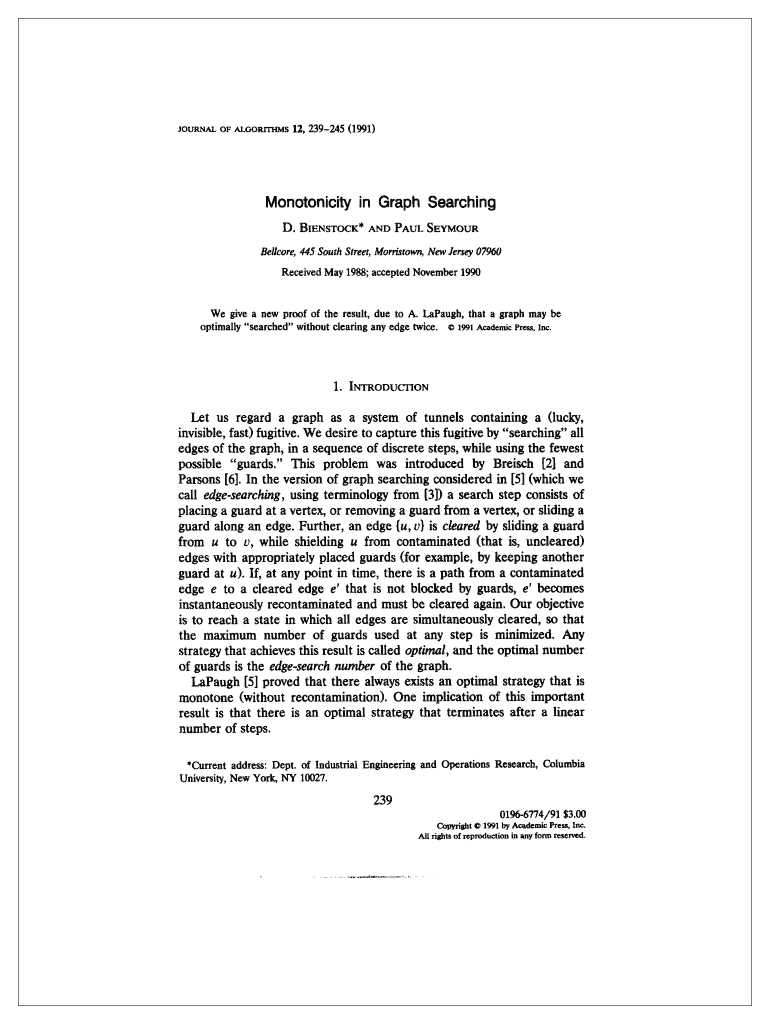
Monotonicity in graph searching is a concept within computational theory that addresses the optimal strategies for searching through graphs with the aim of capturing a fugitive using the fewest number of guards. The principle of monotonicity ensures that once a region of the graph is made secure, it remains secure throughout the process. This concept, fundamental in graph theory, enables the development of efficient algorithms and strategies that eliminate unnecessary recontamination of previously cleared paths.
Key Features
- Optimal Strategies: Monotonicity ensures efficient use of resources, preventing regression in the search process.
- Graph Types: Applicable to various graph structures, including those used in computer networks and logistics.
- Reduces Complexity: Helps in simplifying the approach towards problem-solving in complex graph structures by establishing a straightforward path-clearing strategy.
Key Elements of Monotonicity in Graph Searching - cs ucsb
This form includes various critical elements that are designed to streamline the graph searching process.
Essential Components
- Guard Placement: Strategic positioning of the fewest number of guards necessary to effectively cover all nodes and edges.
- Non-recontamination Paths: Ensures areas once deemed secure do not become vulnerable again, preserving the integrity of the search.
- Mixed-Searching Methods: Utilizes both edge- and node-searching techniques to optimize strategy and execution.
How to Use Monotonicity in Graph Searching
The methodology integrates several steps that facilitate its application in theoretical and practical environments.
Application Procedure
- Identify Graph Type: Understand the structure and properties of your graph.
- Determine Guard Strategy: Develop a plan based on optimal node and edge coverage without leaving gaps.
- Execute Search Method: Implement a combined approach using both edge and node searching for comprehensive security.
Practical Scenarios
- Network Security: Ensuring all potential vulnerabilities are guarded and continuously monitored.
- Urban Planning: Using node and edge strategies for efficient city surveillance systems.
Steps to Complete the Monotonicity in Graph Searching - cs ucsb
This form provides a step-by-step pathway to efficient graph search execution.
Completion Process
- Graph Analysis: Begin by assessing the graph and defining its boundaries.
- Deploy Guards: Allocate resources strategically covering all necessary paths.
- Monitor Progress: Track movements and transitions to ensure no area is recontaminated.
Why Should You Use Monotonicity in Graph Searching
Understanding the importance of this graph theory concept is crucial for those involved in complex network analysis.
Benefits
- Efficiency: Saves time and resources by simplifying the search process.
- Reliability: Ensures no area has to be re-searched once cleared.
- Scalability: Adaptable to various graph sizes and complexities.
Examples of Using Monotonicity in Graph Searching
Practical applications demonstrate the utility of monotonic searching strategies.
Real-World Cases
- Internet Caches: Optimizing data retrieval by preventing redundant searches.
- Transportation Networks: Deploying strategic guard placements to monitor traffic and security.
Versions or Alternatives to Monotonicity in Graph Searching - cs ucsb
Understanding the nuances of different methods can aid in selecting the most effective strategy.
Alternative Approaches
- Aggressive Searching: More intensive but resource-heavy, focuses on rapid deployment.
- Hybrid Models: Combines monotonic strategies with other search theories for enhanced flexibility and adaptability.
State-by-State Differences
Applicability and execution might differ based on local rules and regulations, which can influence the deployment of graph searching strategies.
Differences and Considerations
- Regulatory Impact: Some states have specific guidelines affecting implementations in areas like digital security.
- Data Protection Laws: Varying state regulations may impact strategic application in network and data security.
By understanding these aspects, practitioners can effectively apply monotonicity in graph searching strategies to a diverse array of real-world challenges and academic inquiries.