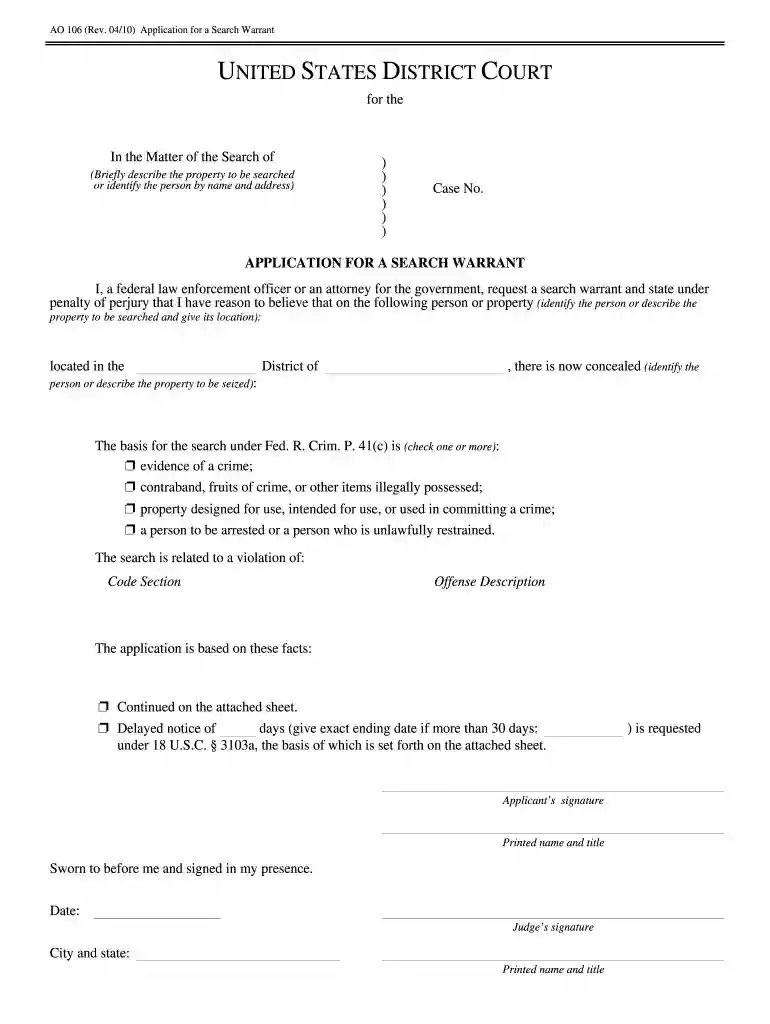
Definition and Meaning of the Warrant Template
A warrant template serves as a standardized document utilized in the legal process to request a warrant from a judicial authority. In the United States, this form is commonly used by law enforcement officials and attorneys to outline the basis for the warrant application, describing specific properties or individuals that require searching under the law.
Key Aspects of a Warrant Template
- Purpose: Primarily designed to provide law enforcement the legal authority needed to conduct a search or an arrest.
- Contents: Typically includes sections for identifying the location to be searched, detailing the items or individuals involved, and articulating the legal rationale justifying the warrant.
- Legal Framework: Governed by various laws and regulations, ensuring that searches are conducted within constitutional boundaries.
Key Elements of the Warrant Template
To effectively prepare a warrant application, it is crucial to understand the essential components of the warrant template. Each section must be meticulously filled to ensure legal compliance and clarity.
Essential Sections of a Warrant Template
- Applicant Information: Includes the name and title of the applicant, usually a police officer or prosecutor.
- Affidavit: A sworn statement that outlines the probable cause, detailing the facts and circumstances that justify issuing the warrant.
- Description of Premises: Specific details about the location to be searched, such as the address, room numbers, and any distinguishing features.
- Items to be Seized: A comprehensive list of evidence or contraband expected to be found during the search.
- Judicial Approval: Space for a judge or magistrate’s signature, signifying that the warrant has been officially approved.
Steps to Complete the Warrant Template
Filling out a warrant template is a systematic process that requires attention to detail to ensure its legality and effectiveness.
- Gather Information: Compile all pertinent information related to the case, including evidence, witness statements, and analysis that substantiates the need for the warrant.
- Complete the Applicant Information Section: Provide accurate details about the individual making the request, including their agency and contact information.
- Draft the Affidavit: Clearly present the facts leading to the probable cause, backed by evidence and observations.
- Detail the Search Location: Accurately describe the premises to be searched to avoid ambiguity during execution.
- List Items to be Seized: Be specific about what items or evidence are being sought to facilitate a targeted search.
- Review and Sign: Have the document reviewed for accuracy and completeness. The applicant must sign the affidavit attesting to its truthfulness before submission.
Legal Use of the Warrant Template
Understanding the legal significance of the warrant template is fundamental for ensuring that law enforcement actions conform to the law.
Legal Considerations
- Fourth Amendment Compliance: The warrant must adhere to the constitutional protections against unreasonable searches and seizures.
- Probable Cause Requirement: Only warrants supported by probable cause can be granted, necessitating a thorough justification backed by facts.
- Exclusionary Rule: Failure to follow proper warrant procedures could lead to evidence being deemed inadmissible in court, impacting prosecutions.
Important Terms Related to the Warrant Template
Familiarity with key legal terminologies associated with the warrant template enhances comprehension of its implications and usage within the legal framework.
Common Terms
- Probable Cause: A reasonable basis for believing that a crime may have been committed and that evidence may be found at a specific location.
- Affidavit: A written statement confirmed by oath, used as evidence in court.
- Seizure: The act of taking possession of property or evidence during a search authorized by a warrant.
- Execution of the Warrant: The process through which law enforcement carries out the warrant’s authorizations.
Who Typically Uses the Warrant Template?
Various professionals in the legal and law enforcement fields utilize the warrant template, often under specific circumstances.

User Groups
- Law Enforcement Officers: Police officers and detectives who seek legal authorization to conduct searches during investigations.
- Prosecutors: Government attorneys preparing warrant applications to gather evidence for upcoming court cases.
- Legal Researchers: Individuals needing forms for investigation or academic purposes within legal studies.
Examples of Using the Warrant Template
The practical application of the warrant template can vary significantly depending on the situation and the type of investigation being conducted.
Application Scenarios
- Drug Investigations: Law enforcement might use the warrant template to gain access to suspected drug manufacturing or distribution premises.
- Financial Crimes: Prosecutors may apply for warrants to seize financial records from businesses involved in suspected fraud.
- Cybercrime: A warrant template may be used to access electronic devices to collect evidence in cases of online harassment or criminal activity.
State-Specific Rules for the Warrant Template
Because laws surrounding warrants can differ by state, understanding these state-specific regulations is essential for compliance and effective law enforcement.
Variations in State Regulations
- Form Requirements: Some states may have specific formatting or content expectations for their warrant templates.
- Execution Procedures: Different jurisdictions may mandate varying procedures for executing warrants, including the timeframes within which the warrant must be carried out.
- Judicial Oversight: Certain states may require additional layers of review or approval processes for warrant applications, emphasizing the importance of local legal understanding.