
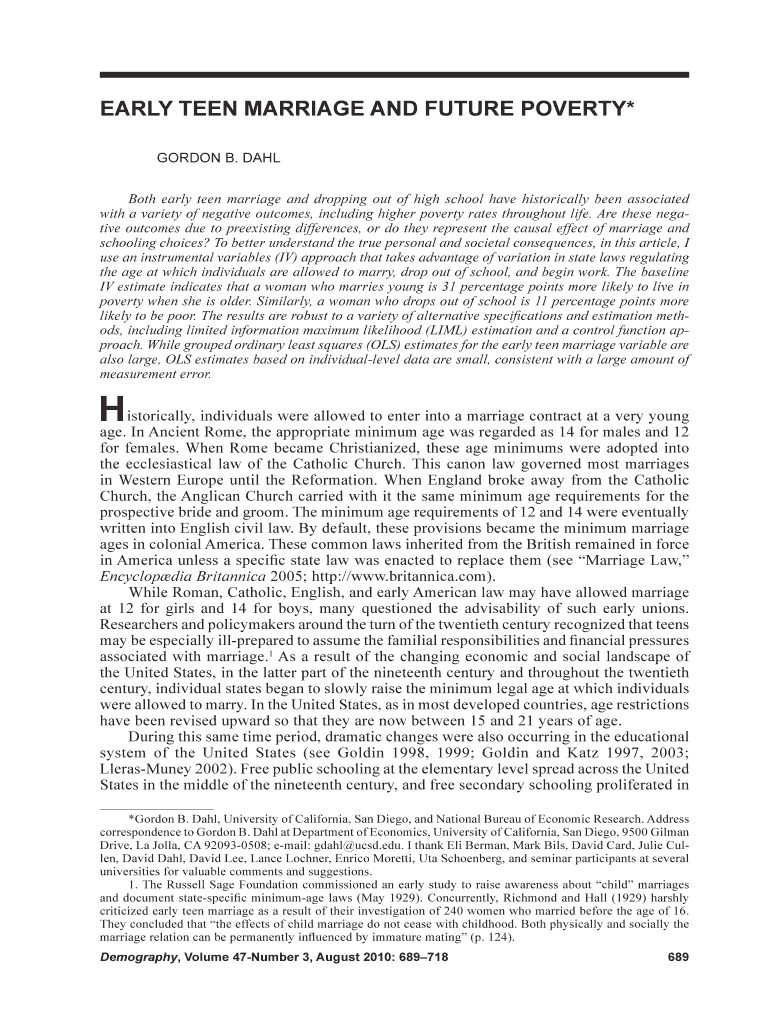







Understanding Early Teen Marriage and Future Poverty
Early teen marriage refers to the practice of young individuals getting married before they reach the age of legal adulthood. This issue has significant implications, particularly when examining its relationship with future poverty. Marrying young, typically before 18, can disrupt education and limit future opportunities, directly impacting economic stability.
Statistical Impact of Early Teen Marriage
A key study notes that early teen marriage increases the likelihood of living in poverty by 31 percentage points. This suggests a direct correlation where early marriage decisions significantly affect long-term economic outcomes. Further, those who marry early often lack access to higher education, which can perpetuate poverty cycles across generations.
The Educational Component
Education plays a vital role in economic advancement. The same study shows that dropping out of high school raises the probability of future poverty by 11 percentage points. Often, individuals who marry early face pressures that lead them to abandon their studies, thus hindering their ability to secure well-paying jobs in the future.
Critical Legal Factors
Various legal frameworks exist to prevent early teen marriage, recognizing its long-term negative impacts. Many U.S. states have implemented minimum age requirements and require parental consent or judicial approval for individuals under 18. These regulations aim to protect young individuals from the adverse consequences of early marriage.
Compulsory Schooling Laws
Compulsory schooling laws increase educational attainment, which can reduce the risk of poverty. By legally mandating education until a certain age, these laws can mitigate the tendency for early marriage among teens, thereby encouraging a focus on education and career development.
Social and Economic Implications
The social implications of early teen marriage are profound, affecting not just the couple but also future generations. Lower educational attainment and early family responsibilities often result in limited job prospects, reinforcing a cycle of poverty. Economically, this scenario affects national productivity and increases welfare dependency.
Economic Cycles and Generational Poverty
Early marriage often leads to immediate financial constraints. With limited skills and education, young couples struggle to provide for their families, often resorting to low-wage jobs. This cycle of poverty can affect subsequent generations, as children in such families may receive limited educational and developmental resources.
Addressing Early Teen Marriage and Poverty
Addressing early teen marriage requires a multifaceted approach involving legal reform, educational initiatives, and community-based interventions. Implementing comprehensive sexual education, increasing access to financial resources, and promoting higher education can help alleviate the pressures that lead to early marriage.
Community-Based Initiatives
Community programs play an important role by providing resources and support to teens who might consider early marriage. These initiatives can offer counseling, mentorship, and financial planning advice to combat the factors that contribute to early marriage and poverty.
Practical Measures for Prevention
Preventing early teen marriage and subsequent poverty involves strategic planning and policy implementation. Some effective measures include raising the minimum marriage age, enhancing educational opportunities, and providing support networks for adolescents.
Policy Recommendations
Governments can adopt policies that create supportive environments for youth. By increasing investment in education and implementing strict laws against early marriage without consent, societies can protect young individuals and promote economic independence.
Visualization through Case Studies
Real-life case studies can provide valuable insights into the challenges and solutions associated with early teen marriage. Analyzing successful interventions in various states or countries can help identify effective strategies and adapt them to different cultural or socioeconomic contexts.
Lessons Learned from Successful Interventions
Some regions have successfully reduced early teen marriage by increasing community engagement and providing alternative pathways for young individuals. These strategies often involve partnerships between governments, non-profits, and educational institutions, demonstrating the power of collaborative efforts.




