
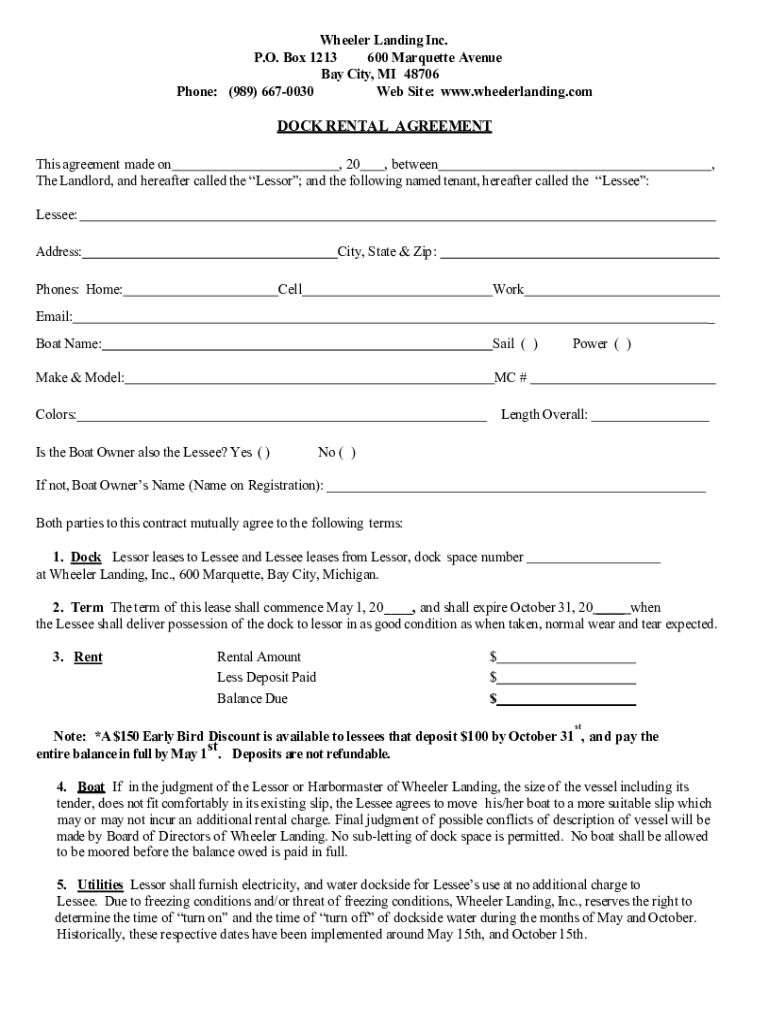







Key Elements of the Dock Rental Agreement - Wheeler Landing
The Dock Rental Agreement at Wheeler Landing serves as a binding contract between Wheeler Landing Inc. and the lessee, outlining the terms and conditions related to the rental of dock space. It's crucial to be familiar with its integral components, which ensure clarity and mitigate potential disputes.
Rental Terms and Conditions
- The agreement specifies the duration of the dock lease, explicitly stating the start and end dates.
- It delineates rental fees, including base charges, payment schedules, and any applicable late fees.
- Any provisions for the renewal or termination of the lease are outlined, enabling the lessee to plan their commitments ahead of time.
Use of Facilities
- Lessees gain access to specific marina facilities, and the agreement details any restrictions on usage.
- It lays down guidelines for the conduct and presence of guests, with clear stipulations on how marina services should be utilized.
Liability and Maintenance
- The agreement includes clauses addressing liability issues, delineating the responsibilities of both Wheeler Landing Inc. and the lessee.
- Specific obligations regarding the maintenance, upkeep, and security of docked vessels are elaborated to prevent misunderstandings.
Steps to Complete the Dock Rental Agreement - Wheeler Landing
Completing the dock rental agreement carefully is vital to ensuring that all legal obligations are understood and acknowledged by both parties involved.
Step-by-Step Process
- Read Thoroughly: Begin by thoroughly reading the entire agreement document, taking note of all obligations, fees, and usage terms.
- Fill in Personal Details: Enter all necessary personal and contact information accurately to avoid future communications issues.
- Specify Rental Duration and Fees: Confirm the dock rental period and associated costs. Ensure these align with the discussed terms.
- Acknowledge Liability Clauses: Carefully review the liability clauses and maintenance obligations before agreeing.
- Sign and Date the Document: Provide a legally binding signature and date the agreement. Ensure that the document is duly signed by both parties before finalizing the lease.
Legal Use of the Dock Rental Agreement - Wheeler Landing
Understanding the legal ramifications of the Dock Rental Agreement is essential for both parties involved in the dock rental process.
Key Legal Considerations
- ESIGN Act Compliance: Electronic signatures used on this agreement must comply with the ESIGN Act, ensuring their legal validity.
- Liability Protection: The agreement features terms that protect both parties, specifically detailing actions in case of damages or breaches.
- Relocation Provisions: Situations involving potential dock relocation due to sale are covered, safeguarding lessees’ rights and Wheeler Landing’s interests.
How to Obtain the Dock Rental Agreement - Wheeler Landing
Accessing the Dock Rental Agreement is a straightforward process that ensures you are well-prepared before entering into a lease agreement at Wheeler Landing.
Acquisition Steps
- The agreement can typically be requested directly from Wheeler Landing’s administrative office or through their official website.
- Interested lessees can also contact Wheeler Landing Inc. via phone or email to have the agreement sent digitally, allowing for easy editing and signing through platforms like DocHub.
Important Terms Related to the Dock Rental Agreement - Wheeler Landing
Being familiar with specific terms related to the Dock Rental Agreement can help in better understanding and execution of the document.
Common Terminology
- Lessee: The individual or entity renting the dock space.
- Lessor: Wheeler Landing Inc., the entity leasing the dock space.
- Marina Facilities: The range of services and areas provided for use by lessees within the marina.
- Liability Clause: Sections detailing the responsibility for damages or accidents at the dock.
Who Typically Uses the Dock Rental Agreement - Wheeler Landing
Recognizing who commonly utilizes the Dock Rental Agreement helps understand its practical applications.


Target Audience
- Boat Owners and Enthusiasts: Individuals seeking seasonal or annual dock space rental.
- Small Businesses: Entities relying on dock usage for commercial activities.
- Vacationers: Temporary lessees using the facilities for recreational purposes during peak seasons.
Examples of Using the Dock Rental Agreement - Wheeler Landing
Practical scenarios illustrate how this agreement is applied in real-world situations.
Hypothetical Scenarios
- Seasonal Rental: A leisure boater rents dock space annually from Wheeler Landing and agrees to adhere to maintenance and usage terms.
- Business Use: A local fishing company utilizes a dock for commercial operations and ensures compliance with seating and equipment deployment terms.
Disclosure Requirements
It is crucial to understand what information must be disclosed within the Dock Rental Agreement for transparency and compliance.
Key Disclosures
- Both parties must disclose any prior legal issues or disputes relating to dock rental.
- Full insurance coverage details should be provided to ensure protection against potential liabilities.




