






Definition & Meaning
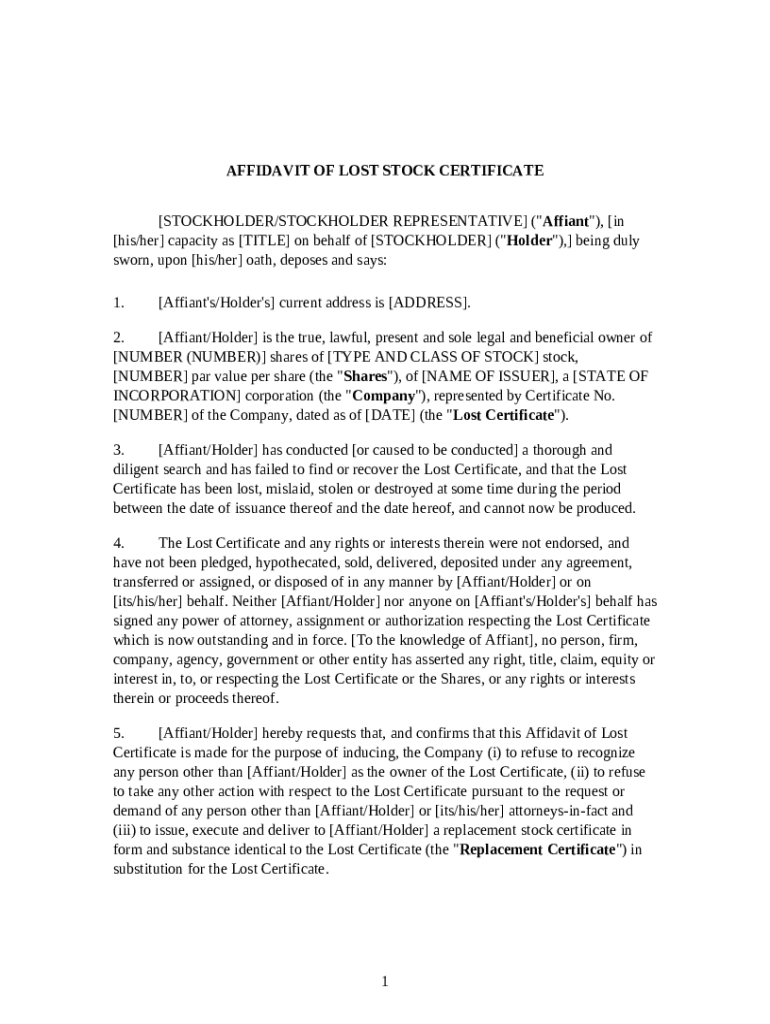
The "Affidavit for Lost, Stolen, Destroyed Stock Certificate" is a legal document used to declare the loss, theft, or destruction of a stock certificate. This affidavit serves as a sworn statement that confirms the stockholder or their authorized representative (affiant) has conducted a thorough search for the certificate and requests a replacement be issued if necessary. It also includes indemnification to the issuing company against potential claims related to the missing certificate. Such affidavits are crucial in maintaining legal stock ownership records and ensuring proper transfer or replacement of lost securities.
Key Elements of the Affidavit
The affidavit includes essential components to establish its validity and protect all parties involved. These elements typically encompass:
- Identification of Stockholder: Includes details like the stockholder's full legal name, contact information, and taxpayer identification number.
- Certificate Details: Specifies the stock certificate number, number of shares, and the issuer’s name.
- Affiant's Statement: A declaration that the stock certificate is indeed lost, stolen, or destroyed, and that diligent efforts have been made to recover it.
- Indemnification Clause: Protects the issuing company from future claims or liabilities associated with the missing certificate.
- Notarization: The affidavit often requires a notary public's signature to verify the identity of the affiant and authenticate the document's execution.
Steps to Complete the Affidavit
Filing this affidavit involves a series of methodical steps, ensuring all necessary details are accurately presented:
- Collect Information: Gather all relevant information about the lost certificate, including the certificate number, number of shares, and issuer’s details.
- Prepare the Affidavit: Complete the affidavit form with accurate and up-to-date information.
- Include a Detailed Explanation: State the circumstances surrounding the loss, theft, or destruction of the certificate, along with actions taken to locate it.
- Sign and Notarize: The affiant must sign the affidavit in front of a notary public to validate the document.
- Submit the Affidavit: Send the completed and notarized affidavit to the issuing company or relevant authority, often accompanied by any required fees.
Important Terms Related to the Affidavit
Understanding these terms is instrumental in successfully navigating the affidavit process:
- Affiant: The individual who swears to the affidavit's content; typically, the stockholder or their representative.
- Indemnify: A contractual obligation of one party to compensate another for any potential losses or damages.
- Notary Public: An authorized official who oversees the signing of important documents, providing verification and legal witnessing.
- Stock Certificate: A physical paper that represents ownership in a corporation, specifying the number of shares owned.
Legal Use of the Affidavit
This affidavit carries significant legal weight and is used to facilitate the replacement of a lost, stolen, or destroyed stock certificate. Its legal implications include:
- Establishing Ownership: It corroborates the affiant's claim of owning the specified shares.
- Preventing Fraudulent Claims: By requiring notarization, the affidavit mitigates the risk of fraudulent replacement requests.
- Facilitating Share Transactions: Enables the stockholder to partake in transactions or stock sales by proving rightful ownership without the physical certificate.
State-Specific Rules
While the general process of using an affidavit for lost stock certificates remains consistent, variations can exist based on state laws. Notable differences might include:
- Notary Requirements: Some states have different rules regarding notary public processes.
- Filing Fees: Various states may impose different filing fees or require additional documentation.
- Legal Terminology: The specific language or clauses mandated for inclusion in the affidavit can vary.
Examples of Using the Affidavit
Practical scenarios highlight how this affidavit might be used:
- Corporate Restructuring: During mergers, a company may require affidavits for missing certificates to maintain accurate share records.
- Personal Misplacement: An individual might need to file an affidavit upon losing or inadvertently destroying a stock certificate.
- Theft Case: If a stockholder suspects theft, filing the affidavit can ensure the company protects the rightful owner's interests against unauthorized claims.
Digital vs. Paper Version
In today’s digital age, both paper and electronic versions of the affidavit are utilized:
- Paper Forms: Traditional in format, requiring manual completion and physical notarization. Often necessary for entities that prefer or require physical records.
- Digital Versions: Offer greater convenience, completed via electronic signatures and digital notarization, if accepted by the entity processing the form. This method is particularly efficient for remote or international transactions.