






Definition & Meaning
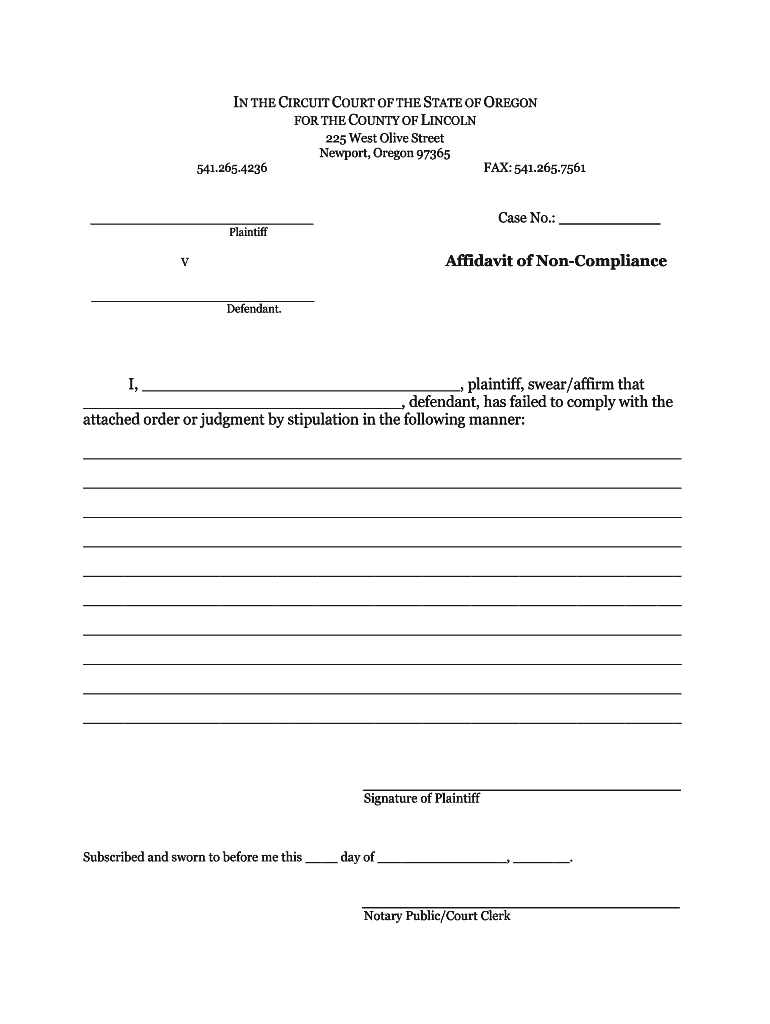
An Affidavit of Non-Compliance is a legal document typically filed in a court setting when one party believes that another has failed to comply with a previously agreed-upon court order or judgment. This document serves as a formal declaration by the plaintiff, outlining the specifics of how the defendant has not adhered to the terms set by the court. The affidavit includes details of the non-compliance and requires a signature and notarization to validate the statements made within.
How to Use the Affidavit of Non-Compliance I
To use an Affidavit of Non-Compliance, you must first thoroughly review the original court order or judgment to ensure that the defendant has indeed failed to meet the obligations set forth. Once confirmed, the affidavit should be completed by detailing the specific instances of non-compliance. This may include dates, actions not taken, or conditions not met by the defendant. Make sure to gather and attach any supporting documents or evidence that can corroborate your claims, offering a clear picture of the alleged non-compliance. Finally, the affidavit must be signed in the presence of a notary to be considered valid.
Steps to Complete the Affidavit of Non-Compliance I
- Gather Original Court Documents: Ensure you have the original court order for quick reference.
- Detail Non-Compliance: Clearly articulate the specific ways the defendant has not complied—include dates, neglected actions, and specific failed obligations.
- Collect Supporting Evidence: Attach any documents that support your claims—this could include correspondence, invoices, or other legal documents.
- Complete the Affidavit Form: Fill out all necessary sections of the affidavit, providing truthful and detailed information.
- Notarize the Document: Sign the affidavit in front of a notary public to officially validate your statement.
- File with the Court: Submit the completed and notarized affidavit to the relevant court handling your case.
Key Elements of the Affidavit of Non-Compliance I
- Plaintiff Information: Full name, address, and contact information.
- Defendant Information: Full name and any relevant identification or case numbers.
- Statement of Non-Compliance: A comprehensive outline of how the terms of the original court order were not met.
- Signatures: Includes the signature of the person filing the affidavit and a section for a notary public.
- Notarization Block: Area for notary public signature and seal, verifying the validity of the document.
Legal Use of the Affidavit of Non-Compliance I
The affidavit serves as a legal instrument to hold a party accountable in court when they have failed to comply with a judgment or order. It is used to bring such non-compliance to the court's attention, potentially resulting in further legal actions against the non-compliant party. These actions could range from a court-ordered mandate for compliance to further penalties or sanctions imposed by the court.
Who Typically Uses the Affidavit of Non-Compliance I
Plaintiffs who have secured a court judgment or order use the Affidavit of Non-Compliance as a follow-up measure when defendants have not met their legal obligations. This can include individuals, businesses, or any entity that has an enforceable court decision in its favor. The document is filed to ensure the defendant is held accountable and the judgment is properly executed.


Required Documents
When filing an Affidavit of Non-Compliance, it is essential to include the following:
- A copy of the original court order or judgment being referenced.
- Any correspondence or documentation that demonstrates attempts made to reach compliance.
- Additional legal documents or evidence that highlights the non-compliance situation.
- Evidence of attempts at communication with the defendant, if applicable.
State-Specific Rules for the Affidavit of Non-Compliance I
While the fundamental purpose of the affidavit remains consistent, each state may have specific procedural rules governing its submission and processing. This can include variations in filing processes, additional required forms, differing notarization requirements, or even specific language that must be included. It is always advisable to consult local legal resources or attorneys to ensure compliance with state-specific regulations. In Oregon, for instance, there might be unique procedural elements mandatory for an affidavit filed in its circuit courts, such as specific filing deadlines or additional local forms that need to be completed.